Introduction: Why Hotels Near MRT Singapore Matter
This guide is written for European travellers who want to explore Singapore efficiently, using its excellent public transport rather than relying on taxis or rideshares. Choosing hotels near MRT Singapore stations is one of the most effective ways to keep journeys smooth, predictable and climate-friendly in a hot, humid city.
Singapore is compact but highly layered, with business districts, heritage quarters and leisure areas spread around a fast, reliable metro network. Staying in hotels with strong MRT access connects you directly to the city’s highlights, and complements broader decisions on where to base yourself in Singapore for sightseeing and easy transport.
Orientation: Singapore’s core districts—Marina Bay, Orchard Road, the historic centre and residential neighbourhoods—are all linked by the MRT, which functions as the backbone of urban movement for residents and visitors alike.
Understanding the MRT Network: The Backbone of Connected Stays
For travellers prioritising transport efficiency, the MRT is the main reference point when choosing where to sleep. Four urban lines are especially relevant for visitors: the East West Line (green), North South Line (red), Downtown Line (blue) and Circle Line (yellow). Together, they link Changi Airport with Marina Bay, Orchard Road, Chinatown, Little India and the Singapore Botanic Gardens.
When comparing mrt access hotels, look first at how many lines intersect near your address. Interchange stations such as City Hall, Dhoby Ghaut, Outram Park and Bugis naturally offer more flexibility and shorter journey times. If you plan to use Singapore as a stopover or short city break from Europe, staying within a three to five minute walk of one of these stations can significantly reduce time spent in transit.
Another useful distinction is between underground, air-conditioned stations in the city core and elevated stations in outer residential areas. For short leisure stays, central underground stations typically mean easier walking connections, more shade and smoother movement between sights, shopping and dining.
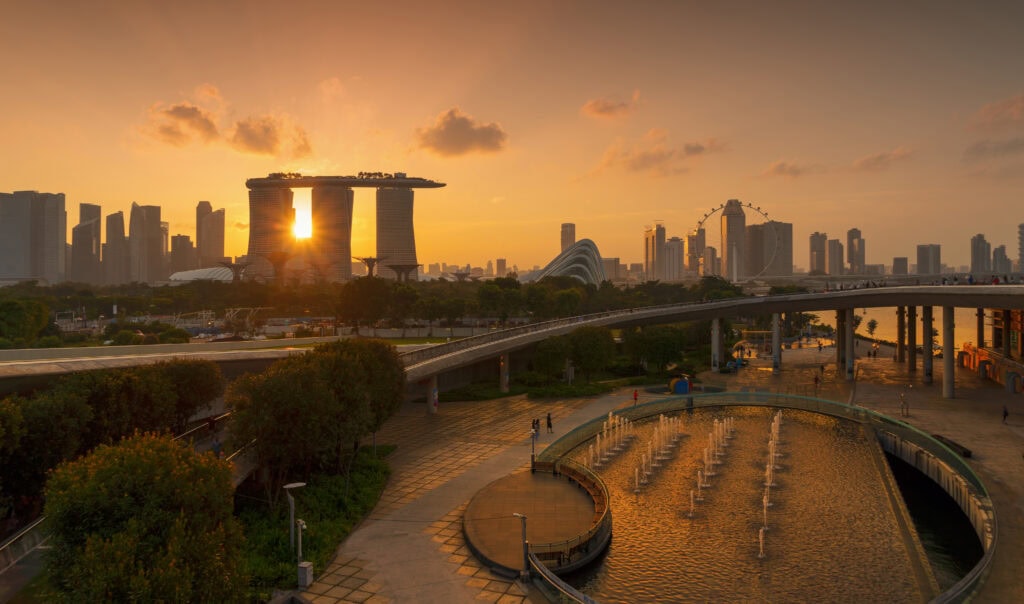
Marina Bay and Raffles Place: Business Skyline with Direct MRT Links
For travellers who value efficiency and polished urban surroundings, Marina Bay and neighbouring Raffles Place are among the most practical areas for hotels near MRT Singapore. This waterfront district is anchored by the Downtown and North South lines, with stations such as Marina Bay, Downtown, Raffles Place and Bayfront offering quick access across the island.
Public transport Singapore hotels in this area tend to be integrated into office towers, malls or mixed-use complexes, meaning sheltered passageways and air-conditioned links between lobby, station and restaurants. This is particularly valuable in the tropical climate, where even short walks can feel draining in the afternoon heat.
Marina Bay works well if you prefer a structured day: starting with morning walks around the bay, followed by easy MRT hops to heritage quarters like Chinatown or Little India, then returning for evening skyline views. It is also a strong choice if you have evening plans at the theatre or in the financial district, as trains run frequently and predictably. For deeper orientation to the area itself, you may find a broader overview of Marina Bay neighbourhood stays helpful later in your planning.
Orchard Road: Shopping Boulevard with Solid but Less Central Connections
Orchard Road is Singapore’s main shopping avenue, lined with malls, dining and a range of accommodation. From a transport-efficiency perspective, it offers reliable—but not interchange-level—MRT access via Orchard, Somerset and Dhoby Ghaut stations on the North South and North East/ Circle lines.
If your priority is retail therapy and air-conditioned promenades, staying near Orchard MRT keeps movements simple. Many connected stays here have direct access from the hotel lobby into a mall, with escalators down to the station concourse. This creates a largely sheltered environment from breakfast through to late-night shopping, which many European visitors appreciate after a long-haul flight.
The trade-off is that Orchard is slightly set back from the waterfront. Reaching Marina Bay, the Gardens by the Bay or the colonial civic district usually involves at least one line change or a short additional ride. For purely sightseeing-focused trips, other central nodes may be marginally more efficient, but for a blend of shopping, dining and straightforward public transport, Orchard remains a practical compromise.
Historic Quarters: Bugis, Chinatown and Little India for Character and Connectivity
For travellers seeking character as well as connectivity, the historic quarters—Bugis, Chinatown and Little India—offer some of the most atmospheric public transport Singapore hotels. Here, shophouse-lined streets, temples and markets sit only a few minutes’ walk from well-connected MRT stations.
Bugis is on both the Downtown and East West lines, making it one of the most versatile bases. Hotels near MRT Singapore in this area are convenient for quick hops to Marina Bay, Kampong Glam, the Civic District and Changi Airport, with minimal transfers. The streets around the station are lively but manageable, giving a good balance between local life and visitor comfort.
Chinatown, served by both the North East and Downtown lines at Chinatown station, is particularly efficient for cross-city journeys. From here, it is a short ride to Clarke Quay, Marina Bay, Little India or HarbourFront for Sentosa-bound travellers. Many connected stays here are integrated into restored heritage buildings, which can be appealing if you enjoy cultural immersion without sacrificing transport ease.
Little India, anchored by Little India and Farrer Park stations, offers quick access to the city centre while retaining a distinctly different atmosphere. Expect colourful streets, spice shops and temples within walking distance of the MRT. The area can feel more intense and energetic than Bugis or Chinatown, which some visitors love and others find overwhelming, but from a movement perspective it is undeniably efficient.
Riverside and Clarke Quay: Nightlife Along the Lines
The riverside precinct around Clarke Quay and Boat Quay is popular for evening dining and nightlife, and its transport links make it a strategic base for those who like to finish their days by the water. Clarke Quay station on the North East Line and nearby Fort Canning on the Downtown Line create simple north–south and east–west connections.
Choosing mrt access hotels along the river means you can rely on the MRT for most daytime sightseeing, then return by foot or a short train ride for dinner along the quay. This is especially practical if you prefer not to navigate late-night taxis in an unfamiliar city; the trains are safe, well-patrolled and clearly signposted, with English widely used on signage and announcements.
The main consideration here is ambient noise. Riverside areas can be lively late into the evening, especially on weekends. If you are sensitive to sound, look for hotels set slightly back from the water but still within easy walking distance of the stations. This way, you retain transport efficiency without sacrificing rest.
Comparing Citywide Areas by MRT Efficiency
Given Singapore’s compact size, much of the city feels well-connected, but subtle differences can matter, especially for shorter European stays or jet-lagged early mornings. Thinking in terms of journey patterns can help you decide between connected stays across the city centre.
If your itinerary is heavy on waterfront landmarks, gardens and modern architecture, areas near Marina Bay, Raffles Place or Bayfront reduce transfer times. For mixed sightseeing and shopping, staying between Orchard and Dhoby Ghaut can be efficient, as Dhoby Ghaut itself is a major interchange linking three lines.
For culture-led trips focusing on temples, markets and heritage streets, Bugis and Chinatown offer perhaps the best balance of walkability and MRT access. To gain a broader sense of how these districts compare beyond pure transport considerations, you might find it useful to consult a more general overview of Singapore neighbourhoods and their personalities in parallel with this transport-focused perspective.
Finally, if you are comfortable changing lines and prefer a quieter residential base, some outer Circle Line or Downtown Line stations offer peaceful surroundings with swift rides into the centre. These are less frequently chosen for short visits, but can suit longer stays where daily rhythms matter more than immediate access to headline sights.
How to Read MRT Maps and Station Areas When Choosing a Hotel
Beyond simply noting the nearest station name, it is useful to read the MRT map with a traveller’s eye. Interchange symbols indicate where two or more lines connect; staying within walking distance of these nodes amplifies your freedom of movement. Be mindful that some multi-line stations, like Outram Park or Bugis, have multiple exits; a hotel next to Exit A can still be several minutes’ walk from Exit E. When comparing locations online, street maps and satellite views help clarify this.
For maximum transport efficiency, consider these details when assessing public transport Singapore hotels: walking distance in real terms (including road crossings), shade coverage along the route, and whether the station connects directly into a mall or is exposed at street level. Short distances can feel longer in strong sun or monsoon rain, so covered walkways, underground passages and malls integrated with the station are worth noting.
Finally, keep in mind that some central stations become very busy at peak commuting hours. If crowds are tiring after a long day, you may prefer a slightly quieter station one or two stops away from major interchanges, accepting a marginally longer journey in exchange for calmer surroundings at your local stop.
Practical Travel Tips for Using MRT-Accessible Hotels in Singapore
- Plan around Changi access: If arriving on an overnight flight from Europe, consider areas on the East West Line (for example, Bugis) to keep your first and last journeys simple.
- Use contactless payment: Most European bank cards work directly at MRT gates, removing the need for separate tickets and simplifying last-minute route changes.
- Avoid peak commuter crush: Weekday mornings (roughly 08:00–09:30) and evenings (17:30–19:30) can be crowded; aim to start sightseeing slightly earlier or later if you value calm trains.
- Dress for air-conditioning: Trains and stations are cool, while streets are hot and humid; breathable layers make transitions between hotel, MRT and outdoor sights more comfortable.
- Note first and last trains: Services start early and end around midnight; if you plan late dinners or drinks along the river, check last-train times from your nearest station.
- Follow local norms: Queues form neatly at platform doors, and giving way to alighting passengers is expected; this keeps movement orderly even at busy central stops.
- Use shopping malls as corridors: Many central stations connect via malls; use these as shaded routes between your hotel, MRT and nearby attractions, especially midday.
- Carry a light day bag: With frequent trains and minimal waiting, you can comfortably return to your hotel during the day if your load stays light and manageable.
FAQs About Hotels Near MRT Singapore
Are hotels near MRT Singapore better than staying near bus routes?
For most short leisure trips, hotels near MRT Singapore offer clearer navigation, faster journeys and simpler wayfinding than relying primarily on buses, especially for first-time visitors unfamiliar with the network.
Which areas offer the best balance of character and MRT access hotels?
Bugis, Chinatown and Little India provide a strong blend of heritage streets, markets and efficient MRT links, making them good choices if you want both local atmosphere and straightforward movement around the city.
How close should my hotel be to an MRT station for comfortable daily use?
A walk of three to seven minutes is typically comfortable in Singapore, provided some of the route is shaded or through malls; beyond ten minutes, the heat and humidity can make journeys feel noticeably longer.
Is it easy to reach Sentosa from public transport Singapore hotels?
Yes, most central districts with strong MRT access connect easily to HarbourFront station, where you can transfer to the Sentosa Express or walk across the boardwalk, keeping the journey almost entirely on public transport.
Do all connected stays in Singapore have direct underground access to MRT stations?
No, only some city-centre properties are physically linked to malls or underground passages; many others are simply a short outdoor walk from the station, so it is worth checking maps and photos to understand the exact route.
Conclusion: Balancing Convenience, Character and Calm
Choosing hotels near MRT Singapore stations allows European travellers to experience the city at a relaxed pace, with predictable journeys and minimal dependence on road traffic. Different districts offer distinct balances of efficiency, ambience and evening atmosphere—from the structured modernity of Marina Bay to the layered streets of Chinatown and Bugis.
Ultimately, the best base is the one that aligns with your planned rhythm: whether you favour early-morning explorations, riverside evenings, shopping-focused days or heritage wandering, the MRT network provides a reliable framework around which to organise your stay.
Recommended next:
- Where to Stay in Singapore CBD for Business and Leisure
- Best Boutique Hotels in Singapore for Design Lovers
- Luxury Hotels near Singapore MRT Stations
- Best Rooftop Pool Hotels in Singapore
- Best Areas to Stay in Singapore Without Breaking the Bank
- Where to Stay in Singapore for First-Timers: Simple Area Guide
- More in Singapore →