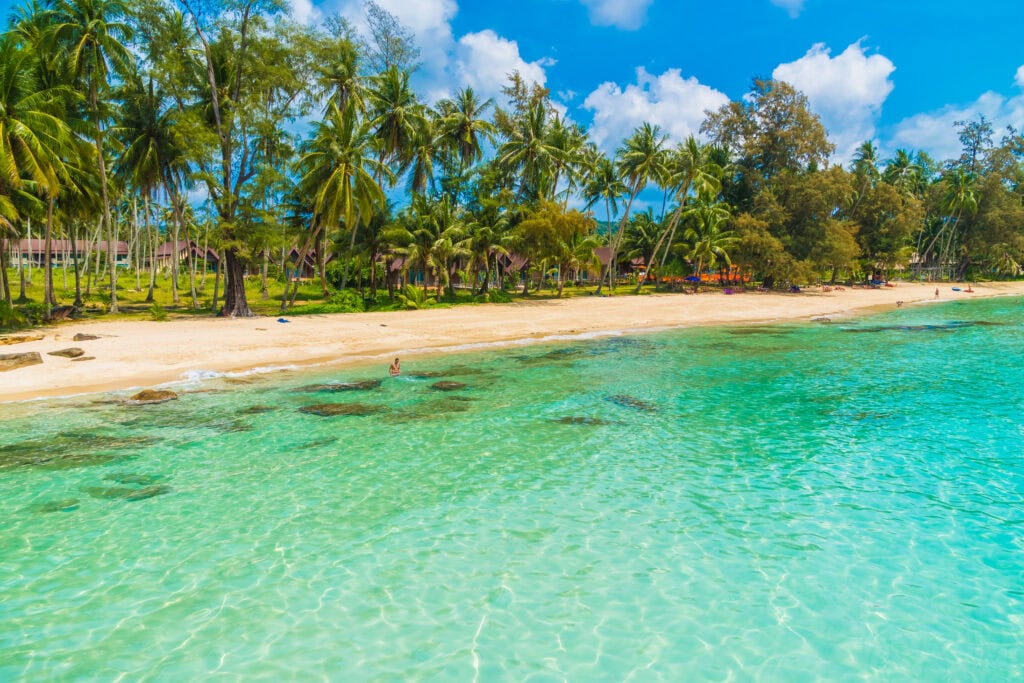
Introduction: A Quiet Beach Base on Thailand’s Andaman Coast
If you are planning a Thailand trip from Europe and hoping to find a calm seaside base, Khao Lak is one of the most appealing stretches of coast. This guide to where to stay in Khao Lak is written for European travellers who enjoy space, quiet beaches and well-run resorts rather than nightlife or crowds.
Compared with more famous Thai destinations, Khao Lak offers a softer, more understated experience: long sandy bays, generous resort grounds and a slower rhythm that works well after time in Bangkok or on a wider Thailand itinerary. For overall trip structure and how Khao Lak might pair with the capital, it complements the orientation advice in Where to Stay in Bangkok for First-Time Visitors.
Geographically, Khao Lak sits on Thailand’s Andaman coast in Phang Nga province, roughly an hour north of Phuket Airport, spread along several different beaches rather than a single compact town.
Understanding Khao Lak’s Layout: A String of Quiet Beaches
Khao Lak is less a single resort town and more a series of beach areas strung along the main north–south coastal road (Route 4). Selecting the best Khao Lak area to stay depends on how secluded you want to be and how much you value being able to walk to cafés, massage places and low-key bars.
Most visitors divide Khao Lak into a few main zones, all sharing a relaxed, low-rise feel:
- Bang La On (Nang Thong Beach) – Sometimes called “Khao Lak Town”, this is the most developed area, with the highest concentration of restaurants, small shops and services, directly behind a long beach.
- Bang Niang – A little further north, with a night market, a scattering of beachside and roadside dining, and a mix of mid- to high-end Khao Lak resorts.
- Khuk Khak and Pakarang – More spread-out and residential, with wide beaches and larger resort plots, excellent for those who want a quieter environment.
- Further north (Pak Weep, Bang Sak) – Increasingly peaceful, with long, semi-wild stretches of sand and a handful of refined, often more self-contained resorts.
Everything lies along the coast, but walking between these zones is often impractical in the heat; you will generally rely on taxis, songthaews (shared pick-up trucks) or resort shuttles for longer distances.
Bang La On & Nang Thong Beach: Balanced Comfort and Convenience
For many European visitors, Bang La On is the best compromise between quiet beaches and everyday convenience. Nang Thong Beach runs for several kilometres, backed by coconut palms and low-rise Khao Lak resorts that rarely feel cramped, even in high season.
The beach itself has soft sand with some rocky sections, and sunsets can be particularly vivid. It is not a party area, but there is enough life to feel gently sociable: small bars set back from the sand, family-run Thai restaurants, a few European-style cafés and basic services such as pharmacies and ATMs along the main road.
Bang La On suits you if:
- You like to walk out of your resort and choose from several dinner options without arranging transport.
- You appreciate a quiet atmosphere but do not want to feel isolated.
- You are visiting Khao Lak for the first time and want straightforward orientation.
The trade-off is that, by Khao Lak standards, this is the busiest stretch. If your priority is absolute seclusion and the softest sense of escape, you may prefer to base yourself slightly further north.
Bang Niang: Low-Key Energy with Quiet Beachfront
Bang Niang is a few minutes’ drive north of Bang La On and feels a touch more laid-back, even though it has its own modest hub of activity. The beach is broad and relatively uncrowded, and the atmosphere remains calm, particularly during the day when many visitors are out on excursions.
Behind the beach, the main road area hosts Bang Niang Market several nights per week. This is not a noisy party spot but it does draw a gentle buzz: food stalls, simple souvenir stands and a few bars with relaxed music. Many European travellers like Bang Niang as a base because it offers a little local life while keeping a distinctly unhurried tone.
Bang Niang is a strong option if you:
- Want access to a night market and a small choice of bars without late-night noise.
- Enjoy walking along the beach between resorts and simple beach restaurants.
- Plan day trips (for example, to the Similan or Surin islands) and value easy pick-up from your accommodation.
The compromise is that the layout feels somewhat linear; you will often walk along the main road to reach facilities rather than through a compact centre. Still, for many, this area offers the ideal balance of quiet beaches and just enough atmosphere.
Khuk Khak and Pakarang: Wide Sands and Space to Breathe
Khuk Khak and the Pakarang Peninsula mark a clear step towards quieter beaches in Thailand while still being part of the wider Khao Lak area. Distances between resorts increase, and you begin to feel the spaciousness that defines this part of the coast.
Khuk Khak Beach is broad and often feels almost empty, especially in the mornings. You may see local fishers launching longtail boats or families walking dogs, but very little commercial activity. The sea can be more powerful here, particularly in the green season, so it suits confident swimmers best during the calmer months.
Pakarang curves gently north, with casuarina trees and patches of reef offshore. Several premium Khao Lak resorts sit on more generous plots here, so even when they are well occupied, there is typically a sense of privacy and calm. This area is ideal if you:
- Prefer to spend long, quiet days on the sand with minimal interruption.
- Enjoy resort facilities such as larger pools, landscaped gardens and spa spaces.
- Do not mind relying on resort shuttles or short taxi rides for most dining beyond the property.
The downside is that independent dining and shopping are more limited. Some visitors choose Khuk Khak or Pakarang for a few days of retreat at the end of a multi-stop holiday, after busier nights in cities or livelier islands.
North of Khao Lak Centre: Pak Weep and Bang Sak for Maximum Quiet
Further north, around Pak Weep and Bang Sak beaches, Khao Lak becomes truly quiet. Here, the coastline stretches in long, pale arcs with fewer built-up sections. The horizons feel wide, and you may walk for some time without seeing many other people, particularly early or late in the day.
These beaches lend themselves to slow routines: unhurried breakfasts, shaded reading by the pool, afternoon swims and sunset walks along the shore. The ambience is more about retreat than exploration. Many resorts in this area are relatively self-contained, designed for guests who are content to stay mostly on-site.
Consider staying here if:
- Your priority is calm, green surroundings and a sense of seclusion.
- You are comfortable with limited nightlife and fewer independent restaurants.
- You are travelling as a couple, on a relaxed family holiday or simply seeking rest after a long-haul flight and busy cities.
From this northern end, the main town areas of Khao Lak are still reachable by taxi, but journeys are longer and costs add up if you travel frequently. For many, that distance is precisely what keeps these beaches peaceful.
Choosing the Right Khao Lak Resort Style for a Quiet Stay
Across Khao Lak, you will find a spectrum of resort styles, from compact boutique properties to expansive beachfront estates. The common thread is a preference for low-rise buildings and tropical landscaping rather than dense blocks of rooms.
When deciding where to stay in Khao Lak, it helps to match resort style to your expectations for quiet:
- Beachfront resorts – Direct access to the sand and sea, often with sunset-facing pools and beachside dining. These can be particularly serene in Khuk Khak, Pakarang and the northern beaches.
- Set-back or garden resorts – Properties located slightly off the beach, sometimes a short walk or shuttle ride away, with lush gardens that can feel very peaceful and insulated from the main road.
- Adults-focused options – While not universal, some properties lean towards a more grown-up ambience, which can make pool and restaurant areas calmer.
- Family-friendly resorts – These can still be quiet, especially in Khao Lak’s relaxed context, but pool areas may be livelier during holiday periods.
For the quietest experience, consider room locations away from main pools or bars, and look for resort maps that show how close rooms are to communal areas. Many Khao Lak resorts are spacious enough to offer genuinely tranquil corners even when occupancy is high.
Access, Transport and Day Trips from a Quiet Khao Lak Base
Although Khao Lak feels remote compared to Phuket or Krabi, it is straightforward to reach and works well as a calm base for exploring the Andaman coast. Most European travellers arrive via Phuket International Airport, then continue by road along the coast, with the drive usually taking around an hour to the central areas.
Once you are in Khao Lak, you will likely move around by taxi or resort shuttle. Distances between the main beaches are modest by European standards, but the heat and lack of continuous pavements make walking longer stretches less appealing. Many visitors settle into a simple pattern: beach time, local walks near their resort and occasional taxi trips into Bang La On or Bang Niang for a change of scene.
From a quiet Khao Lak base, you can still access a range of excursions:
- Marine trips – Day trips to the Similan or Surin Islands for snorkelling and diving, typically departing early to make the most of calmer seas and better visibility.
- Nature and national parks – Inland, Khao Sok National Park offers jungle scenery, river trips and lake visits that contrast beautifully with coastal days.
- Cultural stops – Local temples, memorials and small towns give a glimpse of everyday life in Phang Nga province without the crowds found in major cities.
Because Khao Lak is quieter at night, many visitors appreciate structuring their days around morning or full-day activities, then returning to the beach for sunset and an unhurried dinner.
Practical Travel Tips for a Quiet Stay in Khao Lak
- Plan arrival via Phuket Airport and arrange a transfer in advance or through your accommodation for a smoother journey after a long flight from Europe.
- Check seasonal patterns: the dry season (roughly November to April) brings calmer seas and clearer water, while the green season can mean stronger waves and more frequent showers.
- For maximum quiet, avoid major holiday periods when domestic visitors and international families are more numerous, especially around Christmas, New Year and Easter.
- Choose your beach carefully: Bang La On and Bang Niang offer convenience and a village feel, while Khuk Khak, Pakarang, Pak Weep and Bang Sak are better for seclusion.
- Expect to use taxis or hotel shuttles in the evenings if you stay in the more remote northern beaches and wish to dine elsewhere.
- Pack light cover-ups and insect repellent for evenings, as outdoor dining and garden settings are common across Khao Lak.
- Sea conditions can vary; heed local flags and lifeguard advice, particularly if travelling with children or visiting outside the dry season.
- Cash is still useful for small restaurants, roadside stalls and markets, although many Khao Lak resorts and larger venues accept cards.
- Dress codes are relaxed, but modest clothing is appreciated when visiting temples or local towns away from the beach.
- Allow recovery time after long-haul travel: many European visitors schedule their first full day in Khao Lak as a quiet beach day before tackling excursions.
FAQs About Where to Stay in Khao Lak
Which part of Khao Lak is best for a quiet beach stay?
For the quietest beaches, look towards Khuk Khak, Pakarang, Pak Weep and Bang Sak, where resorts are more spaced out and the coastline feels more natural. Bang La On and Bang Niang remain relatively calm but offer a livelier, more practical base.
Are Khao Lak resorts suitable for couples seeking peace and privacy?
Yes. Many Khao Lak resorts cater well to couples, with spacious grounds, spa facilities and restful pool areas. Adults-focused wing options and beachfront suites are often designed to maximise privacy and quiet, especially in the less central beach areas.
Is Khao Lak a good alternative to busier Thai islands?
Khao Lak works well if you like the idea of quiet beaches in Thailand but prefer not to be on a small island. It has enough infrastructure for comfort while remaining far less crowded than major island hubs, with easy access to marine national parks for day trips.
How far are the quietest Khao Lak beaches from restaurants and shops?
On the northern beaches, many facilities are within your resort or a short taxi ride away. You will not find dense clusters of shops directly behind Pak Weep or Bang Sak, which is part of their appeal for those seeking a calmer setting.
Is Khao Lak suitable for families who want a peaceful holiday?
Khao Lak can suit families very well, particularly those who prefer relaxed days by the pool or on the sand rather than busy entertainment. Choosing a family-friendly property in Bang Niang or Bang La On offers a useful compromise between quiet and access to services.
Conclusion: Quiet Khao Lak as a Restful Andaman Base
Choosing where to stay in Khao Lak is largely about deciding how far along the spectrum from convenience to seclusion you want to be. Central beaches like Nang Thong and Bang Niang provide a comfortable mix of quiet sands and simple amenities, while Khuk Khak and the northern stretches emphasise space, calm and a sense of retreat.
For European travellers, Khao Lak offers a gentle introduction to Thailand’s Andaman coast: understated, low-rise and free from heavy crowds, yet with enough structure to feel comfortable after a long journey. The key trade-off is that increased quiet often comes with greater reliance on resort facilities and short taxi journeys, a balance that many find well worth it for a peaceful stay by the sea.
Recommended next:
- Thailand Itinerary 10 Days: Bangkok, Chiang Mai & Islands for First-Timers
- Thailand Itinerary 14 Days: Classic Route with Beaches and Northern Culture
- Thailand in 7 Days: Bangkok + One Beach Base (No Rushing)
- Best Time to Visit Thailand: Month-by-Month Weather for Europeans
- Thailand Travel Costs: Realistic Daily Budget for European Travelers
- Thailand Travel Insurance Guide: What to Cover and What to Skip
- More in Thailand →