Where to Stay in Chinatown Singapore for Heritage and Hawker Culture
This guide is for European travellers who want their stay in Singapore to feel rooted in the city’s history, food traditions and everyday rhythms rather than in a generic business district. If you are wondering where to stay Chinatown Singapore to be surrounded by heritage shophouses, shrines and local hawker centres, this is the part of the city that keeps its past in constant view. Chinatown lies just southwest of Singapore’s modern Downtown Core, within walking distance of the Central Business District and a few MRT stops from Marina Bay. For a broader overview of how Chinatown fits among the city’s main districts, it can be helpful to read a wider look at the best areas to stay in Singapore for first-time visitors before focusing on this historic quarter. Chinatown’s compact size, layered immigrant history and dense food scene make it one of the most immersive areas to stay, especially if you enjoy exploring on foot and are curious about the city’s Chinese, Peranakan and wider Southeast Asian heritage.Chinatown Orientation: Streets, Sub-Districts and First Impressions
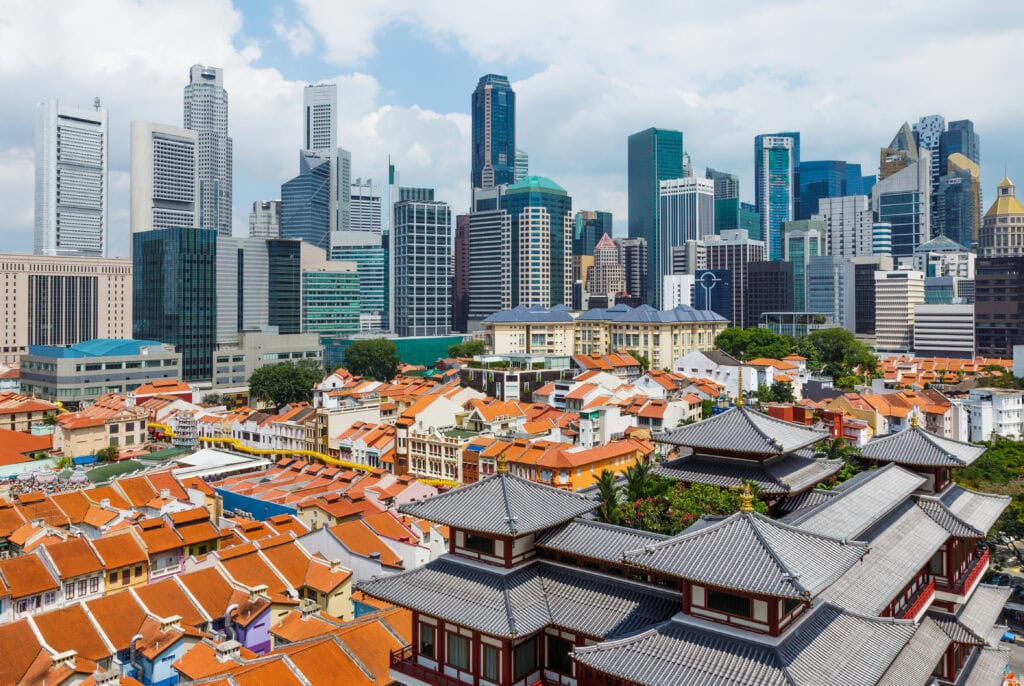
Chinatown is not a single street but a small cluster of historic neighbourhoods threaded between South Bridge Road and New Bridge Road, framed by the skyscrapers of Tanjong Pagar and the Singapore River. Most visitors gravitate towards three sub-areas: Pagoda Street and its adjacent lanes around Chinatown MRT; the stretch of South Bridge Road lined with temples; and the atmospheric streets of Keong Saik and Bukit Pasoh close to Outram Park MRT. The first impression is of low-rise shophouse streets set against an almost cinematic backdrop of glass towers. Five-foot ways shelter pedestrians from tropical rain and sun, Chinese characters adorn signboards, and red lanterns often bridge the lanes above your head. This is one of the few districts where heritage shophouses form an almost continuous streetscape, so where you choose to stay will determine what you see each time you step outside. Chinatown hotels range from converted shophouses on quieter side streets to more contemporary properties along main roads near the MRT. The feel can shift dramatically within a few minutes’ walk, from bustling souvenir stalls and evening crowds to tranquil back lanes with clan associations and traditional medicine shops.Staying Among Shophouse Streets: Heritage at Your Doorstep
If heritage immersion is your priority, focus your search on the tight grid of shophouse streets between South Bridge Road and New Bridge Road, and the elegant row of Keong Saik Road leading towards Outram Park. These areas are dense with late-19th- and early-20th-century shophouses, many now restored with colourful facades, louvered shutters and ornate plasterwork. Choosing a base on or near Keong Saik Road offers a strong sense of place. This once-notorious street has evolved into a design-conscious enclave where traditional clan associations share space with independent cafes and low-key bars housed in heritage buildings. The lanes around Bukit Pasoh Road have a similarly preserved feel, slightly quieter and with a touch more old-world grace, suited to travellers who value characterful surroundings over views or large-scale facilities. A stay close to Pagoda Street or Temple Street places you in the very heart of the tourist-friendly part of Chinatown. It is busy from mid-morning until late evening, but it also means that key temples, markets and hawker centres are no more than a few minutes’ walk. This location suits visitors who want to be in the thick of things and do not mind a certain level of street noise and activity. By contrast, the shophouse streets edging towards Tanjong Pagar—such as Teck Lim Road or sections of Neil Road—feel more residential and calm while still within easy reach of Chinatown’s core. These streets appeal to travellers who are seeking a heritage setting but prefer a softer, more lived-in ambience rather than the constant buzz of the main market lanes.Hawker Culture: Staying Close to Chinatown’s Food Hubs
One of the strongest reasons to stay in Chinatown is the proximity to some of Singapore’s most storied hawker centres. For travellers from Europe, these open-air food courts are a way into the city’s social life as much as its cuisine, and having one nearby can quietly structure your days around local mealtimes and rituals. Chinatown Complex Food Centre is the most significant of these. Tucked within the large yellow housing complex just off Smith Street, it holds hundreds of stalls serving everything from Hainanese chicken rice and char kway teow to Teochew desserts and kopi. Staying in the streets immediately surrounding it—Smith Street, Trengganu Street, Sago Street—means you can slip in for breakfast among elderly regulars, return for a late lunch to escape the midday heat, and wander back in the evening for a bowl of noodles or a plate of satay. Nearby, the atmospheric Telok Ayer area, a short walk from Chinatown MRT, is lined with conserved shophouses housing eateries and cafes, while Maxwell Food Centre sits just across South Bridge Road on the edge of the CBD. A base near South Bridge Road or Telok Ayer Street allows you to flow naturally between heritage temples, colonial-era churches and some of the country’s best-known hawker stalls. If food culture is central to your trip, consider how far you want to walk in the heat each day. A few hundred metres’ difference can mean the choice between spontaneous, frequent visits to hawker centres and needing to plan around them. Staying within a five- to ten-minute stroll of Chinatown Complex or Maxwell Food Centre gives you the luxury of seeing hawker culture as part of your daily routine rather than an outing.Transport and Connectivity: How Well-Linked Is Chinatown?
Chinatown is one of Singapore’s best-connected heritage districts, which makes it practical as a base even if you plan to explore widely. Chinatown MRT station sits on both the Downtown (blue) and North East (purple) lines, while Outram Park—within walking distance of Keong Saik and Bukit Pasoh—offers an interchange between the East West, North East and Thomson–East Coast lines. From Chinatown MRT, Marina Bay is just a few stops away on the Downtown Line, while Clarke Quay and Dhoby Ghaut are easily reached on the North East Line. Buses along Eu Tong Sen Street and New Bridge Road link to the riverfront and Orchard Road, and taxis are readily available along the main arteries, even late at night. The area is also exceptionally walkable by Singapore standards. Many key sites, such as the Buddha Tooth Relic Temple, Sri Mariamman Temple and Thian Hock Keng Temple, can be explored on foot within a compact radius. Walking to the fringes of the CBD or the riverfront near Boat Quay is realistic in the evening when the heat softens, offering a sense of how old and new Singapore interlock. Staying on a quieter side street just off a main road usually gives the best balance: easy access to MRT stations and bus routes alongside more tranquil nights. Visitors sensitive to noise might prefer locations a street or two away from the core market lanes and bar clusters, especially around weekend evenings.Who Chinatown Suits: Types of Travellers and Trade-offs
Choosing to base yourself in Chinatown is ultimately a decision to prioritise atmosphere over formality. European visitors with a strong interest in architecture, immigration history and food culture often find the district particularly rewarding. Chinatown works well for:- Travellers who enjoy walking and wandering through historic streets, with frequent pauses for coffee, snacks or small museums.
- Food-focused visitors eager to engage with hawker culture and try a broad range of dishes within a small geographic area.
- Culturally curious travellers who appreciate seeing temples, clan houses and traditional trades interwoven with everyday life.
- Short city breaks where efficient MRT access and dense sightseeing in one zone are more important than resort-style facilities.
Heritage Highlights Near Your Door: Temples, Museums and Everyday Rituals
Part of the appeal of staying in Chinatown is the way cultural sights naturally layer onto your daily routine. Rather than visiting them in a single, concentrated outing, you may find yourself passing the same temple or ancestral hall at different times of day and seeing distinct atmospheres each time. Key streets like South Bridge Road host several of the district’s most significant religious sites. The richly ornamented Sri Mariamman Temple, Singapore’s oldest Hindu temple, sits close to the Buddha Tooth Relic Temple, whose monastery complex houses a small museum and rooftop garden. These landmarks are not isolated monuments but active religious centres, so staying nearby allows you to witness ceremonies, offerings and the ebb and flow of worshippers. Along Telok Ayer Street, shophouses kneel beside Thian Hock Keng Temple and other smaller shrines, offering insight into how early Chinese migrants expressed gratitude for safe sea journeys. Walking this axis from Chinatown towards the CBD gives a compressed history lesson: from clan associations and merchant houses to the steel and glass of modern finance. Small galleries and heritage centres are scattered through the district, often tucked above street level in shophouses. While none are large, they complement the more visible temples and allow for reflective pauses, particularly in the late afternoon when the heat is at its most intense.Practical Tips for Staying in Chinatown
- Use the MRT for longer hops: Chinatown and Outram Park stations are your main anchors; both connect quickly to Marina Bay, the riverfront and Orchard Road.
- Plan walking routes along shaded arcades: The five-foot ways of the shophouse streets offer cover from sun and showers; map paths using these rather than only major roads.
- Time hawker visits: Arrive early for breakfast or a late lunch at Chinatown Complex or Maxwell Food Centre to avoid the busiest periods and secure seating more easily.
- Expect evening crowds: Streets such as Smith Street and Pagoda Street can be lively late into the evening; choose a room facing an inner courtyard or back lane if you prefer quiet.
- Dress for temple visits: Shoulders and knees should be covered in major temples; carry a light scarf or shawl if you are out in lighter clothing.
- Carry cash for smaller stalls: Many hawker stalls accept digital payments, but some still prefer cash, especially older vendors.
- Mind the climate: Humidity can be intense in narrow streets; pace walks, pause in air-conditioned cafes, and drink water regularly.
- Late-night returns: Taxis and ride-hailing services are straightforward from main roads, but smaller lanes can be one-way or restricted; check your accommodation’s nearest pick-up point.
FAQs: Staying in Chinatown Singapore
Is Chinatown a good base for first-time visitors to Singapore?
Chinatown works well for first-time visitors who value heritage streets, temples and hawker culture over resort-style amenities. It is central, well-connected by MRT and compact enough to explore on foot, making it easy to combine cultural immersion with day trips to other districts.How are Chinatown hotels different from those in Marina Bay or Orchard Road?
Many Chinatown hotels occupy converted shophouses, meaning more intimate buildings, distinctive facades and often slightly smaller room footprints. In contrast, Marina Bay and Orchard Road tend to offer larger, high-rise properties with expansive facilities. Chinatown prioritises atmosphere and neighbourhood life rather than grand scale.Is it noisy to stay near the hawker centres in Chinatown?
Areas immediately surrounding Chinatown Complex and the busiest shophouse streets can remain lively into the evening, with conversation and kitchen sounds drifting up. Those seeking quiet should look for accommodation on adjacent, less-trafficked lanes or towards the Keong Saik and Bukit Pasoh area, which generally feels calmer after midnight.How easy is it to reach Chinatown from the airport?
From Changi Airport, the MRT journey involves a simple line change and takes under an hour, with Chinatown and Outram Park stations serving the district. Taxis and ride-hailing services offer a more direct route and are straightforward to use, especially if you arrive with luggage or after a long-haul flight from Europe.Are there family-friendly places to stay in Chinatown?
Families who enjoy city walking and food exploration can be very comfortable in Chinatown, particularly on quieter streets slightly away from bar clusters. The proximity to hawker centres, temples and the riverfront ensures varied, low-key outings without long journeys across the city.Conclusion
Staying in Chinatown places you at the intersection of Singapore’s migrant history, everyday food culture and contemporary urban life. The trade-off is fewer grand views and large-scale facilities, yet the reward is waking each day amid shophouse streets, incense-scented temples and hawker centres that anchor the city’s identity. For travellers who value immersion over spectacle, it is one of the most characterful parts of Singapore to call home for a few days.Recommended next:
- Where to Stay in Singapore CBD for Business and Leisure
- Best Boutique Hotels in Singapore for Design Lovers
- Luxury Hotels near Singapore MRT Stations
- Best Rooftop Pool Hotels in Singapore
- Best Areas to Stay in Singapore Without Breaking the Bank
- Where to Stay in Singapore for First-Timers: Simple Area Guide
- More in Singapore →