Staying in Singapore for a True Urban Experience
This guide is for European travellers who love cities and want to experience Singapore not just as a stopover, but as a dense, walkable metropolis with character. Instead of retreating to resort-style enclaves, staying in carefully chosen urban hotels in Singapore allows you to plug into the city’s rhythm, from morning hawker breakfasts to late-night skyline views. For a broader overview of neighbourhoods and how they fit together, the detailed area breakdown in this Singapore hotel area guide offers useful context.
Citywide, Singapore is compact yet layered: soaring financial towers, heritage shophouses, ethnic quarters and waterfront promenades all sit within a short distance of one another. Choosing the right metropolitan stays shapes how you experience this urban lifestyle in Singapore, from your daily commute on the MRT to the streets you walk after dark.
Think of the city as a constellation of small districts rather than one generic downtown; where you sleep will influence which side of Singapore’s urban personality you get to know best.
Understanding Singapore’s Urban Layout: Where City Life Happens
To choose the right urban hotel, it helps to understand how Singapore’s central areas connect. The Central Business District (often referred to simply as the CBD) and Marina Bay form the modern skyline core, wrapped by older commercial and cultural quarters such as Orchard Road, Bugis, Chinatown, Kampong Glam and Little India. Further out, neighbourhoods like Tiong Bahru and the riverfront around Clarke Quay blend residential streets with dining, nightlife and creative spaces.
The good news for urban travellers is that the city centre is highly walkable in pockets and tightly linked by MRT lines. You can stay in one district and still access others within 10–20 minutes. The key is to match your preferred pace of urban life: high-rise and polished, creative and bohemian, or culturally immersive and slightly chaotic.
European visitors used to dense but historic cities such as Paris, Barcelona or Vienna will recognise the appeal of Singapore’s mixed streetscapes: shophouse facades and old markets sit in the shadow of glass towers, and your choice of area determines which of these you encounter each time you step out of your hotel.
Skyline, Water and Glass: Urban Hotels Around Marina Bay and the CBD
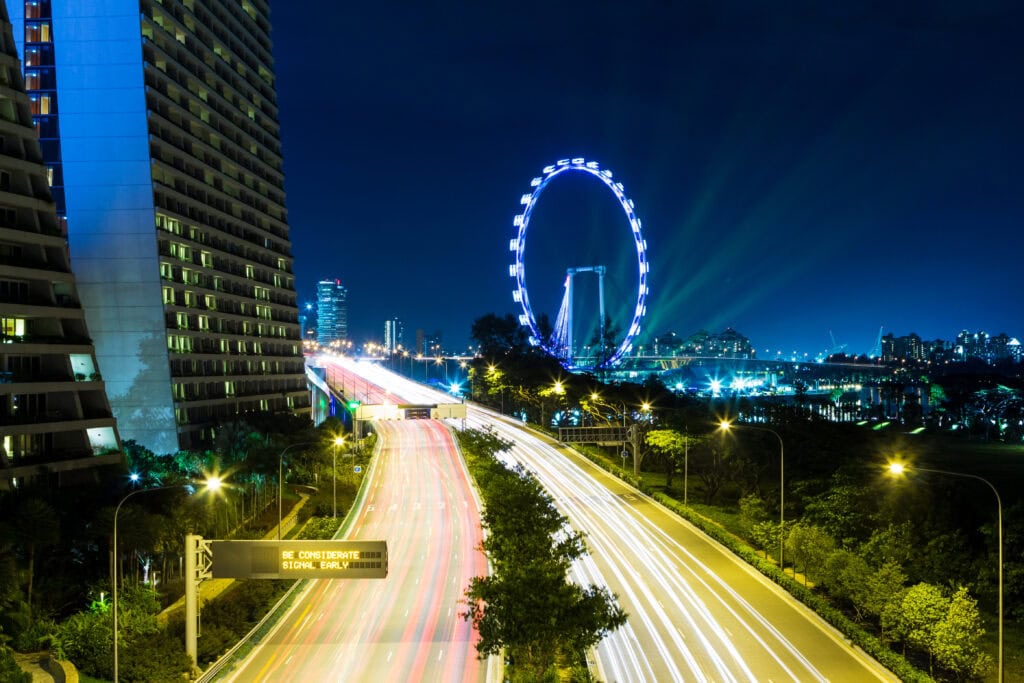
For a quintessential big-city experience defined by scale, light and architecture, the Marina Bay and CBD area delivers Singapore at its most cinematic. Here, urban hotels in Singapore typically occupy high-rise towers, with rooms overlooking the bay, the river, or the dense grid of office buildings. This is the city’s financial and civic heart, ideal if you enjoy feeling embedded in a global metropolis.
Daytime is marked by commuters and business lunches; evenings see joggers circling the bay, and the skyline gradually lighting up. For travellers, this area suits those who value sleek public spaces—wide promenades, rooftop bars, contemporary art installations—and efficient access to the MRT network. It offers perhaps the most obvious form of urban lifestyle Singapore can show: fast-paced, polished, and design-driven.
The trade-off is that traditional street life is a little more curated and less spontaneous than in older neighbourhoods. Food options often sit within upscale malls or integrated developments, and you might find yourself seeking out nearby districts when you crave informal hawker centres or late-night local bars. Still, as a base for first-time visitors who want a strong sense of Singapore’s modern identity, this is a compelling city experience hotel zone.
Retail Boulevards and High-Rise Comfort: Orchard Road as an Urban Base
Orchard Road is Singapore’s long-established commercial spine, lined with malls, office towers and hotels. Staying here appeals to travellers who enjoy the urban intensity of major European shopping districts: constant movement, bright facades, and every convenience close at hand. Urban hotels in this area often combine views over tree-lined boulevards with easy underground connections via the MRT and pedestrian tunnels.
From an immersion perspective, Orchard Road’s charm is less about traditional culture and more about the rituals of city life: grabbing coffee in a busy café, navigating multi-level malls, or slipping into quieter residential streets just beyond the main road. In the evenings, the area is well lit, active and generally comfortable to explore on foot, which can be reassuring if you are new to Southeast Asian cities.
However, Orchard is more polished than gritty. Those looking for an edgier urban lifestyle Singapore might find it a little homogeneous. As a compromise, some travellers choose Orchard for its connectivity and then explore culturally rich districts during the day, using this boulevards-and-malls corridor as a convenient urban retreat between outings.
Historic Streets and Everyday Life: Chinatown, Little India and Kampong Glam
If you are drawn to neighbourhoods where daily life spills onto the street, the historic quarters surrounding the city core offer a deeply textured urban experience. In Chinatown, restored shophouses host everything from traditional medicine halls to contemporary cafés, with residential blocks and markets threading between them. Little India feels denser and more sensory, with colourful facades, temple processions and music spilling from shops late into the night.
Urban hotels in these quarters place you amid markets, temples and family-run eateries. Here, the urban lifestyle Singapore offers is more about community rhythms than polished waterfront views. Mornings start with deliveries to market stalls; evenings bring incense, food aromas and social gatherings on street corners. For some visitors this is energising and authentic; for others it can feel busy and overstimulating.
Kampong Glam, centred around the Sultan Mosque and Haji Lane, adds a creative layer with street art, boutique shops and Middle Eastern eateries. The built environment is lower-rise than Marina Bay or Orchard, but still categorically urban: narrow lanes, mixed-use buildings and a constant background hum of activity. For travellers interested in photography, heritage architecture and multicultural daily life, these districts provide a compelling alternative to high-rise city experience hotels.
Riverside and Nightlife Energy: Clarke Quay and the Singapore River
For those who associate vibrant city trips with riverfront walks and evening crowds, the Singapore River corridor around Clarke Quay and Boat Quay offers a different slice of metropolitan stays. Once a working river lined with warehouses, it has evolved into a string of dining and nightlife clusters, with a mix of modern residences and hotels set just behind the quays.
Staying near Clarke Quay means easy access to bars, restaurants and illuminated riverside paths. It is particularly attractive to travellers who like to walk home after dinner rather than navigate late-night transport. The ambience is unmistakably urban lifestyle Singapore: outdoor seating, international crowds, local office workers unwinding after work, and music carrying across the water.
The trade-off is noise and a stronger focus on entertainment than on traditional culture. If you prefer quiet evenings, you may want to choose a hotel slightly set back from the busiest stretches of the river. During the day, paths along the river become relaxed walking routes towards the CBD or Robertson Quay, offering a pleasant way to experience the city’s urban fabric at a gentler pace.
Creative and Residential Urbanity: Bugis, Bras Basah and Tiong Bahru
Not all urban hotels in Singapore sit among office towers. Some of the most interesting stays for city immersion are found in more residential yet still central neighbourhoods. The Bugis and Bras Basah area, for example, is an evolving cultural district with museums, arts schools, historic streets and contemporary retail all within walking distance. Here, the city experience hotels tend to be mid-rise, surrounded by a blend of heritage shophouses and newer developments.
By contrast, Tiong Bahru showcases a different side of the urban lifestyle Singapore has cultivated: early 20th-century low-rise blocks with curved balconies, leafy side streets, and a growing café and gallery culture. From a European perspective, it feels closer to a compact, village-like quarter within the city, where you can observe daily routines—morning markets, school runs, neighbours chatting in courtyards—while still being a brief MRT ride from the downtown skyline.
These districts suit travellers who value walkability and local nuance over landmark views. Streets feel lived-in rather than curated, and you might find yourself returning to the same coffee shop or hawker centre several days in a row, gaining a subtle sense of belonging that is sometimes missing in more transient business districts. For broader orientation across these and other areas, the citywide overview in this Singapore neighbourhood stay guide can be a useful reference.
Choosing Your Urban Base: Matching Neighbourhoods to Travel Style
Given Singapore’s compact size, no single district is objectively “best” for urban immersion; rather, each offers a distinct micro-experience. For travellers who enjoy dramatic skylines and architectural icons, Marina Bay and the CBD provide that classic global-city sensation. Those who prefer retail energy and comfort might lean towards Orchard Road, accepting its commercial focus as part of the experience.
For a more layered, multicultural city break, Chinatown, Little India and Kampong Glam offer dense street life and strong visual identity, though with more sensory intensity and less polished streetscapes. Riverfront areas such as Clarke Quay give night owls a lively base, while Bugis, Bras Basah and Tiong Bahru deliver a “local urban” feel that rewards slow exploration.
Whichever you choose, pay attention to MRT connectivity as this determines how easily you can sample other sides of the city. Many European travellers appreciate mirroring their home-city habits: walking to a favourite café, using public transport as default, and returning in the evening to a neighbourhood that matches their preferred level of noise and activity. In Singapore, that choice is primarily a matter of which urban hotel district you adopt as your temporary home.
Practical Travel Tips for an Urban Stay in Singapore
Prioritise MRT access: When looking at hotels, focus on those within a short, shaded walk of an MRT station such as City Hall, Raffles Place, Orchard, Bugis, Chinatown or Little India to keep travel times efficient.
Plan for the climate: Singapore’s heat and humidity are constant; choose urban routes that pass through malls, covered walkways or underground links to stay comfortable during midday walks.
Time your walking explorations: Early mornings and evenings are best for exploring compact neighbourhoods like Tiong Bahru, Kampong Glam and Chinatown on foot.
Use contactless payments on transport: European contactless bank cards usually work directly on MRT and buses, simplifying movement between districts.
Expect strong air-conditioning: Carry a light layer when moving between the humid streets and the cool interiors of malls, offices and trains.
Respect local norms: Eating on public transport is not allowed, and reserved seats on the MRT should be given up to those who need them, even if the train is busy.
Plan late-night returns: While central areas are generally safe, check the last MRT times if you are staying in quieter neighbourhoods and heading to Clarke Quay or the riverfront at night.
Use mixed transport: Combine the MRT with short taxi or ride-hail journeys to bridge gaps between districts, especially when moving from hillier residential zones to the waterfront.
Embrace hawker centres: For a true city-living feel, make local food courts part of your routine—many are integrated into housing estates or near markets, giving insight into everyday life.
Stay hydrated: Keep water with you, particularly when exploring on foot, and take regular indoor breaks to avoid fatigue in the heat.
FAQs About Urban Hotels and City Life in Singapore
Which area offers the most authentic urban lifestyle in Singapore?
For an intense, everyday-city feel, Chinatown, Little India and Kampong Glam stand out thanks to their markets, temples and constant street activity. If you prefer a softer, residential urbanity, Tiong Bahru and parts of Bugis and Bras Basah offer a more relaxed but still distinctly city-based lifestyle.
Are urban hotels in Singapore well connected by public transport?
Yes, most central urban hotels in Singapore sit within walking distance of at least one MRT station, and often several bus routes. Marina Bay, Orchard Road, Bugis, Chinatown and the CBD are particularly well connected, making it easy to move between distinct neighbourhoods without relying heavily on taxis.
Is it better to stay by Marina Bay or in a historic district for a city experience?
Marina Bay and the CBD emphasise skyline views, architectural landmarks and a polished city environment, while historic districts highlight culture, food and daily routines. Your choice depends on whether you value visual spectacle and modern design more than immersive street life and heritage architecture.
Do metropolitan stays in Singapore feel safe for walking at night?
Central Singapore is generally considered safe, and many locals and visitors walk between MRT stations, riverfront areas and hotels late into the evening. As with any large city, it is still wise to stay aware of your surroundings, stick to well-lit streets, and follow basic urban common sense.
How many days are ideal to experience Singapore’s city life?
Allow at least three full days if you want to experience contrasting sides of Singapore’s urban character—modern bayfront, heritage quarters, residential neighbourhoods and the riverfront—without rushing. With more time, you can treat the city less like a checklist of sights and more like a place to inhabit temporarily.
Conclusion
Staying in urban hotels in Singapore is less about a single landmark and more about choosing which version of city life you want outside your front door: glass towers and wide promenades, historic lanes and markets, riverside evenings or quiet residential cafés. The city’s compact scale and efficient transport make it easy to sample multiple districts, but your chosen base will still shape your daily patterns, noise levels and views.
For European travellers who gravitate towards walkable streets, public transport, and observing local routines, Singapore offers a varied but coherent urban canvas—polished in parts, textured in others, and always distinctly metropolitan.
Recommended next:
- Where to Stay in Singapore CBD for Business and Leisure
- Best Boutique Hotels in Singapore for Design Lovers
- Luxury Hotels near Singapore MRT Stations
- Best Rooftop Pool Hotels in Singapore
- Best Areas to Stay in Singapore Without Breaking the Bank
- Where to Stay in Singapore for First-Timers: Simple Area Guide
- More in Singapore →