Hotel Areas in Singapore with the Best Transport Connections
This guide is for European travellers who value time-efficient movement around a city as much as stylish rooms and skyline views. In compact, hyper-organised Singapore, choosing the best connected hotels can dramatically shape how easily you move between neighbourhoods, attractions and meetings. While the city is relatively small, different districts offer very different levels of convenience, and understanding the public transport map helps you match your base to your style of travel. For a wider overview of neighbourhoods beyond pure connectivity, it can be helpful to cross-check with broader area-focused insights on where to stay in Singapore as you read this guide.
Geographically, Singapore’s most connected hotel zones stretch in a loose arc from Marina Bay and the Central Business District up through Orchard Road, with strong satellite hubs in Bugis, Little India and Chinatown, plus efficient links to Changi Airport. Most visitors rely on the MRT (metro) network, supported by buses and plentiful taxis, which together make moving between these areas fast and predictable.
Understanding Connectivity: How Singapore’s Transport Web Shapes Hotel Choice
Before zooming in on individual districts, it helps to understand what makes some hotel areas in Singapore feel exceptionally well connected. It is less about distance and more about the intersection of MRT lines, ease of transfers and how walkable the surroundings are from your hotel lobby. Excellent transport hub hotels tend to cluster where several MRT lines meet, with sheltered walkways, clear signage and nearby amenities such as food centres, malls and basic services.
The backbone of Singapore’s public transport is the MRT, which is clean, frequent and fully integrated. For travel efficiency, European visitors often prioritise areas where:
- At least two MRT lines intersect, reducing the need for long detours or multiple transfers.
- There is a direct or one-transfer route to Changi Airport on the East–West Line or Downtown Line.
- Major sightseeing clusters such as Marina Bay, Orchard, Chinatown and Little India are two to four stops away.
- Walkways are shaded or indoors, which matters more than you might expect in Singapore’s heat and humidity.
Choosing among the best connected hotels in Singapore is therefore an exercise in reading the map: prioritising interchange stations, judging how many everyday journeys you will make, and considering whether you prefer to walk, ride, or rely on taxis for the final stretch.
Marina Bay: Singapore’s Showcase with Seamless MRT Links
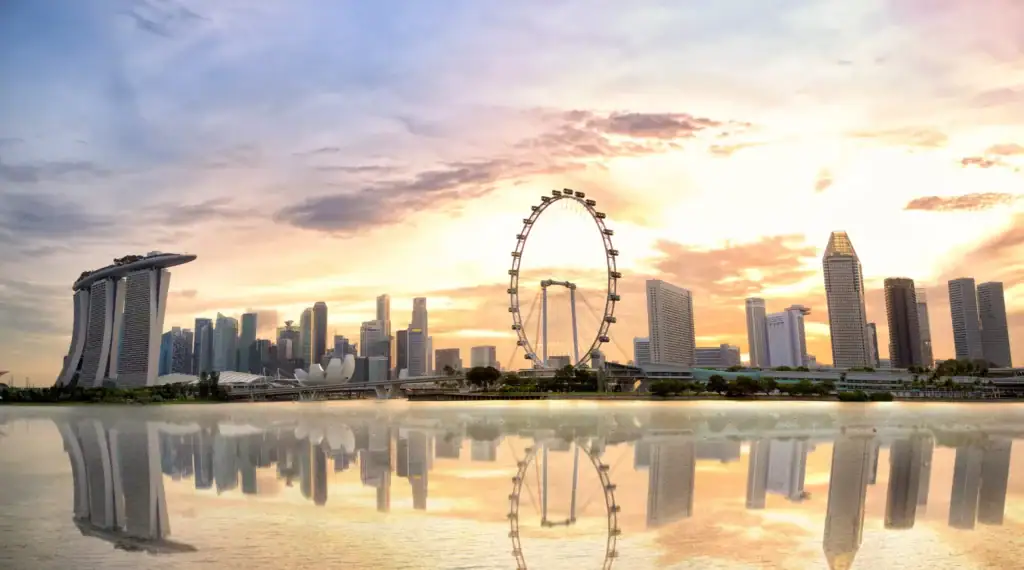
Marina Bay is the city’s architectural showpiece, but it is also one of the most efficient bases for moving around the island. Hotels here typically sit close to Marina Bay, Bayfront, Promenade or Esplanade MRT stations, which together form a dense cluster of lines: Circle (CC), Downtown (DT), North–South (NS) and Thomson–East Coast (TE). This web of connections makes Marina Bay one of the premier connected areas in Singapore for both leisure and business trips.
From a transport perspective, Marina Bay works especially well if you are mixing sightseeing with meetings. The MRT delivers you in minutes to the historic Civic District, the CBD at Raffles Place, Chinatown, Bugis and even Little India with simple transfers. Many walkways are air-conditioned, funnelling you through malls and underground passages that link hotels, stations and office towers, which significantly reduces weather-related fatigue.
The trade-off is that Marina Bay feels more formal and planned than some older parts of town. While it is superb for panoramic views, waterfront walks and direct access to attractions such as Gardens by the Bay, it is less atmospheric at street level than districts with shophouse streets and hawker centres. For travellers who prize movement and skyline over neighbourhood grit, however, Marina Bay hotels rank high among Singapore’s best connected options.
Orchard Road: Shopping Boulevard with Straight-Line Connectivity
Orchard Road is known globally as Singapore’s shopping heart, but underneath the malls and department stores lies a highly practical transport spine. The Orchard–Somerset–Dhoby Ghaut sequence along the North–South Line provides rapid north–south mobility, while Dhoby Ghaut functions as a key interchange, connecting the North–South, North East and Circle lines.
Staying along Orchard Road suits travellers who prefer simple, direct routes with minimal changes. Trips to Marina Bay, City Hall, Raffles Place and Changi Airport (with a single transfer to the East–West Line) are straightforward. Many hotels are directly connected to MRT stations via underground malls, allowing you to move from room to train almost entirely indoors.
The area is less central than Marina Bay in geographic terms, but it compensates with comfort, shelter and a strong mix of services, from pharmacies to supermarkets. For families and relaxed city breaks, Orchard’s connected hotels make moving around Singapore feel easy, even if you occasionally need to transfer lines for the more offbeat neighbourhoods.
CBD, Raffles Place and Tanjong Pagar: Business Districts as Transport Hubs
Singapore’s Central Business District (CBD) may look corporate at first glance, but it offers some of the most transport-efficient hotel locations in the city. Raffles Place, Telok Ayer and Tanjong Pagar stations sit at the heart of the grid, with the East–West, North–South, Downtown and Thomson–East Coast lines either converging here or passing within one or two stops.
For European travellers visiting Singapore for meetings, conferences or short urban stopovers, hotels in this zone deliver exceptional connectivity. Morning commutes to downtown offices are walkable, while evening MRT rides carry you quickly to Clarke Quay, Orchard or Marina Bay. The proximity of transport hubs makes these areas particularly attractive for those who need to compress multiple commitments into a few days.
From a pedestrian perspective, the CBD has improved significantly, with more green spaces, better crossings and an emerging food-and-bar scene in shophouse streets around Telok Ayer and Amoy Street. Yet the vibe remains business-first. If you prefer atmospheric heritage streets or a more leisurely pace, you might edge towards nearby Chinatown or Clarke Quay, which share many of the same MRT advantages but with softer edges.
Chinatown and Clarke Quay: Characterful Districts with Cross-City Access
Chinatown and Clarke Quay sit at a sweet spot between efficiency and character. Both areas are anchored by MRT stations on multiple lines: Chinatown station connects the Downtown and North East lines, while Clarke Quay lies on the North East Line one stop from Dhoby Ghaut and only a short ride to HarbourFront and Little India.
From a connected-hotel perspective, these districts offer some of the most balanced locations in Singapore. You are within walking distance of the CBD, Tanjong Pagar and Boat Quay, while Marina Bay and Orchard are a quick ride away. Buses and taxis fill in any gaps, and the riverfront setting offers a different sense of orientation from the grid of downtown streets.
The atmosphere here is notably livelier than in Marina Bay. Chinatown’s conserved shophouses and temples give a sense of continuity and scale that many visitors appreciate after a day among glass towers. Clarke Quay, meanwhile, has a more nightlife-oriented personality, which can be either a plus or a trade-off depending on your travel style and room orientation. Both serve as excellent bases for travellers who want strong transport hub hotels without sacrificing local colour.
Bugis and Little India: Colourful Interchange Zones with Direct City and Airport Access
Bugis and Little India are among the most practical areas for travellers who want to combine efficient transport with a strong sense of place. Bugis is particularly attractive for connectivity: Bugis station lies on both the East–West and Downtown lines, allowing easy cross-island travel including direct or one-transfer links towards Changi Airport and the central business areas.
Little India, anchored by Little India and Farrer Park stations on the North East and Downtown lines, offers similar advantages for moving across the city. The Downtown Line is especially useful for heading to the Botanic Gardens, Chinatown, Telok Ayer and the financial district, while the North East Line provides a quick run to Clarke Quay, Dhoby Ghaut and HarbourFront.
These districts feel more organic and sensory than some of the polished waterfront zones. Streets are busier, markets and food courts more prominent, and the urban fabric more varied. For some travellers this is precisely the charm: efficient transport layered over a lively, everyday cityscape. The trade-off can be a little less formality and occasionally denser crowds, especially around festival periods.
For a mid-trip change of scene, travellers interested in different neighbourhood characters often combine a stay here with time in more polished zones like Marina Bay; further orientation is available in detailed neighbourhood overviews of Singapore’s hotel areas.
Sentosa, HarbourFront and the Outliers: When Connectivity is a Deliberate Trade-Off
Not every excellent hotel location in Singapore is defined by pure transport efficiency. Areas such as Sentosa and the outer northern or eastern districts trade some immediate connectivity for resort-style surroundings or quieter residential streets. For a city break focused on quick-fire sightseeing, these may feel a step removed. For longer stays, they can work if you understand the practicalities.
HarbourFront, at the mainland gateway to Sentosa, is comparatively well connected thanks to the North East and Circle lines plus a major bus interchange and ferry terminal. Here, a hotel base allows relatively quick access to Clarke Quay, Chinatown and the CBD while maintaining proximity to Sentosa’s beaches and attractions. Sentosa itself is linked by monorail, cable car and pedestrian causeway, adding a slight layer of transfer time but not true isolation.
Farther out, neighbourhoods near the airport or in more residential zones rely more on single MRT lines and longer journeys into the centre. These can be appropriate for very short layovers or highly specific itineraries, but for most European visitors the convenience of the central grid—Marina Bay, the CBD, Orchard, Bugis, Chinatown and Little India—delivers a better balance between connectivity and city experience.
Practical Transport-Focused Travel Tips for Singapore
- Use the MRT as your default: For most central journeys, the MRT is faster and more predictable than taxis, especially during commuter peaks or heavy rain.
- Choose an interchange station if possible: When comparing well connected hotels in Singapore, prioritise walking distance to stations like Dhoby Ghaut, Raffles Place, Bugis or Chinatown.
- Factor in climate for walking distances: A 10-minute walk on the map can feel longer in tropical humidity; covered walkways and underground malls make a real difference.
- Plan airport connections in advance: Check whether your nearest MRT line links directly or with one simple transfer to the East–West Line towards Changi Airport.
- Use contactless payment for simplicity: Most visitors can tap in and out with standard contactless bank cards, avoiding separate travel cards or tickets.
- Mind peak hours: Trains are busiest on weekday mornings and evenings; if you prefer more space, plan museum visits and transfers outside these windows.
- Check late-night options: MRT services end around midnight; if you expect late finishes, note the approximate taxi journey time and cost from your area.
- Look for integrated developments: Many central hotels are part of mixed-use complexes that connect directly to stations and bus stops, streamlining daily movements.
- Learn a few station names: Having key stops—City Hall, Raffles Place, Bugis, Orchard, Chinatown—clear in your mind helps with quick on-the-spot route planning.
- Respect local norms on public transport: Queuing, keeping right on escalators and avoiding loud phone calls are appreciated and help journeys feel calmer.
FAQs on the Best Connected Hotel Areas in Singapore
Which area has the best overall transport connections for first-time visitors?
For most first-time visitors, Marina Bay or the nearby CBD around Raffles Place offer the best combination of multi-line MRT access, walkability to major sights and straightforward routes to Orchard, Chinatown and the airport.
Are Orchard Road hotels well connected for more than just shopping?
Yes. Orchard’s position on the North–South Line, combined with Dhoby Ghaut’s interchange, provides direct or one-transfer access to Marina Bay, the CBD, Little India and several museum districts, making it more than just a shopping strip.
How do Chinatown and Little India compare as transport hub hotels?
Both are excellent. Chinatown links the Downtown and North East lines, while Little India connects the Downtown and North East lines slightly further north. Chinatown is closer to the CBD and Marina Bay; Little India feels more residential and sits between Bugis and Orchard.
Is it practical to stay on Sentosa if I want to explore the rest of Singapore?
It is practical if you are comfortable with one extra transfer. You will usually move via the Sentosa Express or cable car to HarbourFront, then connect to the MRT network. Journeys take longer than from central districts but remain manageable for relaxed itineraries.
Which areas are best if I have an early morning flight from Changi Airport?
Bugis, the CBD along the East–West Line and areas near City Hall or Raffles Place work well, offering quick MRT or taxi links to Changi. For very early departures, a central area with easy taxi access is generally the most time-efficient choice.
Conclusion
Across Singapore, the densest web of MRT lines, sheltered walkways and short transfer times converges in and around Marina Bay, the CBD, Orchard, Bugis, Chinatown and Little India. Each area offers a different balance of atmosphere, skyline, heritage and nightlife, but all share strong transport fundamentals that support efficient daily movement. For European travellers, thinking in terms of lines and interchanges rather than simple distance on a map helps clarify the trade-offs between resort-style seclusion and pure connectivity, allowing you to choose a base that matches both your itinerary and your preferred rhythm of exploration.
Recommended next:
- Where to Stay in Singapore CBD for Business and Leisure
- Best Boutique Hotels in Singapore for Design Lovers
- Luxury Hotels near Singapore MRT Stations
- Best Rooftop Pool Hotels in Singapore
- Best Areas to Stay in Singapore Without Breaking the Bank
- Where to Stay in Singapore for First-Timers: Simple Area Guide
- More in Singapore →