Finding the best balanced areas to stay in Singapore
This guide is for European travellers who want comfortable, well-connected neighbourhoods in Singapore rather than purely budget or purely luxury districts. In a compact city where every area feels central, choosing the best balanced areas to stay Singapore-wide is really about fine-tuning the mix of comfort, character and effortless access. For a wider context on how the main districts fit together, it is worth pairing this overview with a broader look at the best areas to stay in Singapore for first-time visitors.
Singapore is a tightly organised island city-state, with most visitor-friendly areas spread around a core stretching from Marina Bay through the Central Business District and Orchard Road, out to heritage quarters such as Chinatown and Little India. Distances are short, but the feel and rhythm of each neighbourhood are distinct, and that makes your base choice surprisingly important.
From a European perspective, the city’s public transport is exceptionally reliable, the urban environment is safe and clean, and most places combine modern comforts with strong air conditioning and quiet interiors. The art lies in choosing balanced stays Singapore-wide that give you both retreat and immediacy: a calm place to sleep, yet only a few MRT stops from the bay, the riverfront or the shopping belt.
Marina Bay and the CBD: polished comfort near the water
For many visitors, Marina Bay and the adjacent Central Business District (CBD) represent the classic image of modern Singapore: glass towers, wide promenades and skyline views. As an area to stay, it offers a sophisticated blend of comfort and location, particularly appealing if you value sleek urban design and easy orientation.
Comfort here comes from the built environment itself. Sidewalks are broad, crossings are well signposted and there is a sense of order that will feel instantly familiar to travellers from Northern and Western Europe. Air-conditioned underground passages link buildings and MRT stations, giving you relief from the humidity between sights.
In terms of access, Marina Bay is one of the best balanced areas to stay Singapore can offer: the Downtown and Circle MRT lines connect quickly to Changi Airport via interchanges, and you are only a short ride from Orchard Road, Chinatown, Bugis or Little India. Walking is also rewarding, especially in the evenings when the bayfront lights up and the heat eases.
The trade-off is that this area can feel quite businesslike outside evenings and weekends, and more curated than lived-in. If you prefer a sense of everyday local life right outside your door, you may find the CBD slightly too polished. But for travellers who enjoy structured days of sightseeing followed by quiet, comfortable nights, it is an extremely practical travel Singapore base.
Orchard Road: comfort, shopping and straightforward transport
Orchard Road is Singapore’s premier shopping boulevard, lined with malls, food courts and leafy side streets. While it is best known for retail, it also works well as a comfortable city area to stay, especially if you appreciate straightforward transport and a familiar urban rhythm.
From a comfort perspective, Orchard offers a cocoon-like experience. Much of your movement takes place through covered walkways and integrated developments, so you can move between shops, eateries and your accommodation with minimal exposure to the tropical weather. Interiors are generally quiet and well insulated, a welcome detail after a long-haul flight from Europe.
Access is equally strong. Several MRT stations run along Orchard Road, connecting you directly to the Marina Bay and CBD area, as well as to older districts such as Chinatown and Little India. Buses run frequently, and taxis are easy to hail. Despite being slightly removed from the waterfront, travel times to major attractions are usually 10–20 minutes.
The main trade-off is that Orchard is heavily commercial. While it is among the most balanced stays Singapore offers in terms of comfort and connectivity, its atmosphere revolves around shopping rather than local street life. It works particularly well if you enjoy structured days of sightseeing combined with predictable, air-conditioned evenings close to your base.
Riverfront areas: Clarke Quay and Robertson Quay for nightlife and walks
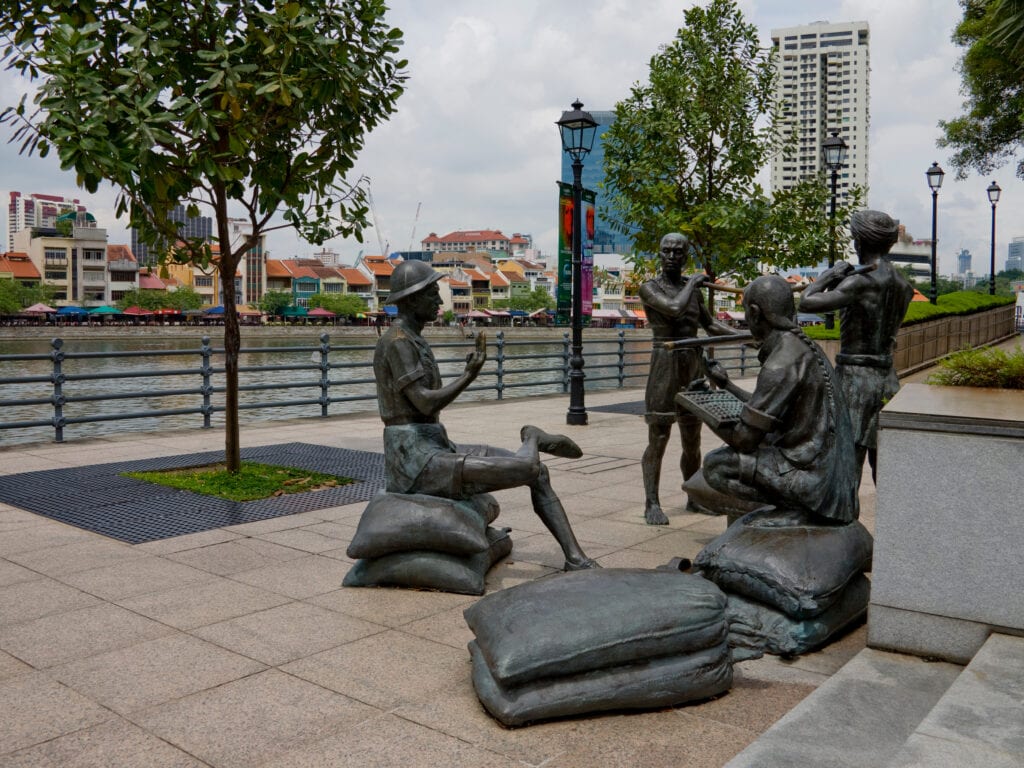
Following the Singapore River inland from Marina Bay, you encounter Clarke Quay and Robertson Quay, two adjoining riverside neighbourhoods that blend dining, nightlife and a relaxed waterfront ambience. For European travellers who enjoy walking along the water and having evening options on the doorstep, this corridor offers a well-balanced base.
Clarke Quay is the livelier of the two, with colourful shophouses and a cluster of bars and restaurants. It can be energetic at night, particularly at weekends, which some will find vibrant and others perhaps too busy. Robertson Quay, a little further upriver, is more residential and subdued, with tree-lined promenades and a calmer mood.
Comfort here comes from the riverside setting: you can stroll along the promenades in the evening breeze, often under shade, with easy access to cafés and casual dining. It suits travellers who like to explore the city by foot, as you can walk to the CBD, Boat Quay and even to parts of Marina Bay if you are comfortable with longer strolls.
In terms of access, the area is well linked by the North East and Downtown MRT lines, putting you within a few stops of Chinatown, Little India and Orchard Road. It is one of the more practical travel Singapore choices if you value nightlife but prefer slightly removed, quieter corners such as Robertson Quay for sleeping.
Chinatown and Tanjong Pagar: heritage character with urban convenience
Chinatown and the neighbouring Tanjong Pagar district provide a compelling mix of heritage, food culture and urban convenience, making them some of the most comfortable city areas for travellers who like to feel embedded in local life.
Chinatown’s narrow streets, temples and markets offer a striking contrast to the towers of Marina Bay, yet you are still within the central orbit of the city. Shophouse-lined roads host everything from traditional eateries to modern cafés, giving you a sense of place that many European visitors value after long journeys.
Comfort here is more about atmosphere than quiet seclusion. Streets can be busy in the daytime, but even a short detour away from the main market lanes reveals calmer pockets. Tanjong Pagar, once a working port district, now has a growing collection of lifestyle spots while remaining less crowded than the main Chinatown core.
Access is excellent, with multiple MRT lines intersecting around Chinatown and Outram Park. You are only a couple of stops from Marina Bay, Orchard Road or the civic district, and buses fan out towards the southern waterfront and HarbourFront. For travellers interested in understanding how different quarters of Singapore fit together, this location offers a strongly balanced perspective.
Bugis and Bras Basah: cultural mix and easy connections
Just east of the civic district, Bugis and Bras Basah form a cultural and educational hub that blends museums, historic streets and contemporary developments. For those looking for balanced stays Singapore-wide, this area offers a strong compromise between local flavour, centrality and everyday convenience.
Bugis itself has a lively street-market feel near Bugis Street and Haji Lane, where independent boutiques and cafés cluster around colourful shophouses. Slightly south, Bras Basah is more institutional, home to museums, art schools and performing arts venues, giving the area a thoughtful, cultured atmosphere.
Comfort levels vary street by street, but many parts are pleasantly walkable, especially in the early morning and later evening. You will find plenty of covered walkways, small parks and shaded corners. The combination of modern complexes and older low-rise buildings means the area feels more layered and less polished than Marina Bay, but still very manageable.
Access is perhaps the area’s greatest strength: several MRT lines intersect around Bugis and Bras Basah, making it very easy to reach the airport, Marina Bay, Orchard Road and the heritage quarters. For visitors interested in a practical travel Singapore base with a cultural edge, this corridor deserves serious consideration.
Little India and Kampong Gelam: colourful quarters with good links
North of the main shopping belt lie Little India and Kampong Gelam, vibrant districts that offer a more sensory, colourful experience of Singapore. They appeal to travellers who prioritise character and cultural immersion but still want straightforward transport and reasonable comfort.
Little India is one of the most atmospheric parts of the city, with temples, spice shops, sari boutiques and bustling streets. It can feel intense at peak times, but also rewarding if you enjoy photography, markets and street-level detail. Kampong Gelam, centred around the golden-domed Sultan Mosque and Arab Street, has a slightly calmer, creative feel with many cafés and small design shops.
Comfort depends on how you respond to busy streets and strong sensory impressions. Interiors are typically air-conditioned and quiet, but the outdoor environment is more energetic than in the bayfront or Orchard areas. For some European visitors this creates a vivid sense of place; for others it may feel less restful after a long day out.
Access is nonetheless excellent, with Little India and Bugis MRT stations connecting you quickly to Marina Bay, Orchard Road and the airport line. The area is also well served by buses. If you enjoy exploring on foot and do not mind a livelier street scene, this can be one of the best balanced areas to stay Singapore offers in terms of culture versus convenience.
Tiong Bahru: residential calm with café culture
On the western edge of the central area, Tiong Bahru is a low-rise, Art Deco neighbourhood that has become known for its cafés, bakeries and independent shops. For European travellers seeking quieter, comfortable city areas with a more residential atmosphere, it provides an appealing alternative to the high-rise core.
The comfort here is psychological as much as physical. Streets are calmer, traffic is lighter and the scale is human-sized, with low apartment blocks and leafy courtyards. It can feel surprisingly reminiscent of certain European urban quarters, making it pleasant for slow mornings and relaxed evenings.
Access remains practical: Tiong Bahru MRT on the East–West Line brings you to the CBD, Marina Bay and Changi Airport via direct or one-stop connections, while buses run frequently towards Orchard Road and Chinatown. Walking to the riverfront is possible if you enjoy longer strolls, although you will likely rely more on public transport than in ultra-central districts.
This area particularly suits those who like to observe local routines, visit markets and spend time in cafés. It may not be the first choice for an ultra-short stay, but for visitors spending several days in the city, it offers a balanced base where you can unwind between forays into busier quarters. For a broader comparison of how these neighbourhoods relate to one another, it can help to consult a detailed overview of where to stay in Singapore by area.
Practical travel tips for balanced citywide stays
Prioritise MRT proximity: In this compact city, being within a 5–8 minute walk of an MRT station in areas like Marina Bay, Orchard, Bugis or Chinatown makes movement effortless and reduces reliance on taxis.
Think in travel times, not distances: Most central districts are 10–20 minutes apart by MRT, so focus on journey time to your likely daily destinations rather than how far they look on the map.
Allow for humidity: Even short walks can feel longer in Singapore’s climate. Choose neighbourhoods with covered walkways or integrated developments, such as Orchard Road or parts of Marina Bay.
Balance day and night atmospheres: If you plan early sightseeing and quiet evenings, marina or Orchard areas work well. For later dinners and riverside walks, consider Clarke Quay, Robertson Quay or Tiong Bahru.
Use contactless payment for transport: European bank cards usually work directly at MRT gates and on buses, making travel between citywide areas seamless.
Plan arrival with jet lag in mind: If landing late from Europe, areas with direct MRT links and clear wayfinding, such as Orchard or Bugis, minimise cognitive load on the first night.
Consider sound levels: For lighter sleepers, opt for slightly set-back streets in Chinatown, Little India or Clarke Quay rather than main market or nightlife corridors.
Respect local norms in residential quarters: In quieter areas such as Tiong Bahru or parts of Kampong Gelam, keep noise low at night and avoid congregating on residential stairways or corridors.
Pack for indoor and outdoor temperatures: Air conditioning can be strong in malls and transport hubs, so having a light layer makes shifting between hot streets and cool interiors more comfortable.
Allow extra time in peak hours: MRT trains remain efficient, but central stations and interchanges can be busier during commuter peaks, especially around the CBD and Orchard corridors.
FAQs about balanced areas to stay in Singapore
Which neighbourhood offers the best balance of comfort and central location?
For many visitors, Marina Bay and the adjacent CBD strike the most balanced mix of comfort, modern infrastructure and quick links across the city, with Orchard Road and Bugis close behind for similarly convenient yet slightly different atmospheres.
Are heritage areas like Chinatown and Little India practical bases?
Yes, both Chinatown and Little India are highly practical travel Singapore bases thanks to strong MRT connections and numerous amenities. They are livelier and more sensory than the bayfront districts, so they suit travellers who enjoy vibrant street life as part of their stay.
What is the most walkable area for evening strolls and dining?
The riverfront corridor from Boat Quay through Clarke Quay to Robertson Quay is particularly walkable, with continuous promenades and a wide choice of dining. Parts of Marina Bay and the Esplanade area are also excellent for evening walks with city views.
Is it better to stay near Orchard Road or Marina Bay for a first visit?
Both are among the best balanced areas to stay Singapore offers for a first visit. Orchard Road is ideal if you appreciate shopping and indoor comfort, while Marina Bay provides stronger visual orientation and immediate access to many of the city’s major landmarks.
Which area suits a quieter, residential-style stay?
Tiong Bahru and the calmer parts of Robertson Quay offer a more residential environment with cafés and local shops, while still maintaining good transport links to the main sights and business districts.
Conclusion
Across compact, well-planned Singapore, the most comfortable and balanced stays tend to cluster around the central axis from Marina Bay and the CBD, through Orchard Road and the riverfront, to heritage quarters such as Chinatown, Bugis and Little India, with Tiong Bahru offering a quieter alternative on the edge. Each neighbourhood involves trade-offs between polished modernity, historic character, nightlife and residential calm, but all share reliable transport, strong infrastructure and an underlying sense of order that makes the city particularly easy to navigate for European travellers.
Recommended next:
- Where to Stay in Singapore CBD for Business and Leisure
- Best Boutique Hotels in Singapore for Design Lovers
- Luxury Hotels near Singapore MRT Stations
- Best Rooftop Pool Hotels in Singapore
- Best Areas to Stay in Singapore Without Breaking the Bank
- Where to Stay in Singapore for First-Timers: Simple Area Guide
- More in Singapore →