Bangkok can be inexpensive to explore, but transport choices, currency conversion and small travel fees can quickly change the total. These Bangkok travel hacks explain how to control those costs without relying on fixed prices that may already be outdated.
For broader preparation covering money, connectivity and local transport, see our Thailand essentials for European travellers. The operator details in this guide were checked on 31 October 2026; confirm current packages, fares and opening information before travelling.
1. Compare rail, licensed ride apps and metered taxis
There is no single cheapest option for every journey. Use BTS or MRT when a station is close to both ends of your route. For destinations away from the rail network, compare a licensed ride-hailing quote with an official metered taxi.
Thailand’s Department of Land Transport lists Grab and Bolt among its certified electronic ride-service providers. App prices can still change with demand and traffic, and the displayed amount may not include every toll or additional charge. Use the pickup and vehicle details shown in the app rather than accepting an unsolicited street offer. See the Department of Land Transport annual report.
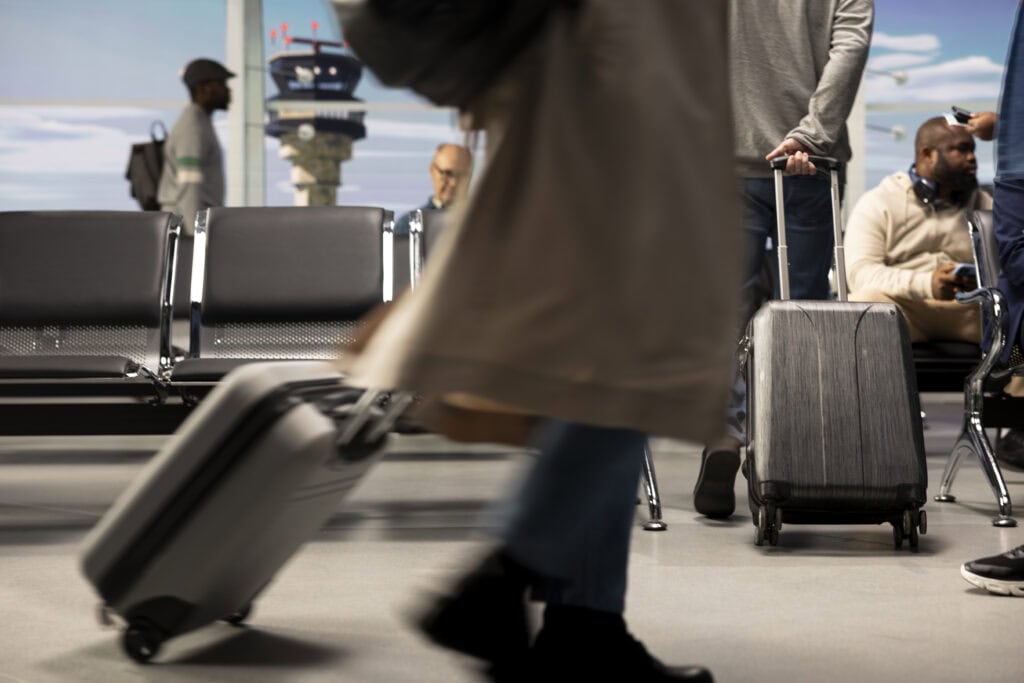
Arriving at Suvarnabhumi Airport
Suvarnabhumi Airport has an official metered-taxi system. The airport states that the metered fare, airport surcharge, tolls and any permitted baggage charge are separate components. It also identifies an official Grab pickup point at Level 1, Gate 4. Follow current airport signs because pickup arrangements can change. Details are available on the official Suvarnabhumi transport page.
2. Pay in Thai baht when offered currency conversion
A card terminal may offer to convert a purchase into euros, Swiss francs or another home currency. This is dynamic currency conversion, or DCC. Choosing Thai baht normally leaves the conversion to your card issuer or network instead of accepting the merchant’s offered exchange rate and markup.
Visa says the exchange rate and any additional markup must be disclosed and that customers must be able to decline DCC. The exact cost difference is not universal: it depends on the offered rate and the foreign-transaction terms of your card. Review your card issuer’s fees before departure and select THB when you want to decline the terminal’s conversion. See Visa’s DCC guidance.
3. Decline ATM conversion and check the separate withdrawal fee
At an ATM, choose an option such as “continue without conversion” or “charge in THB” if you want your own card provider to perform the currency conversion. Read each screen carefully: declining conversion does not remove the ATM operator’s withdrawal fee or any fee charged by your bank.
The ATM should display its local fee before you confirm. Because charges vary by operator, card network and account, no Thai bank is automatically cheapest for every European card. If your bank charges per withdrawal, fewer planned withdrawals may reduce fees, but only withdraw an amount you can store securely.
4. Compare tourist SIM and eSIM packages by trip length
AIS, True and dtac offer tourist connectivity packages, including eSIM options for compatible phones. Prices and allowances depend on package duration, data limits and included calls, so a single price range is not reliable.
- Check whether your phone supports eSIM and is unlocked before travelling.
- Compare the validity period with the actual length of your trip.
- Check whether “unlimited” service has a maximum-speed allowance or speed restriction.
- Bring your passport because tourist SIM registration is required.
Staff at official operator counters can register and activate a physical SIM. Current packages are published by AIS and True-dtac. Buying online in advance can be convenient, but compare the final package rather than assuming an airport or online offer is always cheaper.
5. Use BTS and MRT for suitable routes
Bangkok’s rail systems can avoid road congestion, particularly when your accommodation and destination are close to stations. Check the entire journey before buying a ticket because transfers between lines may require additional walking or a separate fare.
MRT identifies 07:00–09:00 and 16:30–19:30 as peak periods. Travelling outside those times may be more comfortable when your schedule is flexible. Use the official MRT map and service information for current routes rather than relying on an old saved map.
6. Stay near the transport you will actually use
A low room rate can lose its advantage if every outing requires a long taxi journey. Check the walking route—not just the straight-line distance—from a hotel to the nearest useful station or pier.
- Sukhumvit: useful for many BTS and MRT connections, depending on the exact address.
- Silom and Sala Daeng: convenient when access to both BTS and MRT suits the itinerary.
- Riverside: consider the distance to a pier or rail connection before booking.
- Old Town: practical for several major historic sights, although many locations are not directly beside BTS.
Hotel prices change with dates, events, room conditions and cancellation terms. Compare the final price, including taxes and transport needs, instead of relying on a permanent nightly-price category.
7. Plan outdoor activities around the heat
There is no universal daily time window that is safe or unsafe. Temperature, humidity, cloud cover and individual health all matter. The World Health Organization recommends avoiding strenuous activity during the hottest part of the day, staying hydrated and spending time in a cool place when necessary. See the WHO heat and health guidance.
- Schedule long outdoor walks for cooler parts of the day when possible.
- Carry water and take breaks before you feel exhausted.
- Use rail, shaded routes or indoor stops to break up longer journeys.
- Do not treat nationality as a measure of heat tolerance; pay attention to conditions and your own response.
8. Use convenience stores selectively
Convenience stores are useful for sealed water, simple snacks and small travel supplies, but availability and prices vary by branch. They are not automatically the cheapest place for every item. Compare larger purchases with supermarkets or pharmacies and do not select an ATM merely because it is inside a familiar store.
9. Check the dress rules for each temple or palace
Dress requirements differ between sites. As a practical starting point, wear clothing that covers the shoulders and knees and is not transparent, but check the official rules for the attraction you intend to visit.
The Grand Palace publishes more detailed restrictions, including rules covering sleeveless, transparent, short and certain tight-fitting garments. Review the Grand Palace visitor information before arriving. Bring suitable clothing rather than assuming a scarf or cover-up will be available nearby.
10. Choose indoor stops without assuming they are free
Shopping centres such as ICONSIAM, CentralWorld, Siam Paragon and Terminal 21 can provide an indoor break between journeys. Entry to the building is generally different from paying for activities, exhibitions, food or transport, so check costs for anything you plan to do inside.
Bangkok Art and Culture Centre states that admission to its exhibitions is free except for special events. Its published visitor hours were Tuesday–Sunday, 10:00–20:00 when checked on 31 October 2026. Confirm the schedule and closures on the official BACC visitor page.
11. Apply observable food and water precautions
A busy stall does not by itself prove that food is safe. Choose food that is cooked thoroughly and served steaming hot. Avoid raw or undercooked dishes when hygiene is uncertain, and use caution with ice or drinks if you cannot establish that the water is safe.
The same precautions apply to inexpensive stalls, restaurants and food courts. The CDC’s food and water safety guidance for travellers explains how temperature, handling and water sources affect risk.
A simple money-saving routine
- Map the journey and check whether BTS or MRT serves both ends conveniently.
- If rail is unsuitable, compare a licensed app quote with an official metered taxi.
- Confirm whether tolls, airport surcharges or other permitted charges are separate.
- Choose THB when declining card-terminal or ATM currency conversion.
- Check the local ATM fee and your card issuer’s charges before completing a withdrawal.
- Compare SIM validity and data conditions with the length of your trip.