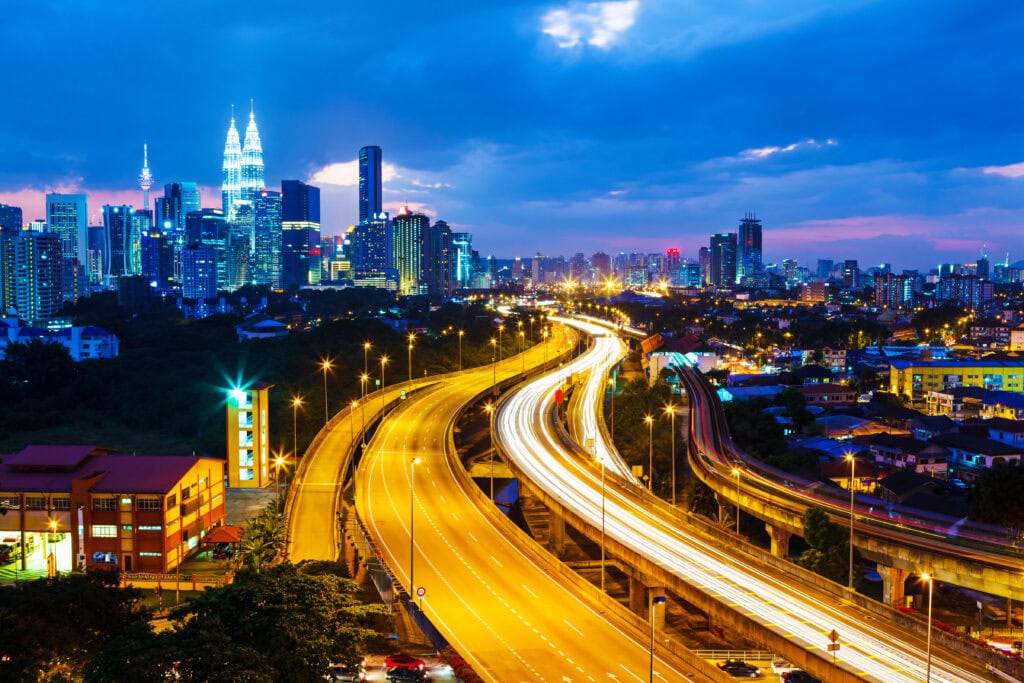
Malaysia is relatively straightforward to explore, but the most practical transport depends on where you are going. Trains work well along parts of Peninsular Malaysia, buses reach a wider range of towns, and domestic flights are often the logical choice for Borneo or longer cross-country journeys.
This Malaysia transportation guide explains how the main options fit together, where each one works best and what European travellers should check before buying tickets.
Quick answer
Use ETS trains for comfortable travel along the main west-coast rail corridor of Peninsular Malaysia. Choose long-distance buses when there is no convenient railway or when you want a direct connection between towns. Fly when travelling between Peninsular Malaysia and Malaysian Borneo, or when a long overland journey would take too much time.
No single mode covers the whole country. A typical trip might combine an airport train or bus, an ETS service, one or two intercity buses and a domestic flight. Island journeys may also require a ferry or local boat.
Malaysia transport options compared
| Transport | Best for | Main advantages | Points to check |
|---|---|---|---|
| ETS train | Major destinations on the west side of Peninsular Malaysia | Comfortable seating, stations in central or established urban areas, no airport procedures | Rail coverage is limited, and popular departures can fill |
| Intercity train | Selected routes not covered by ETS | Useful where the rail network matches your itinerary | Services can be slower or less frequent; current routes should be confirmed |
| Long-distance bus | Towns without a useful rail link and direct city-to-city journeys | Broad network and many route combinations | Traffic can affect arrival times, and terminals may be outside the centre |
| Domestic flight | Borneo, islands with airports and long distances | Saves substantial overland time and crosses the sea between the peninsula and Borneo | Baggage rules, airport transfers and schedule changes vary by airline |
| Local rail, bus or taxi | Urban travel and the final connection to accommodation | Completes journeys from major stations and airports | Availability and payment methods differ by city |
Understanding Malaysia’s transport geography
Malaysia has two main geographical sections: Peninsular Malaysia and the East Malaysian states of Sabah and Sarawak on Borneo. The South China Sea separates them, so there is no train or bus linking the peninsula directly with Malaysian Borneo. Most visitors fly between the two.
Within Peninsular Malaysia, the strongest rail coverage follows the west-coast corridor. This makes trains useful for journeys involving Kuala Lumpur and several popular northern or southern destinations. Buses fill many of the gaps, including routes to smaller towns, hill areas and places away from the railway.
Rail is much more limited in Sabah and Sarawak. Flights, intercity buses, shared vehicles, taxis and local transfers tend to play a larger role there. Conditions and journey lengths can differ considerably from those in the peninsula, so avoid assuming that a route will be quick simply because the distance looks short on a map.
Travelling by train in Malaysia
What is the ETS train?
ETS means Electric Train Service. Operated on the main intercity rail network, it generally serves the north–south corridor on the western side of Peninsular Malaysia. It is usually the most relevant train for visitors moving between major destinations along that corridor.
Route patterns, stopping services and train categories can change. Check the current timetable and station name through the official railway operator before planning accommodation or a same-day connection.
Where the train is most useful
ETS is worth considering for trips between Kuala Lumpur and destinations along the west-coast rail route. Butterworth is the mainland rail gateway commonly used for onward travel to Penang Island. Depending on the current timetable, some southern journeys may require a change or a different rail service.
Rail is less useful for destinations on the east coast or places far from a station. Even where a train exists, a direct bus may produce a simpler door-to-door journey once transfers are included.
Other intercity rail services
Malaysia also has intercity rail services outside the core ETS pattern. These can be relevant for selected southern and interior routes, but they may operate differently from ETS and may not offer the same frequency or journey style. Confirm the current route, train type and interchange requirements rather than relying on an old map or travel blog.
Train booking and luggage tips
- Check both the station name and the town it serves. A station may be on the mainland or some distance from your final destination.
- Reserve earlier when travelling around weekends, school breaks or public holidays, when demand is often higher.
- Allow a sensible buffer before a ferry, flight or separately ticketed connection.
- Keep passports, electronics and medication in a small bag with you.
- Large luggage storage can be limited. Pack so that you can lift and move your own case without difficulty.
- Bring a light layer, as air-conditioned carriages can feel cool compared with the outdoor heat.
Bus travel in Malaysia
Bus travel in Malaysia offers broader geographical coverage than the railway. Long-distance coaches connect major cities, regional centres and many tourist destinations, making them especially useful where the train route is indirect or unavailable.
Kuala Lumpur has several transport hubs. Terminal Bersepadu Selatan, usually referred to as TBS, handles many intercity services, but not every bus uses the same terminal. Always verify the exact departure point shown on your ticket.
When a bus is the better choice
A coach may be more practical for destinations away from the west-coast railway, for direct links that avoid changing trains, or for routes where the bus terminal is better positioned for your plans. It can also be useful for crossing between regional destinations without returning to Kuala Lumpur.
Compare the complete journey rather than only the scheduled travel time. Include the trip to the terminal, check-in or boarding time, possible traffic and the transfer from the arrival terminal to your accommodation.
Choosing and booking an intercity bus
- Confirm the operator, terminal, departure date and destination before paying.
- Check whether the destination shown is the town centre, a suburban terminal or a nearby district.
- Use current operator or terminal information, as boarding arrangements can change.
- Do not plan a tight onward flight after a long road journey. Traffic and weather can affect arrival times.
- Keep valuables and essential documents in your hand luggage rather than in the underfloor compartment.
- Label checked luggage and retain any receipt or tag provided by the operator.
Day buses or overnight buses?
Overnight buses can save daytime travel, but they do not suit everyone. Road movement, air conditioning and intermediate stops may make sleep difficult. Daytime services are often a better choice for travellers who value rest, want to see the landscape or need a reliable night’s sleep before an activity.
If considering an overnight service, check the seating layout, arrival terminal and local transport options at the expected arrival time. Do not assume that taxis, public transport or hotel reception arrangements will be identical throughout Malaysia.
Domestic flights in Malaysia
Domestic flights in Malaysia are most useful for journeys between Peninsular Malaysia and Sabah or Sarawak. Flying can also make sense between distant cities in the peninsula, between parts of Borneo or when an island has a practical airport connection.
Kuala Lumpur’s main aviation area is a major domestic hub, while some routes may use other airports. Check the airport name and terminal carefully: searching only for the city can hide an important difference in transfer time and location.
When flying saves time
- Travelling from Kuala Lumpur or another peninsular city to Sabah or Sarawak.
- Combining distant regions within a limited holiday.
- Reaching destinations where the overland alternative requires several separate transfers.
- Connecting to an island with an airport when the available flight suits the itinerary better than a bus-and-ferry combination.
A short flight is not always the fastest overall choice. Add airport transfer time, check-in, security, baggage collection and the journey from the arrival airport. For shorter peninsular routes, a direct ETS train or coach may be easier.
Airfare and baggage checks
Domestic airline fares can be structured differently. The lowest displayed option may not include the baggage, seat choice or flexibility you need. Review the fare conditions and current cabin and checked-baggage allowances on the airline’s own website before travel.
Measure and weigh luggage if your allowance is restrictive. This is particularly important when connecting from a European long-haul ticket to a separately purchased domestic flight, because the two bookings may have different baggage terms and may not protect a missed connection.
Getting around Peninsular Malaysia
For a multi-stop peninsula itinerary, trains and buses usually complement each other. A rail-first plan works well when several destinations sit along the ETS corridor. Add buses for places beyond the railway and use local transport for the final section.
For example, travellers might use rail between Kuala Lumpur and Butterworth, then continue to Penang Island by a separate local connection. A destination outside the rail corridor may instead be reached by direct coach. Current train, bus and ferry arrangements should be checked before fixing the order of the trip.
Getting around Sabah and Sarawak
Transport planning in Malaysian Borneo requires a different approach. Domestic flights are important for covering long distances, while buses and other road transfers connect many regional destinations. Rail should not be treated as the backbone of a Borneo itinerary.
Road journeys may take longer than expected because the map does not show road conditions, stops or indirect routing. Build in recovery time rather than scheduling a major wildlife excursion immediately after a long transfer.
If your trip combines the peninsula with Borneo, the route ideas in Malaysia Itinerary 14 Days: Add Borneo Wildlife and Islands can help you decide where a domestic flight fits most naturally.
Island connections
Some Malaysian islands have airports, while others require a ferry or smaller boat from the mainland. A train, bus or flight may therefore cover only the first part of the journey.
Check the current departure point and allow enough time between separately booked transport. Boat operations can be affected by weather and local conditions, and the relevant gateway may change by season or route. Avoid planning an international flight immediately after a ferry connection without a generous buffer.
Which transport option suits you?
Best for comfort on the peninsula: ETS train
Choose the train when your destinations are on the main rail corridor and the timetable works. It generally avoids road traffic and offers a straightforward station-to-station journey.
Best for broad coverage: long-distance bus
Choose buses for destinations without a useful station, direct regional connections and routes where rail would involve unnecessary changes.
Best for Borneo and long distances: domestic flight
Choose flights between the peninsula and Malaysian Borneo, or when an overland journey would consume too much of a short holiday.
Best for a flexible itinerary: combine all three
Most multi-region visitors benefit from mixing transport types. Select each leg independently instead of trying to complete the entire trip by train, bus or air.
Practical tips for European travellers
- Use local dates and times when booking. Double-check departures around midnight to avoid selecting the wrong day.
- Leave recovery time after arriving from Europe. Heat, humidity and jet lag can make an immediate long transfer tiring.
- Keep screenshots or offline copies of tickets, booking references and accommodation addresses.
- Carry a small amount of cash for local connections, while checking which payment methods the operator accepts.
- Bring a light jumper for strongly air-conditioned trains, buses and airport terminals.
- Do not compare airfares without adding baggage and airport-transfer costs.
- Check public-holiday and school-holiday dates before finalising the route, as transport can be busier.
- Ask the operator in advance if you require step-free access, mobility assistance or help with large luggage. Facilities vary by station, terminal and vehicle.
- Use the exact spelling of Malaysian place names when searching. Similar station, terminal and airport names can refer to different locations.
Common transport planning mistakes
- Assuming every major destination has an ETS station: rail coverage is useful but not nationwide.
- Booking the wrong Kuala Lumpur terminal or airport: verify the full name, not only the city.
- Creating tight self-connections: separate train, bus, ferry and flight tickets may offer no protection if the first service is delayed.
- Ignoring the final transfer: a cheap fare may arrive at a terminal far from the hotel or attraction.
- Using an outdated timetable: routes, operators and departure points can change.
- Planning Borneo like the peninsula: distances, road links and the role of domestic aviation are different.
FAQ
Is train travel the best way to get around Malaysia?
It is a good option for destinations on the main west-coast corridor of Peninsular Malaysia, but it does not cover the whole country. Buses offer wider coverage, while flights are usually more practical for travelling between the peninsula and Borneo.
Should I book Malaysian trains and buses in advance?
Advance booking is sensible when your itinerary depends on a particular departure, especially around weekends and holiday periods. Availability and sales windows vary, so check current information from the operator or terminal.
Are domestic flights necessary for a Malaysia trip?
Not for a peninsula-only itinerary. They become much more useful when visiting Sabah or Sarawak, combining distant regions or working with limited time. Compare the total airport-to-airport journey with available rail and bus alternatives.
Can I travel with a large suitcase on Malaysian transport?
Usually, travellers can bring luggage, but storage arrangements and allowances differ. Trains may have limited large-bag space, coaches commonly use luggage compartments, and airlines apply fare-specific baggage rules. Check the operator’s current terms before departure.
Final recommendation
Build your route around geography rather than committing to one transport type. Use ETS where the rail corridor fits, buses for wider peninsular coverage and domestic flights for Borneo or genuinely long journeys. Confirm current schedules, terminals and baggage conditions before each leg, and leave generous buffers between separately booked services.