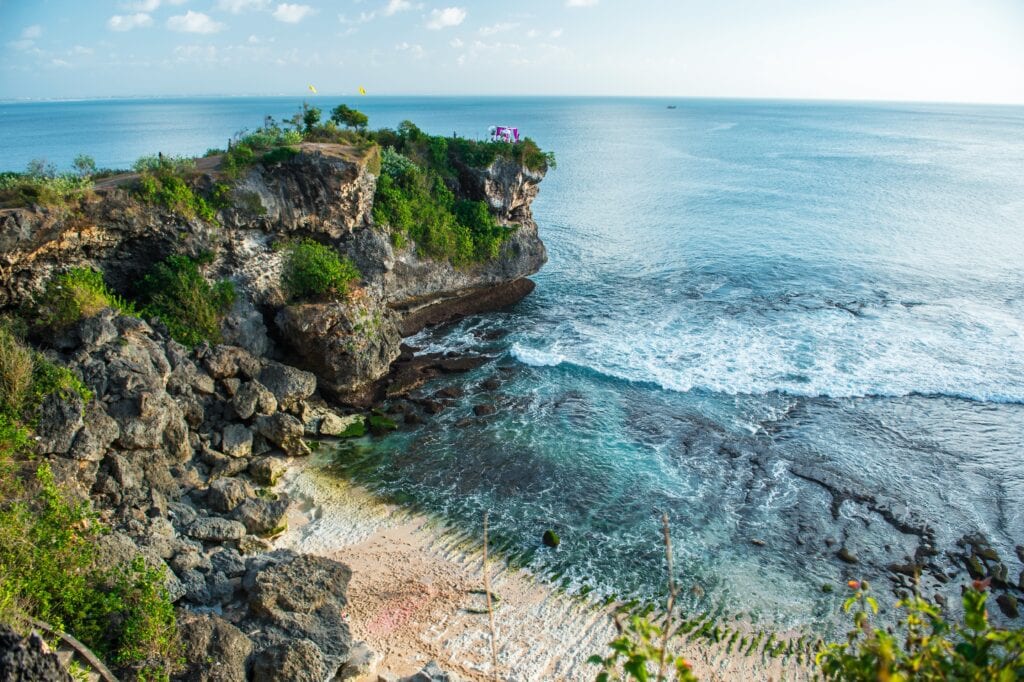
For European travellers planning a Bali journey beyond the familiar beach clubs and sunset crowds, this guide focuses on the hidden beaches in Bali where the island still feels spacious, textured and quietly local. These are not necessarily untouched places, but they tend to reward slower movement, early starts and a willingness to accept rougher access in exchange for calmer sand.
Bali’s coastline is diverse: limestone cliffs in the south, volcanic black sand in the east and north, reef-protected bays around the Bukit Peninsula, and ferry-reached shores on nearby islands. Orientation matters: most of Bali’s better-known beach areas sit in the south-west, while many of the quieter beaches Bali still offers are found down cliff paths, along rural roads or outside the main resort corridors.
What Makes a Bali Beach Feel Hidden
In Bali, “hidden” rarely means completely unknown. It more often means a beach is harder to reach, less developed, exposed to tides, or simply outside the routes most first-time visitors follow. A quiet beach may have a steep staircase, limited shade, no lifeguards, or a narrow access road that deters casual visits. These are the trade-offs that keep many secret beaches Bali travellers talk about from becoming conventional resort beaches.
The most peaceful beaches tend to share a few qualities: limited parking, few beachfront businesses, a setting below cliffs or behind headlands, and water conditions that require some judgement. They can feel serene in the morning and busy by sunset, or accessible at low tide and awkward at high tide. The practical question is not only where to go, but when to arrive and what kind of beach experience is realistic.
For European visitors used to Mediterranean coves, Bali’s quieter beaches can feel familiar in form but different in rhythm. Tides, surf breaks and ceremonial life shape the coast. A temple procession, seaweed harvest, fishing activity or strong swell may change the atmosphere of a beach from one day to the next.
The Bukit Peninsula: Cliff-Backed Coves and Pale Sand
The Bukit Peninsula, south of Jimbaran and around Uluwatu, holds some of the best beaches in Bali not crowded by the standards of the island’s southern coast. The landscape is dramatic: dry limestone cliffs, narrow lanes, white sand pockets and reefy water that shifts in colour with the tide. It suits travellers who want impressive scenery and do not mind steps, uneven ground or limited facilities.
Nyang Nyang is one of the classic quiet beaches Bali visitors seek when they want space. Reached by a long descent, it opens onto a broad sweep of pale sand beneath high cliffs. Its size helps absorb visitors, so even when others arrive, it rarely feels as compressed as the smaller beaches near Uluwatu’s surf points. Swimming is dependent on conditions, and the beach is often better for walking, reading and watching the horizon than for casual bathing.
Green Bowl is more compact and feels more secluded because of its steep staircase and cave-backed setting. At low tide, the rock pools and reef flats create a striking coastal scene, though swimming can be limited. It is most rewarding for those who enjoy quiet atmosphere over convenience. Gunung Payung, further east along the Bukit, offers a similarly calm mood with a generous stretch of sand and a sense of distance from the busier surf-and-sunset circuit.
The important caveat across the Bukit is exposure. Paths can be tiring in heat, shade may be scarce, and tides affect where it is comfortable to sit. The reward is a version of southern Bali that still feels rugged, sculptural and relatively unhurried.
East Bali: Small Bays, Snorkelling Water and Slower Villages
East Bali is a strong choice for travellers who associate hidden beaches in Bali with quieter villages rather than dramatic cliff paths. Around Padangbai, Candidasa and Amed, the coast becomes more varied: small bays, fishing boats, black or mixed sand, coral gardens and views toward Lombok in clear weather. The pace is slower, and the beach experience is less about glamour than texture.
Bias Tugel, near Padangbai, is often described as a secret beach although it is well known locally. Its charm lies in its tucked-away position and clear water, with a compact arc of white sand set apart from the ferry-port bustle. It can feel peaceful outside peak day-trip times, particularly in the morning. As with many smaller coves, sea conditions and tides matter.
Further north-east, Amed’s beaches are not hidden in the sense of being difficult to find, but they remain among the best beaches in Bali not crowded with mainstream resort traffic. Jemeluk Bay and neighbouring stretches combine black volcanic shorelines with snorkelling close to the beach. The mood is gentle, with outrigger boats drawn up on the sand and Mount Agung often visible inland. It suits travellers who want quiet coastal days, local rhythm and underwater interest rather than powdery white sand.
East Bali is also useful for understanding the island beyond its more photographed south. Distances can be deceptive, so a beach day here is best considered part of a wider east-coast stay or a deliberately slow excursion, not a quick diversion from Seminyak or Canggu.
North and West Bali: Dark Sand, Open Space and Fewer Visitors
The north and west coasts offer a different interpretation of hidden gems. The beaches are often darker, longer and less conventionally tropical, but they can be far quieter than the south. For travellers seeking quiet beaches Bali still keeps outside the main visitor corridors, this side of the island can be deeply appealing.
Near Lovina, the coastline is calm and low-key, with black sand, fishing boats and broad sea views. It is not the place for dramatic surf or pristine white sand, but it has an ease that can feel rare in Bali. Early mornings are especially atmospheric, when the beach is cooler and the village edges are waking slowly.
Further west, around Pemuteran and the approach to West Bali National Park, the island becomes more spacious. Beaches here are quieter partly because they are farther from the airport and the southern resort belt. The landscape feels drier and more open, with mountain silhouettes, calm bays and a stronger sense of distance. Snorkelling and reef conservation are part of the coastal identity, but the mood remains restrained.
The trade-off is logistical. North and west Bali require longer drives, and beach infrastructure can be modest. For many European travellers, however, this is precisely the appeal: a coast that feels lived-in rather than staged, with room to breathe and fewer competing soundtracks.
Nusa Penida and Offshore Shores: Beautiful but Not Always Easy
Nusa Penida is often included in discussions of secret beaches Bali visitors dream about, yet it needs careful framing. The island’s beaches are spectacular, but they are not all simple swimming beaches, and some famous viewpoints attract significant day-trip traffic. The hidden quality comes less from being unknown and more from the rawness of access, the scale of the cliffs and the island’s tougher terrain.
Atuh Beach and Diamond Beach on the eastern side are visually striking, with pale sand, cliffs and turquoise water. Reaching the sand involves steps and attention, particularly in heat or after rain. These beaches can feel magical early in the day but less solitary once tours arrive. Diamond Beach in particular is often more suitable for photographs and atmosphere than relaxed swimming, depending on conditions.
For a quieter experience, the key is to stay realistic about movement on the island. Roads can be rough, distances take time, and the most dramatic locations are not always the most comfortable places to linger. Those searching for the best beaches Bali not crowded should look beyond the headline viewpoints and consider smaller coves, early starts and tide-aware planning.
Nusa Lembongan and Nusa Ceningan, while more developed in parts, can also offer softer beach moments if visited away from the busiest hours. Their advantage is scale: it is easier to move slowly, read the tides and find a calm corner without committing to the more demanding terrain of Penida.
How to Choose the Right Quiet Beach for Your Travel Style
The best hidden beach is not always the most remote one. For a relaxed beach day, a modestly accessible bay with shade and calm water may be preferable to a dramatic cove reached by a difficult descent. Travellers should match the beach to their priorities: swimming, walking, photography, snorkelling, solitude, or cultural atmosphere.
For white sand and cliff scenery, the Bukit Peninsula is the clearest choice. For snorkelling and a slower village feel, East Bali is more rewarding. For space and a sense of distance, the north and west coasts offer the strongest contrast to southern Bali. For visual drama, offshore islands such as Nusa Penida deliver, but they require more planning and caution.
It is also worth considering where a beach sits in relation to accommodation and transport. A quiet beach reached after a long drive can lose its charm if visited as a rushed half-day trip. Bali’s traffic is unpredictable, particularly around the south, and travel times often matter more than distances on a map.
Those seeking genuinely quiet beaches in Bali should think seasonally as well. The dry season often brings clearer skies and more comfortable access, while shoulder periods can feel calmer. Weekends, local holidays and late afternoons near sunset points tend to be busier, even at beaches that feel remote at other times.
Practical Travel Tips for Bali’s Hidden Beaches
- Start early, especially in the south. Morning light, cooler temperatures and lighter traffic make cliff paths and quieter beaches more enjoyable.
- Check tides before visiting reef-fringed coves such as Green Bowl or smaller Bukit beaches; low tide can reveal rock pools, while high tide may reduce usable sand.
- Do not assume every beach is suitable for swimming. Strong currents, reef shelves and changing surf are common, particularly below cliffs and on exposed coasts.
- Wear practical footwear for steep stairs, loose stones and hot paths. Many hidden beaches in Bali involve more walking than expected.
- Carry water, sun protection and light cover. Shade can be limited, and some quieter beaches have minimal facilities.
- Allow generous journey times. A beach that appears close to Uluwatu, Sanur or Canggu on a map may take longer to reach because of traffic or narrow roads.
- Respect temple areas, offerings and local ceremonies. Beaches are part of daily Balinese life, not only leisure spaces.
- Keep beaches quiet in practice as well as in name: avoid loud music, remove rubbish and be mindful around fishing boats and local families.
- Consider hiring an experienced local driver for remote beaches if you are not confident on steep or narrow scooter routes.
FAQs About Hidden Beaches in Bali
What are the best hidden beaches in Bali for avoiding crowds?
Nyang Nyang, Gunung Payung, Bias Tugel outside peak hours, parts of Amed, and beaches around Pemuteran are strong options. None are guaranteed empty, but they usually feel calmer than the main beaches of Seminyak, Canggu or Kuta.
Are there secret beaches in Bali that are easy to reach?
Some are relatively easy, but the quietest beaches usually involve a compromise. Bias Tugel and Gunung Payung are more manageable than many cliff coves, while remote north and east coast beaches require longer drives rather than difficult walks.
Which quiet beaches in Bali are best for swimming?
Swimming conditions change with tide and swell. Sheltered bays in East Bali and parts of Amed can be better for calm water, while many Bukit beaches are more exposed and require caution. Local advice is valuable on the day.
Is Nusa Penida good for uncrowded beaches?
Nusa Penida has dramatic beaches, but the most famous locations can be busy with day visitors. It is better for scenery and adventurous access than effortless seclusion. Early starts and realistic route planning make a significant difference.
When is the best time to visit Bali’s hidden beaches?
Mornings are generally best for cooler conditions, softer light and fewer visitors. Dry-season months often make access easier, while shoulder periods can provide a quieter atmosphere without the heaviest crowds.
Conclusion
The hidden beaches in Bali reveal a quieter side of the island, from limestone coves on the Bukit Peninsula to black-sand shores in the north and snorkelling bays in the east. Their appeal lies in space, atmosphere and a closer sense of place, rather than polished convenience.
The trade-offs are part of the experience: longer drives, steep steps, changing tides and fewer facilities. For travellers who value calm over ease, Bali’s lesser-known beaches offer a more contemplative coastal rhythm and a richer understanding of the island’s shoreline.
Recommended next:
- Where to Stay in Bali for First-Time Visitors
- Bali Itinerary 7 Days: Ubud + Beaches with Smooth Transfers
- Bali Itinerary 10 Days: Add Nusa Islands and Slow-Luxury Days
- Bali in 5 Days: Best Highlights Without Feeling Rushed
- Best Time to Visit Bali: Month-by-Month Weather and Crowd Reality
- Bali Travel Costs: Daily Budget for Comfortable (Not Backpacker) Trips
- More in Bali →