Central hotel areas in Singapore for European visitors
This guide is designed for European travellers who want a clear sense of location when choosing central hotels in Singapore, rather than focusing on specific properties. In a compact city where distances are short but neighbourhoods feel very distinct, understanding how the city core is laid out is essential for easy orientation.
Singapore’s central area stretches in a loose arc from Marina Bay up through Orchard Road, across the historic ethnic quarters and along the Singapore River, all stitched together by one of the most efficient metro systems in Asia. For a broader comparison of districts and how they fit together, the city overview in Where to Stay in Singapore: Best Areas for Luxury, Sightseeing and Easy Transport offers a useful framework before you focus on specific locations.
In practical terms, the most central location in Singapore for visitors sits around Marina Bay and the Downtown Core, from where you can walk or ride the MRT quickly to Orchard, the heritage quarters, and cultural sights. Choosing a stay within this ring keeps journeys short and navigation simple, especially on a first visit from Europe when time and energy are precious.
Understanding the central core: how Singapore is laid out
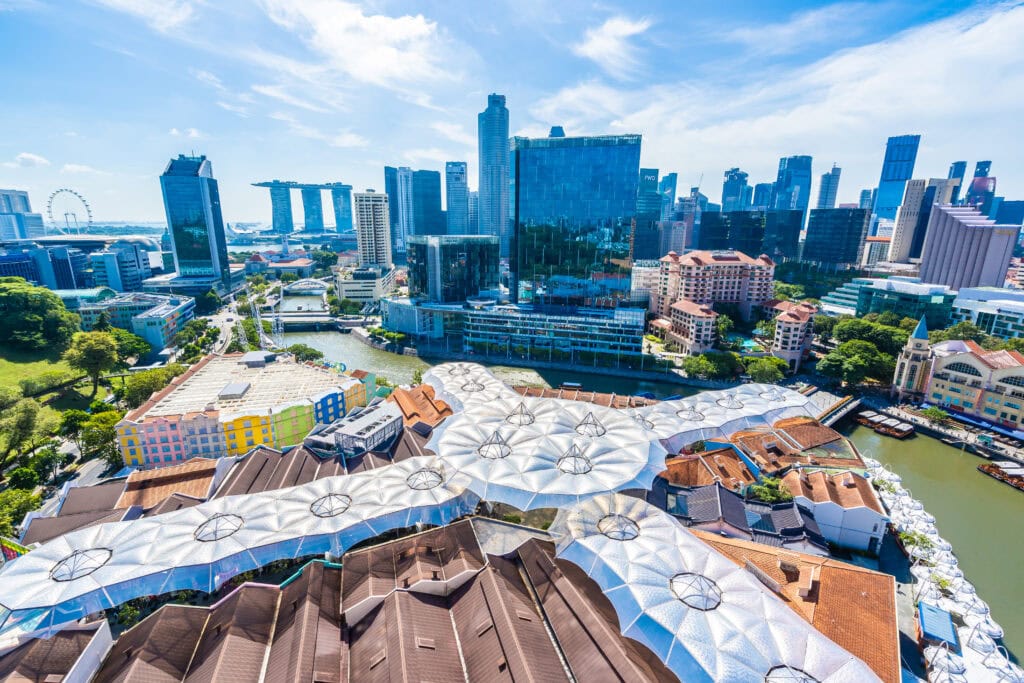
For orientation, it helps to imagine central Singapore as a series of adjoining zones that curve around the bay and follow the river inland. At the southern edge, Marina Bay forms a modern amphitheatre of glass and steel facing the water. Just behind it lies the Downtown Core and the Central Business District (CBD), home to banks, offices and a rising number of central hotels.
From there, the Singapore River runs inland past Clarke Quay and Boat Quay, lined with converted warehouses and low-rise shophouses. A little further inland again are the historic neighbourhoods of Chinatown, Kampong Glam and Little India, each with their own metro stops and distinctive architecture. North-west of the river, Orchard Road forms a long shopping boulevard, while Tiong Bahru sits just beyond as a quieter, residential-feeling enclave.
For most European visitors wanting a central location in Singapore, the choice is less about distance and more about which axis of the city you prefer: the bay and skyline views around Marina Bay, the riverfront atmosphere near Clarke Quay, the historic streets of Chinatown and Little India, or the retail spine of Orchard Road.
Marina Bay and Downtown Core: the most central location in Singapore
Marina Bay and the adjoining Downtown Core form the geographic and symbolic heart of modern Singapore. This is the most obvious answer for travellers seeking central hotels in Singapore with straightforward access to the rest of the city. Several MRT lines intersect here, including the Circle, Downtown and North–South lines, making it exceptionally easy to move between districts.
Stays around Marina Bay Place, City Hall or Raffles Place mean you can walk to the waterfront promenade, Gardens by the Bay, the Padang, and the National Gallery. It is also the most convenient base for early-morning runs around the bay, evening strolls, or quick trips by metro to the airport via the Downtown line with a simple transfer.
The main trade-off is atmosphere. The area is polished and impressive but relatively business-like in the evenings, especially from Sunday to Thursday. Those who enjoy a sense of bustle will appreciate its daytime energy; travellers looking for a more local, neighbourhood feel may prefer one of the heritage quarters described below while still keeping the bay within a short ride.
Orchard Road: central hotels with easy access and retail focus
Orchard Road is Singapore’s iconic shopping boulevard, stretching roughly from Dhoby Ghaut to Orchard and Tanglin. For many European travellers, this area offers a reassuringly straightforward orientation: a single, long avenue lined with malls, dining options and well-marked underpasses linking everything together.
Several MRT stations sit along Orchard Road, giving easy access to Marina Bay, the CBD, and Changi Airport with just one or two line changes. This makes Orchard a practical option for those who prefer to navigate via one major landmark street rather than a grid of smaller lanes.
Orchard’s central advantage lies in comfort and convenience: air-conditioned malls provide respite from the humidity, covered walkways protect from tropical downpours, and you will rarely be far from familiar dining options. The drawback is that you are slightly removed from the historic core and the waterfront – still close in absolute terms, but less atmospheric for evening strolls than the riverside or heritage districts.
Singapore River, Clarke Quay and Boat Quay: orientation along the water
Following the curve of the Singapore River offers one of the easiest mental maps of the city. From the historic mouth of the river near Boat Quay, it winds past Clarke Quay and Robertson Quay before heading inland. Staying in this zone places you within walking distance or a short metro ride of Marina Bay, the CBD and the heritage quarters, while giving you a strong natural landmark for orientation.
Clarke Quay and Boat Quay are known for their lively dining and bar scenes, particularly in the evenings when office workers and visitors gather along the riverfront. The streets are compact, the shophouse facades colourful, and it is difficult to get seriously lost: simply follow the water back towards the bay or upstream towards quieter residential areas.
Transport is straightforward, with Clarke Quay station on the North East Line and Fort Canning on the Downtown Line, plus several bridges and underpasses linking both sides of the river. The main consideration is noise, particularly at weekends. Travellers seeking peaceful evenings may prefer to stay a little upstream at Robertson Quay or in neighbouring Tiong Bahru, and then walk or take a short ride to the riverfront when they want more atmosphere.
Chinatown, Kampong Glam and Little India: central hotels with cultural immersion
The historic neighbourhoods of Chinatown, Kampong Glam and Little India sit within the central area yet feel very different from the polished bayfront. For visitors who like to anchor their orientation on distinctive architecture and street life, these quarters can be some of the most rewarding places to stay.
Chinatown lies just west of the CBD, easily reached from Raffles Place on foot or via the Downtown and North East MRT lines. Narrow streets of shophouses, temples and markets create a strong sense of place. It is a practical base if you value both character and centrality, with quick metro connections to Marina Bay, the river and Orchard Road.
Kampong Glam and Little India sit slightly further north but remain firmly part of central Singapore. They are served by multiple MRT stops, including Bugis, Rochor and Little India, placing you just a few minutes from the Downtown Core. These areas are ideal for travellers who enjoy photographing colourful streets, browsing small shops, and having a clear, memorable mental image of their surroundings rather than a skyline of towers.
In these quarters, pavements can be busier and streets more irregular than around the bay or Orchard Road, which adds to their charm but may require a little more attention when navigating with luggage or after a long flight from Europe. Nonetheless, the strong visual cues – temples, mosques, markets – make it surprisingly easy to find your way once you have walked the area once or twice.
Tiong Bahru and the edge-of-centre neighbourhoods
For those who prefer a quieter, residential feel while staying within easy reach of the city core, Tiong Bahru and nearby areas just west of the river are worth considering. Tiong Bahru is known for its low-rise art deco apartment blocks, independent cafes and small boutiques, offering a softer introduction to Singapore than the high-rise cityscape.
From an orientation perspective, this district is compact and highly walkable. Tiong Bahru MRT sits on the East–West line, just two or three stops from the Downtown Core and Raffles Place, while numerous bus routes run directly into the CBD and Orchard Road. You gain a sense of being slightly outside the busiest central zone, yet most key sights remain no more than 15–20 minutes away by public transport.
The trade-off is immediacy. You will not step out of your hotel directly onto the bayfront or a major shopping street, and first-time visitors may feel slightly less connected to the main postcard views. However, many experienced travellers find that basing themselves in a neighbourhood like Tiong Bahru provides a more relaxed daily rhythm, while still granting easy access to central attractions when desired.
Central hotels in Singapore and airport access
For European visitors arriving after a long-haul flight, transfer time from Changi Airport can influence where in the central area to stay. Rail and taxi journeys to the city core are relatively short, but certain districts involve fewer transfers and simpler routes, which can be welcome when jet-lagged.
Marina Bay, City Hall and the Downtown Core are especially convenient if you plan to use the MRT from the airport, with direct or single-transfer connections via the East–West and Downtown lines. Orchard Road, Bugis and Little India are also straightforward, typically involving one change and clear signage at each interchange.
If you anticipate late-night arrivals or early-morning departures, any location close to an MRT interchange station or along the East–West line reduces the need to think about routing. However, because distances in central Singapore are relatively small, even hotels slightly outside the immediate bayfront – such as those in Chinatown or Tiong Bahru – remain practical from an airport-access perspective.
Practical travel tips for staying in central Singapore
- Use the MRT as your primary reference point: when choosing a central location in Singapore, check which line serves your area and how many changes are needed to reach Marina Bay, Orchard and Changi Airport.
- Allow time to adjust to humidity: plan your first afternoon around shaded areas such as malls along Orchard Road or the underground walkways connecting the Downtown Core, rather than long unshaded walks.
- Walk in short segments: central districts are close together, but heat can make distances feel longer; combine short walks with quick MRT hops between Marina Bay, the riverfront and the heritage quarters.
- Carry a light layer: while outdoors is warm, air-conditioning in malls, the metro and lobbies around Marina Bay and Orchard can feel cool after coming from European climates.
- Use landmarks for navigation: in the bay area, orient yourself by the water and the skyline; along the river, simply follow the flow between Boat Quay, Clarke Quay and Robertson Quay.
- Plan around peak hours: the CBD and Marina Bay can feel busy at weekday lunchtime and after work; heritage districts like Chinatown and Little India are more atmospheric in the early evening.
- Respect local norms: Singapore is orderly and rules-driven; be mindful of no-smoking areas, queue markings in stations, and reserved seating on trains when moving around the city core.
- Consider noise levels: waterfront and nightlife-focused spots around Clarke Quay can be lively late into the evening; those seeking quiet may prefer Orchard’s side streets or residential-feeling areas like Tiong Bahru.
FAQs about central hotels in Singapore
Which area is most central for first-time visitors to Singapore?
For straightforward orientation, the zone around Marina Bay, City Hall and the Downtown Core is the most central. It offers quick MRT links in several directions, easy access to major sights and a clear visual landmark in the bay itself.
Are central hotels in Singapore within walking distance of major attractions?
Many central hotels are within walking distance of at least some key attractions, but Singapore’s climate makes combining walking with short MRT rides more comfortable. From a central base, most landmarks are 5–20 minutes away by public transport.
Is Orchard Road a good central location in Singapore for sightseeing?
Orchard Road is a practical central location if you value retail, air-conditioned spaces and simple navigation along a single main street. It is very well connected by MRT, though you will rely on public transport or short rides to reach the bayfront and heritage districts.
How do Chinatown, Little India and Kampong Glam compare for access?
All three are firmly central, each with their own MRT stations and multiple bus routes. Chinatown is closest to the CBD and the river, while Little India and Kampong Glam sit slightly further north but remain only a few stops from Marina Bay and Orchard.
Where can I read more about how Singapore’s districts fit together?
For a broader overview of how the main areas relate to each other and to the transport network, a dedicated citywide look at where to stay in Singapore by area can help fine-tune your choice once you have identified the central zones that appeal most.
Conclusion: choosing your place in Singapore’s compact centre
Singapore’s central area is compact, efficient and forgiving of small mistakes in orientation, especially compared with larger capitals. The real decision is not about being far from the action, but about what kind of urban landscape you want as your daily reference point: the dramatic bay skyline, the straightforward retail axis of Orchard Road, the riverside curve of Clarke Quay, or the historic textures of Chinatown and Little India.
Each of these zones offers a slightly different balance of atmosphere, convenience and calm, yet all remain well connected by public transport and easy to understand after a day or two on the ground. With a clear sense of how these central districts interlock, European travellers can choose a base that aligns with their own way of exploring, knowing that most of the city’s highlights will be within easy reach.
Recommended next:
- Where to Stay in Singapore CBD for Business and Leisure
- Best Boutique Hotels in Singapore for Design Lovers
- Luxury Hotels near Singapore MRT Stations
- Best Rooftop Pool Hotels in Singapore
- Best Areas to Stay in Singapore Without Breaking the Bank
- Where to Stay in Singapore for First-Timers: Simple Area Guide
- More in Singapore →