Walkable Hotel Areas in Singapore for Exploring on Foot
This guide is for European travellers who value being able to step out of their hotel and explore a city on foot rather than relying on taxis. In compact, efficient Singapore, choosing the right base can mean spending your days wandering riverfront promenades and historic streets instead of sitting in traffic or underground trains. For a broader overview of how the main districts compare for first-time trips, you may also find the citywide insights in this orientation to Singapore’s key areas useful.
Singapore is a city-state, and many of its central districts are designed for pedestrians, with shaded sidewalks, covered walkways, and seamless connections to the MRT. The most walkable areas to stay cluster around the Downtown Core and historic neighbourhoods, where paths along the Singapore River and around Marina Bay link major sights, shopping, and dining in an easily navigable loop.
From bayfront boulevards and colonial-era avenues to atmospheric shophouse quarters, the city offers several distinct walkable Singapore neighborhoods, each suited to different travel styles and rhythms.
Marina Bay: Grand Boulevards and Waterfront Loops
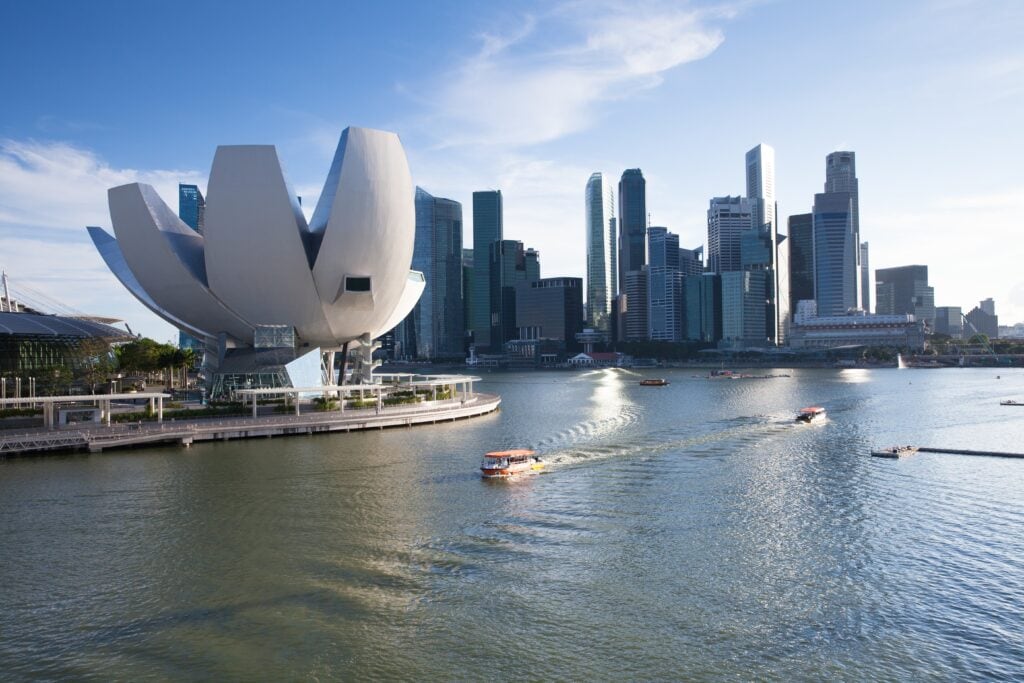
For many visitors, Marina Bay is the most obvious answer when considering central walking areas in Singapore. This is the modern heart of the city, where broad waterfront promenades create a continuous circuit around the bay, connecting landmarks, parks, and major cultural venues.
The appeal here is the ease of movement at ground level. A largely car-light ring road runs inland, leaving the waterfront itself open to pedestrians and joggers. From a hotel around Marina Bay, you can walk directly to the Merlion, Esplanade – Theatres on the Bay, and the Helix Bridge, then continue to the ArtScience Museum and the entrance to Gardens by the Bay without needing transport.
Walkability is reinforced by excellent MRT access: City Hall, Esplanade, Promenade, Bayfront, and Downtown stations all sit within a comfortable radius. Covered walkways and underground malls link many of them, letting you cross busy junctions without breaking your stroll. The trade-off is that Marina Bay can feel corporate and polished, especially in the evenings once office workers have left, so it suits travellers who prioritise skyline views, space to walk, and architectural drama over neighbourhood intimacy.
Orchard Road: Shaded Sidewalks and Underground Passageways
Orchard Road, west of the historic core, is another of the most walkable areas to stay Singapore offers, particularly for those who enjoy urban strolling with plenty of stops along the way. Though known globally as a shopping boulevard, Orchard is also designed with pedestrians in mind.
Wide pavements, frequent crossings, and long runs of canopied or tree-shaded sidewalks make it surprisingly pleasant on foot, even in the mid-day heat. Much of the walking experience here is semi-indoor: air-conditioned malls and underground passageways connect MRT stations such as Orchard, Somerset, and Dhoby Ghaut, letting you cover some distance away from the humidity.
From an orientation perspective, Orchard Road sits slightly uphill from the Downtown Core. You can walk from the upper end near Tanglin all the way down to the civic district at Dhoby Ghaut in roughly 30–40 minutes, then continue on to Bras Basah and the National Museum. The vibe is contemporary and polished, ideal for travellers who appreciate comfort and infrastructure, though it is less atmospheric if you prefer historic streets or waterfront scenery.
Singapore River, Clarke Quay and Boat Quay: Evening Promenades
The Singapore River corridor offers some of the most enjoyable explore on foot options in the city, especially in the late afternoon and evening. The riverside paths run for several kilometres from Robertson Quay through Clarke Quay and Boat Quay to the mouth of the river at Marina Bay, forming a scenic pedestrian spine through the city.
Clarke Quay itself is known for its dining and nightlife, but the real advantage for walkers is continuity: you can set off in one direction towards the quiet, residential-feeling Robertson Quay, or in the other towards the historic shophouses of Boat Quay and then the colonial landmarks of the Civic District. Bridges cross the river at frequent intervals, so you can improvise loops of varying lengths without doubling back.
Walkability here is less about grand boulevards and more about atmosphere. You stroll past terraces, low-rise heritage buildings, and glimpses of the skyline reflected in the water. North–south, it is an easy walk to Fort Canning Park, while east–west you are never far from MRT stations at Clarke Quay, Fort Canning, Raffles Place, or City Hall. The trade-off is that it can feel busy and lively at night, better suited to travellers who enjoy an animated evening scene than those who prefer complete quiet.
Historic Districts: Chinatown, Little India and Kampong Glam
For many European travellers, the most memorable walking experiences in Singapore happen in its historic neighbourhoods. Chinatown, Little India, and Kampong Glam (around Bugis) are among the most vivid walkable Singapore neighborhoods, offering dense streetscapes and strong cultural character within relatively compact areas.
Chinatown, southwest of the Downtown Core, is easy to explore on foot: blocks of conserved shophouses are arranged in a grid, with temples, clan houses, markets, and eateries never far apart. Pedestrianised side streets and well-marked crossings help soften the traffic on the main roads. From here, it is walkable to Tanjong Pagar, the Singapore River, and even Marina Bay if you are comfortable with a longer stroll.
Little India, further north near Serangoon Road, has a different rhythm. Pavements can be narrow and busy at peak times, but the area is compact and criss-crossed with short lanes. The sensory experience is intense: colour, sound, and fragrance at almost every turn. Walking between Little India, Farrer Park, and Rochor stations gives a good sense of the district’s varied corners.
Kampong Glam, near Bugis, is perhaps the most relaxed of the three. The streets behind the Sultan Mosque feel almost village-like, and Haji Lane and the surrounding grid invite slow wandering on foot. Together, these districts are ideal for travellers who want to understand the city’s multicultural history at street level and are comfortable with a more organic, less polished walking environment.
Bugis and Bras Basah: Museum Mile and Civic Landmarks
Between Orchard Road and Marina Bay, the Bugis and Bras Basah area forms an academic and cultural belt that is particularly well-suited to pedestrians. This is where you find several of Singapore’s major museums, arts institutions, and colonial-era buildings, all within an easy walking radius.
Sidewalks are broad, crossings are frequent, and many streets are lined with arcades that provide shade and shelter. From a hotel in this area, you can walk to the National Museum of Singapore, the National Gallery, the Peranakan Museum, and the civic green around the Padang without needing transport. Bugis Street Market and the restored shophouses around it add a more informal counterpoint to the formal civic architecture.
As a base, this central walking area suits travellers who like to structure their days around cultural visits, punctuated by short, manageable walks rather than long itineraries. The MRT lattice here is dense, with Bras Basah, Bencoolen, Bugis, and City Hall all within a relatively compact zone. It offers a gentle balance between the modernity of the Downtown Core and the historic texture of Kampong Glam and the Civic District.
Tiong Bahru: Local Neighbourhood Strolling
Tiong Bahru, southwest of the River, offers a quieter, residential take on walkability. Known for its 1930s Streamline Moderne architecture and leafy streets, the area is one of Singapore’s most pleasant neighbourhoods for slow, unhurried walks.
The street grid is small and human-scaled, with low-rise blocks, independent cafes, and small shops. Traffic is relatively light, and junctions are easy to cross, making it an appealing environment for those who enjoy wandering without a fixed agenda. Although it is not in the immediate Downtown Core, Tiong Bahru is only a short walk or one MRT stop away from the riverfront and Chinatown.
This is a good base if you prefer a local-feeling enclave while still being able to reach the central walking areas quickly. It is also a useful contrast to more high-rise districts like Marina Bay or Orchard Road, offering a sense of how everyday life unfolds away from the main tourist axis. For a wider sense of how this and other districts compare as bases, the broader overview of Singapore’s main areas to stay can provide additional context.
Sentosa and the Southern Waterfront: Seaside Paths and Resort-Style Walking
While not traditionally considered part of the urban centre, Sentosa and the adjacent southern waterfront areas offer another dimension of walkability focused on seafront promenades and landscaped paths rather than city streets.
On Sentosa itself, many routes are pedestrian-friendly: boardwalks, beach promenades, and internal pathways allow you to move between attractions, beaches, and viewpoints largely on foot. The Sentosa Boardwalk connects back to the mainland at HarbourFront, creating the option of walking over the water rather than relying entirely on transport.
The trade-off here is that, although very walkable locally, Sentosa is not within easy walking distance of the Downtown Core. You would likely combine internal walks with public transport or monorail rides when heading into the city. This suits travellers who want a more resort-like environment but still appreciate the option of structured, scenic promenades rather than remaining solely within a single complex.
Practical Travel Tips for Exploring Singapore on Foot
- Plan walks around the heat: Temperatures and humidity are high year-round. Aim for early morning and late afternoon walks, using mid-day for indoor visits or shaded routes such as Orchard’s underground links.
- Use the MRT to bridge gaps: Singapore’s metro is extensive and well-signposted. Combine short MRT hops with walking to cover different central walking areas in a single day without fatigue.
- Take advantage of covered walkways: Many main streets have arcades or linked malls. In Orchard, Bugis, and the Downtown Core, you can move considerable distances via sheltered passages.
- Watch for sudden rain: Brief, heavy showers are common. Pack a compact umbrella or light rain jacket, especially if you plan to walk between Marina Bay and the historic districts.
- Respect pedestrian signals: Junctions are well controlled by lights and crossings. Wait for the green man, as fines for jaywalking exist and traffic can move quickly.
- Carry water and light clothing: Even short walks can feel demanding in the humidity. Lightweight, breathable fabrics and comfortable walking shoes are advisable.
- Use parks and rivers as navigation aids: The Singapore River, Fort Canning Park, and Marina Bay form a clear framework. Once oriented to these, it becomes easier to judge walking distances.
- Note differing walking environments: Orchard and Marina Bay offer broad pavements and formal promenades; Chinatown and Little India have more crowded, narrow sidewalks, so allow more time.
- Be mindful in residential areas: In quieter districts like Tiong Bahru, keep noise down at night and observe local norms around shared spaces and courtyards.
- Check park opening hours: Certain park sections and elevated paths may close at night, so verify timings before planning an evening walk.
FAQs about Walkable Areas to Stay in Singapore
Which area in Singapore is best for exploring on foot?
For a first visit, the area around Marina Bay and the Singapore River is particularly convenient, as you can walk between major sights, the historic civic district, and several museums using waterfront promenades and well-marked streets.
Are Chinatown and Little India good for walking?
Yes, both are excellent for walking, with dense streets, markets, and temples close together. Pavements can be narrow and crowded at busy times, but distances are short and the sense of immersion is high.
Is Orchard Road pedestrian-friendly beyond shopping malls?
Orchard Road is very pedestrian-friendly, with wide sidewalks, shaded trees, and plenty of crossings. Underground walkways allow you to move between sections comfortably, making it suitable for those who prefer structured, well-serviced walking routes.
Can you walk between Marina Bay and the historic districts?
It is easy to walk between Marina Bay, the Civic District, and parts of Chinatown. Paths along the river, as well as broad pavements around City Hall and Raffles Place, create logical, safe routes for pedestrians.
Is Singapore generally safe for walking at night?
Central Singapore is widely regarded as safe for walking after dark, particularly around Marina Bay, Orchard Road, and the riverfront. Normal city awareness still applies, but lighting, signage, and pedestrian infrastructure are strong.
Conclusion
Singapore offers a range of walkable areas to stay, from the grand promenades of Marina Bay and the polished sidewalks of Orchard Road to the historic textures of Chinatown, Little India, and Kampong Glam. Each district offers a different balance of atmosphere, convenience, and local character, but all benefit from a pedestrian-friendly layout and strong public transport connections.
Choosing where to base yourself ultimately depends on whether you prioritise cultural immersion, architectural spectacle, evening energy, or quiet neighbourhood streets. With thoughtful planning, it is possible to design a stay in Singapore where most of your days unfold at walking pace, experiencing the city’s layers directly at street level.
Recommended next:
- Where to Stay in Singapore CBD for Business and Leisure
- Best Boutique Hotels in Singapore for Design Lovers
- Luxury Hotels near Singapore MRT Stations
- Best Rooftop Pool Hotels in Singapore
- Best Areas to Stay in Singapore Without Breaking the Bank
- Where to Stay in Singapore for First-Timers: Simple Area Guide
- More in Singapore →