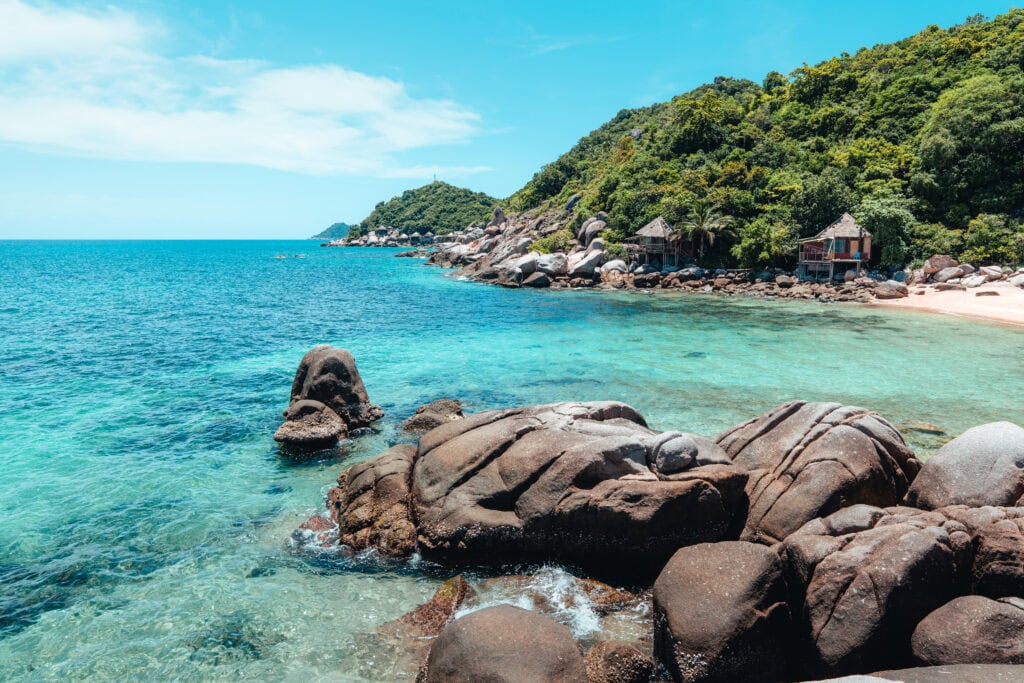
Where to Stay in Koh Phangan Beyond Full Moon
This guide is for European travellers who associate Koh Phangan mainly with the Full Moon Party, yet are looking for quiet bays, wellness areas and a slower rhythm of island life. It focuses on calm corners of the island, explaining where to stay in Koh Phangan if you are more interested in yoga, swimming and coastal walks than in nightlife.
Koh Phangan lies in the Gulf of Thailand, north of Koh Samui, and feels noticeably more relaxed than many mainland beach destinations. Understanding its different coastal pockets is as essential for orientation here as choosing the right neighbourhood in a big city, just as you would when deciding where to base yourself in Bangkok as a first-time visitor.
At first glance, the island can appear small and interchangeable, but the bays differ considerably: some are sheltered and almost rural, others are focused on yoga and wellness, and a few remain connected to the party scene. The following overview concentrates on Koh Phangan areas to stay that favour calm, greenery and low-key evenings.
Understanding Koh Phangan’s Calm Bays and Quiet Beaches
Before looking at individual areas, it is useful to understand the broad layout of Koh Phangan. The main arrival point is Thong Sala on the southwest coast, where ferries from Koh Samui and the mainland dock. From here, a ring road circles much of the island, with side roads dropping down to individual coves.
The calmest parts of the island tend to be away from the southeast, where the Full Moon Party at Haad Rin has shaped development. In contrast, the northwest and northeast headlands are known for quiet beaches, small-scale resorts and a wellness-focused crowd. Distances are short in kilometres, but the winding roads and occasional steep hills mean that 10–15 kilometres can feel surprisingly far, especially at night or in heavy rain.
For European visitors, this layout matters because it influences whether you will rely on taxis, private transfers or scooters. Staying in a self-contained bay with a few local eateries and a small village centre can feel easier if you prefer not to drive. Those who are comfortable on a scooter might enjoy being a little more remote, with access to both forested interiors and empty stretches of sand.
Srithanu: Yoga Hub and Sunset-Facing Calm
On the northwest coast, Srithanu has become the island’s informal centre for yoga, meditation and alternative therapies. It is one of the most popular Koh Phangan areas to stay for travellers seeking a retreat-like atmosphere without feeling isolated.
The main road through Srithanu is lined with vegetarian cafés, smoothie bars and yoga shalas, yet the overall pace is unhurried. Accommodation is loosely spread out between the village, the lagoon and the small beaches that face west towards the sunset. You can walk between most places, though stretches of the main road can be hot in the midday sun.
Srithanu’s beaches are small but photogenic; at low tide, long sandbars emerge and the bay can feel more like a shallow lagoon than a traditional swimming beach. This makes it peaceful for floating and paddleboarding, though less ideal for those who want deep water right from the shore. Evenings here are low-key, with soft music and occasional community events rather than large bars or parties.
Srithanu suits travellers who value wellness facilities within walking distance, appreciate a social but not noisy atmosphere, and do not mind that the village feels more international than local. It is an easy base if you want to explore other Koh Phangan quiet beaches by scooter during the day and return to a familiar, relaxed village in the evening.
Thong Nai Pan Noi and Thong Nai Pan Yai: Northeastern Bays With a Secluded Feel
On the opposite side of the island, the twin bays of Thong Nai Pan Noi and Thong Nai Pan Yai form one of the most beautiful and self-contained corners of Koh Phangan. Reached via a scenic, hilly road from the centre of the island, they feel considerably more secluded than their distance on the map might suggest.
Thong Nai Pan Noi is the smaller, more compact bay, with a sheltered curve of pale sand and a gentle slope into the sea. The hills behind are covered in dense jungle, creating a sense of enclosure and quiet. A small village lane runs parallel to the beach, with a few cafés, bars and Thai eateries. This is a place where you can comfortably spend several days without needing to leave the bay.
Thong Nai Pan Yai, just to the south, has a longer stretch of sand and a slightly more spread-out feel. It tends to be even quieter, with more space between properties and an atmosphere that suits those who enjoy long walks along the beach at dawn and dusk. The sea here is generally calm in season, with enough depth for swimming.
Both bays are particularly appealing to couples and longer-stay guests who want a tranquil base and are less concerned about being close to the main ferry pier. Travel times from Thong Sala are usually 30–45 minutes by road, which is worth keeping in mind if you plan frequent trips around the island. Once you arrive, however, the effort pays off with a strong sense of being far from the party circuit.
Hin Kong and the Western Coast: Tidal Flats, Sunsets and Quiet Stays
South of Srithanu, the coastline around Hin Kong is another area that European travellers often consider when deciding where to stay in Koh Phangan beyond the party zones. This stretch of coast looks out across the sea towards Ang Thong Marine Park and Koh Samui, and is known for expansive sandflats at low tide.
The shore here is more about atmosphere and views than classic swimming beaches. At high tide, the water comes in close and is calm; at low tide, the sea retreats a long way, leaving rippled sand patterns and shallow pools. Many properties here sit directly on the shoreline, with palm trees and hammocks providing a quietly tropical feel.
A narrow coastal road follows the water, meaning that cafés, small bars and accommodation are usually within easy walking distance of one another. Traffic is relatively light but can increase around sunset as visitors arrive to watch the sky change colour. Even with this small influx, the area remains gentle and unhurried.
Hin Kong is a good compromise for those who want a sense of seclusion but still appreciate being within a short drive of Thong Sala’s shops and ferry connections. It is also a practical choice for travellers who are not planning to ride scooters at night, as many restaurants and low-key bars are reachable on foot along the flat coastal strip.
Chaloklum and the Northern Coast: Fishing Village Character and Laid-Back Bays
On the north coast, Chaloklum is a traditional fishing village that has gradually attracted a small but steady stream of travellers seeking a local feel and quiet evenings. The village clusters around a wide bay, with colourful fishing boats and a working pier that lend the area a sense of everyday life.
The main beach in Chaloklum is broad and typically quiet, though some sections are used more by boats than swimmers. For many visitors, the real appeal lies in the nearby smaller bays such as Haad Khom (Coral Bay), which can be reached by a short drive or a long coastal walk. These spots offer clear water, snorkelling opportunities and a reassuringly low level of development.
The village itself has a handful of restaurants serving fresh seafood, a few cafés and convenience shops. Evenings are subdued: people gather for dinner, stroll along the waterfront and then return to their accommodation. If you are looking for bright lights or live music every night, Chaloklum will feel too quiet. For those wanting to read, swim and occasionally snorkel, it can be ideal.
Chaloklum suits travellers who like the idea of a functioning Thai village with tourism woven into, rather than replacing, local life. It is also a practical base for exploring the island’s northern hiking trails and viewpoints, as well as for boat trips that depart from the local pier.
Baan Tai and the Central South Coast: Balanced Access With a Softer Mood
The stretch of coast between Thong Sala and Baan Tai occupies an interesting middle ground in discussions of where to stay in Koh Phangan. While it is closer to the party areas than the bays in the north and northeast, it has large pockets that feel residential and subdued, especially away from the main road.
The shoreline here alternates between sandy sections and more tidal, mangrove-fringed stretches. Views across the sea towards Koh Samui are a constant backdrop, particularly striking at sunset. Being on the main road means that taxis and songthaews (shared pick-up trucks) pass frequently, making it convenient to travel without your own transport.
This area tends to attract longer-stay visitors, digital nomads and those who value easy access to both Thong Sala and quieter coasts further north. The trade-off is that the beaches are not as pristine as those at Thong Nai Pan or the small coves near Chaloklum. However, for travellers who prioritise logistics and a sense of everyday island life over picture-perfect sand, the central south coast can work well.
For some visitors, Baan Tai is also a practical first base before moving on to more remote bays later in their stay. It allows you to orient yourself, organise transport and supplies, and then decide whether you prefer the northern village atmosphere, the wellness focus of Srithanu, or the seclusion of the northeast.
Wellness and Retreat Areas: Beyond the Party Reputation
One of the most striking shifts in Koh Phangan over recent years has been the growth of wellness-focused spaces. While Srithanu is the most visible hub, smaller yoga platforms, meditation centres and retreat-style properties are scattered around the northwest and interior hills.
These wellness areas tend to be deliberately low-key, with early mornings and quiet nights. They appeal to European travellers who want to combine time on Koh Phangan quiet beaches with structured yoga classes, breathwork sessions or simply a slower routine. Many visitors plan stays of a week or longer, treating the island almost as a reset from busier European city life.
Choosing where to stay in relation to these centres depends largely on your tolerance for remoteness. Properties on hillside locations often have sweeping sea views and a sense of being cocooned in nature, but walking to the beach or village requires dealing with steep gradients and, at times, unlit paths. Coastal wellness spaces are more convenient yet can feel slightly busier in high season.
Either way, the presence of these retreat-style pockets reinforces the island’s identity as more than a party destination. For those who have already explored mainland cities and are familiar with urban orientation advice similar to Bangkok neighbourhood breakdowns, Koh Phangan offers a contrasting experience of small-scale, nature-led routines.
Practical Travel Tips for Calm Stays in Koh Phangan
- Arriving on the island: Most travellers arrive via ferry from Koh Samui or the mainland to Thong Sala; from here, pre-arranged transfers are useful if heading to Thong Nai Pan or the more remote northern bays.
- Transport within Koh Phangan: Scooters are the most flexible option but require confidence on hilly, occasionally potholed roads; if in doubt, choose an area like Srithanu or Hin Kong where you can walk to most amenities.
- Timing your journeys: Allow extra time for transfers in the late afternoon, when school traffic and delivery trucks can slow progress along the central roads.
- Seasonal considerations: During the monsoon-influenced months, roads to the northeast (Thong Nai Pan) can be wet and slippery; in such periods, staying closer to Thong Sala or the west coast may feel more comfortable.
- Beach expectations: Many west coast beaches are tidal; if you prioritise swimming at any time of day, research which bays maintain sufficient depth during low tide.
- Noise awareness: Even in quieter areas, occasional beach gatherings and local events can run late; if you are sensitive to noise, check how close your accommodation is to beach bars or main village lanes.
- Respecting local norms: Away from the main party beaches, dress is generally modest in villages; beachwear is accepted on the sand but less so in small shops and markets.
- Evening mobility: Many roads are unlit at night; if you plan to walk, carry a small torch and choose bays with continuous pavement or beachside paths.
- Health and wellness: If you are travelling specifically for yoga or retreats, check how far your chosen bay is from the nearest clinic or pharmacy, especially in the more remote northeastern and northern areas.
- Combining locations: Consider splitting your stay between a convenient base near Thong Sala or Baan Tai and a quieter bay such as Srithanu or Thong Nai Pan to experience different sides of the island.
FAQs About Where to Stay in Koh Phangan Beyond the Party Scene
Which part of Koh Phangan is best for quiet beaches?
The northeast bays of Thong Nai Pan Noi and Thong Nai Pan Yai, along with smaller coves near Chaloklum on the north coast, offer some of the quietest swimming beaches. They are more remote than the south but reward the extra travel time with calm water and limited nightlife.
Is Srithanu a good area to stay if I want calm but not isolation?
Yes. Srithanu combines a gentle, wellness-focused atmosphere with a compact village layout, making it one of the most convenient Koh Phangan areas to stay for those who want cafés, yoga and the sea within walking distance, yet prefer evenings that stay relatively quiet.
Where should I stay if I want to avoid the Full Moon Party completely?
To avoid the party, look to the northwest and north of the island: Srithanu, Hin Kong, Chaloklum and the Thong Nai Pan bays are all far enough from Haad Rin that the event has little impact on daily life there. The main consideration will be your comfort with the longer transfer from the ferry pier.
Are Koh Phangan’s wellness areas suitable for first-time visitors to Thailand?
They are. Places like Srithanu and the calmer western bays attract many first-time visitors, including solo travellers, because they combine a relaxed social scene with relatively easy logistics. The environment is slower paced than big cities, but basic services and transport links are well established.
How do I choose between Srithanu and Thong Nai Pan for a peaceful stay?
Srithanu is better if you want a social wellness hub with multiple yoga studios and cafés, plus easier access to the rest of the island. Thong Nai Pan, on the other hand, is ideal if you prefer a self-contained, scenic bay where the beach is the main focus and you are comfortable with being further from Thong Sala.
Conclusion
Staying in Koh Phangan beyond the Full Moon Party means choosing between a spectrum of calm: from the yoga cafés of Srithanu and the tidal serenity of Hin Kong to the fishing village atmosphere of Chaloklum and the secluded twin bays of Thong Nai Pan. Each area offers its own balance between convenience, local character and quiet, allowing European travellers to match their preferred pace of island life with the landscape that suits them best.
Recommended next:
- Thailand Itinerary 10 Days: Bangkok, Chiang Mai & Islands for First-Timers
- Thailand Itinerary 14 Days: Classic Route with Beaches and Northern Culture
- Thailand in 7 Days: Bangkok + One Beach Base (No Rushing)
- Best Time to Visit Thailand: Month-by-Month Weather for Europeans
- Thailand Travel Costs: Realistic Daily Budget for European Travelers
- Thailand Travel Insurance Guide: What to Cover and What to Skip
- More in Thailand →