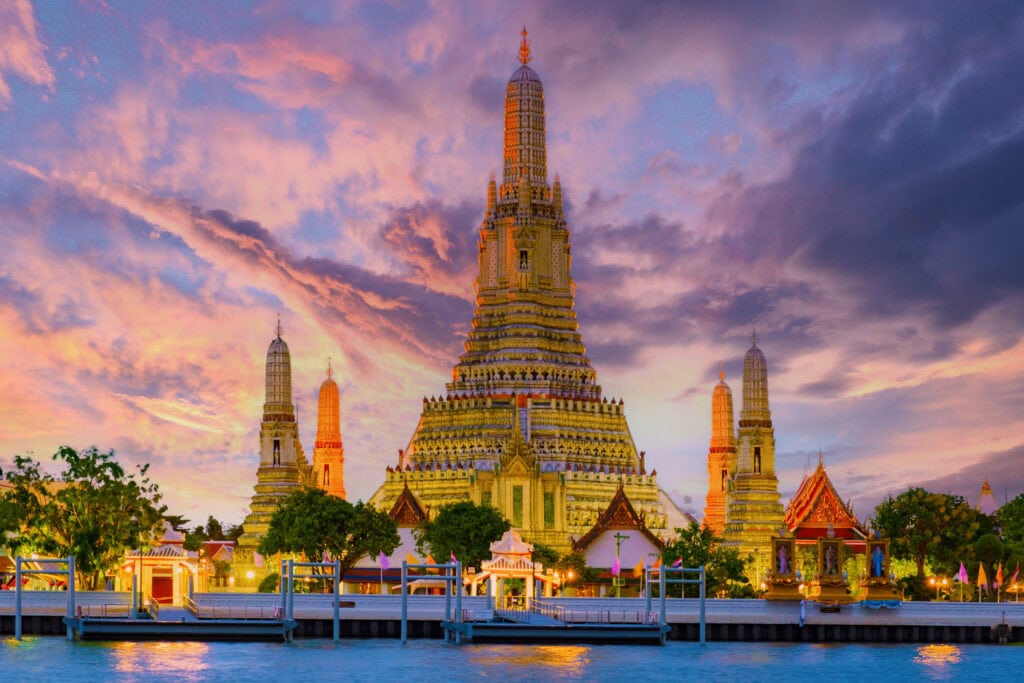
Thailand itinerary 14 days for European travellers
This thailand itinerary 14 days is designed for European travellers seeking a balanced first encounter with the country: a combination of Bangkok’s intensity, the calm of the southern islands, and the cultural depth of the north. It is a classic 2-week plan, paced for comfort after a long-haul flight yet rich enough to feel you have seen three distinct sides of Thailand. For travellers coming from Europe, Thailand offers a gentle entry into Southeast Asia: excellent infrastructure, clear regional contrasts, and straightforward connections between city, beach and mountains. This itinerary follows the well-established Bangkok–islands–Chiang Mai arc, the most time-efficient way to experience Thailand’s quintessential highlights in two weeks. Geographically, Thailand stretches from the northern mountains near Myanmar and Laos down to a long southern peninsula bordered by the Andaman Sea and the Gulf of Thailand, which makes planning a coherent 2 week thailand itinerary largely a question of sequencing north, central and south in a logical flow.Overview: how a classic 2 week Thailand itinerary fits together
This classic 14-day route is built around three bases: Bangkok, a southern island area, and Chiang Mai. The result is a triangle that minimises backtracking and internal travel time while giving a sense of Thailand’s diversity.- Bangkok (3–4 nights) – Entry point, jet lag adjustment, temples, river life and food. Ideal to begin or end the trip thanks to international air connections.
- Southern islands (5–6 nights) – Either the Andaman Sea (Phuket, Krabi, Koh Phi Phi) or the Gulf of Thailand (Koh Samui and neighbouring islands) depending on season and weather.
- Chiang Mai (3–4 nights) – Northern culture, temples, cooking classes, night markets and access to surrounding hills.
Days 1–3: Bangkok as your urban introduction
Bangkok anchors any comprehensive thailand travel plan. It can appear chaotic on arrival from Europe, but its neighbourhoods quickly reveal an underlying structure: historic temples along the river, commercial districts around Siam, and contemporary lifestyle areas in Sukhumvit and Silom. Day 1: Arrival and first orientation- Arrive at Suvarnabhumi or Don Mueang airport, then transfer into the city by taxi, airport rail link or pre-arranged transport.
- Use the first evening for a gentle walk in your immediate area and a simple local dinner; the goal is to adjust to the humidity and time difference rather than sightsee heavily.
- Focus on the Old Town and riverside: the Grand Palace, Wat Phra Kaew, and nearby Wat Pho. Shoulders and knees need to be covered, so plan clothing accordingly.
- In the afternoon, take a long-tail boat through the canals (klongs) on the Thonburi side to experience a slower, traditional aspect of the city.
- Evening around the riverside or in Chinatown for street food and a sense of older shop-house Bangkok.
- Explore a contrasting area such as Sukhumvit or Silom for cafés, galleries and a more contemporary energy.
- If your thailand itinerary 14 days includes shopping, central areas around Siam have major malls that also serve as convenient retreats from the heat.
- Finish with a rooftop drink or riverside walk to see the city lit up at night.
Days 4–8: Southern islands for beaches and slow days
The middle portion of a classic 2 week thailand itinerary usually belongs to the islands. This creates a clear pause between the stimulus of Bangkok and the cultural focus of the north. Choosing the right coastline depends largely on the month of travel. Andaman Sea: Phuket, Krabi, Koh Phi Phi The Andaman coast on the west side is known for limestone cliffs and dramatic seascapes. It works well from roughly November to April, with calmer seas and more reliable sunshine.- Phuket offers several distinct beach areas, from quieter bays in the north to more lively stretches closer to town. It has the broadest choice of dining and activities, from island-hopping to viewpoints.
- Krabi, including Ao Nang and Railay, feels more compact, framed by cliffs and mangroves. Long-tail boats connect beaches with offshore islands in under an hour.
- Koh Phi Phi is smaller and more isolated, with impressive scenery but a more concentrated atmosphere. Many travellers visit as a day trip rather than staying overnight.
- Koh Samui has a ring road circling the island, with beaches ranging from lively stretches to quieter bays. Inland you find waterfalls and viewpoints.
- Koh Phangan offers a mix of low-key villages, yoga and wellness areas, plus some busier pockets. Away from its well-known parties, a large part of the island feels tranquil.
- Koh Tao is more compact, with hilly roads and small coves, suitable for those interested in snorkelling and time on the water.
- Day 4 – Morning flight from Bangkok to your chosen island airport (Phuket, Krabi, or Samui), then an easy afternoon by the beach.
- Days 5–7 – Mix of island-hopping day trips, relaxed beach time and short explorations inland. Keep at least one full day with no fixed schedule.
- Day 8 – Final morning at the beach, then an afternoon or evening flight north to Chiang Mai, usually via Bangkok.
Days 9–13: Chiang Mai and the culture of northern Thailand
Chiang Mai provides a counterpoint to the south: cooler evenings, a more compact historic core, and a slower tempo. For many travellers, it becomes a highlight of their bangkok islands chiang mai journey. Day 9: Arrival and Old City walk- After arriving from the south, settle into the Old City or a nearby riverside area.
- Spend the late afternoon walking between a few of the central temples, such as Wat Chedi Luang and Wat Phra Singh, noticing how the city feels markedly calmer than Bangkok.
- Visit Wat Phra That Doi Suthep, the temple overlooking Chiang Mai from the mountain to the west. The journey up, whether by songthaew or private car, gives an overview of the surrounding forested hills.
- Return via small villages or viewpoints, then spend the evening at one of the night markets, sampling northern Thai dishes that differ from those in the south.
- Many visitors choose a cooking class, craft workshop, or cycling tour into the surrounding countryside. These activities fit particularly well into a thailand travel plan that values slower, more immersive days.
- The city also has a developing café culture and small galleries, especially in neighbourhoods just outside the Old City.
- Reserve a full day for the wider region: perhaps a visit to nearby villages, waterfalls, or tea and coffee areas in the hills.
- If you prefer to stay within the city, this can instead become a flexible day for markets, spa time, or simply revisiting areas you enjoyed earlier in the stay.
- Use the last morning for a quiet walk, final temple visit, or café stop, before flying back to Bangkok in the afternoon or evening.
Day 14: Return to Bangkok and onward to Europe
Most European departures leave from Bangkok, so the final day typically involves a short domestic flight from Chiang Mai back to the capital.- If your international flight departs late at night, you may have a few spare hours in Bangkok. In that case, many travellers choose a familiar neighbourhood to revisit for a last meal or walk.
- Allow generous buffer time between flights to account for weather, airport transfers and security formalities. Many visitors feel more relaxed when they schedule the Chiang Mai–Bangkok flight for earlier in the day.
Adapting the classic route to your travel style
While the structure of Bangkok, islands and Chiang Mai remains constant, there is room within a thailand itinerary 14 days to adjust the balance according to personal preferences and seasonality.- For culture-focused travellers – Add a night to Chiang Mai and reduce the beach stay by one day. You might also include a half-day museum visit in Bangkok or focus more on Chinatown and historic quarters rather than modern shopping areas.
- For beach-first travellers – Extend the islands by one or two nights, especially if travelling in peak beach season. In that case, a shorter two-night stop in Bangkok at the beginning and three in Chiang Mai can still work well.
- For families – Fewer hotel changes tend to be easier. Consider staying the full five nights on one island rather than splitting between multiple places, and choose neighbourhoods in Bangkok and Chiang Mai with straightforward transport and access to parks or quieter streets.
- For repeat visitors – You might keep the overall triangle but substitute a different northern base, or select a less developed island area while still using Bangkok as your entry and exit point.
Practical travel tips for a smooth 14 days in Thailand
- Seasonality matters: The Andaman coast (Phuket, Krabi, Koh Phi Phi) generally suits the European winter months, while the Gulf of Thailand (Koh Samui and neighbours) can be more favourable around the European summer.
- Internal flights: For a 2 week thailand itinerary, domestic flights save considerable time. Routes such as Bangkok–Phuket, Bangkok–Samui and Bangkok–Chiang Mai operate frequently, often from both main Bangkok airports.
- Airport choice in Bangkok: Check carefully whether your domestic flight uses Suvarnabhumi or Don Mueang, as they are on opposite sides of the city and transfers can take longer than expected in traffic.
- Local transport in cities: In Bangkok, the BTS Skytrain and MRT are efficient for central areas, while boats work well along the river. In Chiang Mai, most journeys are short and handled by taxis, songthaews or walking.
- Island transfers: Even when flying to an island airport, some beach areas require an additional road transfer or short boat ride. Build this into your first and last days in the south so they remain unhurried.
- Clothing and temples: Modest dress is needed for major temples in Bangkok and Chiang Mai. Light, breathable fabrics that cover shoulders and knees work well in the heat.
- Heat and humidity: European travellers may find midday sun intense, especially in the earlier days. Plan key walks and temple visits for mornings and late afternoons, reserving midday for shaded or indoor activities.
- Food and water: Street food is a central part of the experience, but it is wise to start gently while your system adjusts. Stick to bottled or filtered water and pay attention to hygiene at smaller stalls.
- Cash and payments: Cards are widely accepted in cities and larger island resorts, but local markets, smaller eateries and some transport still prefer cash. ATMs are common in all major stops on this itinerary.
- Respectful interactions: A simple “wai” (palms together with a slight bow) and basic Thai greetings are appreciated. In temples, remove shoes where requested and keep voices low, especially during ceremonies.
FAQs about planning a 14-day Thailand itinerary
Is 14 days enough for a classic Bangkok, islands and Chiang Mai route?
Yes, 14 days is enough to follow a coherent bangkok islands chiang mai route without feeling constantly in transit. It allows three or four nights in each main stop plus a comfortable travel day at each transition.How should I split my time in a 2 week Thailand itinerary?
A balanced split for a thailand itinerary 14 days is roughly 3–4 nights in Bangkok, 5–6 nights at one island base, and 3–4 nights in Chiang Mai. This provides a natural progression from city to beach to northern culture.Which islands work best with this Thailand travel plan?
For the Andaman Sea, Phuket or Krabi make convenient bases with good flight connections and varied day trips. On the Gulf side, Koh Samui fulfils a similar role. All can be combined smoothly with Bangkok and Chiang Mai within two weeks.Should I fly or travel overland between Bangkok, the islands and Chiang Mai?
Given the distances involved in a nationwide thailand travel plan, flights are usually the most time-efficient choice, especially on a limited schedule. Overland routes are possible but tend to consume full days that could otherwise be spent exploring.Is this itinerary suitable for a first trip to Thailand from Europe?
This structure is particularly suited to first-time European visitors. It offers an accessible introduction to the country’s major regions while keeping logistics straightforward and minimising the number of different bases.Conclusion: a coherent snapshot of Thailand in two weeks
This thailand itinerary 14 days offers a clear, well-paced overview of the country: the density and energy of Bangkok, the restorative calm of the southern beaches, and the cultural depth of Chiang Mai. It does not attempt to cover every region; instead, it focuses on three complementary areas that fit neatly together within two weeks. The trade-off is that some regions, such as the far north or smaller islands, remain for a future journey. In exchange, the itinerary remains manageable, with room for unstructured time and personal exploration, giving European travellers a measured yet memorable first impression of Thailand.Recommended next:
- Thailand Itinerary 10 Days: Bangkok, Chiang Mai & Islands for First-Timers
- Thailand in 7 Days: Bangkok + One Beach Base (No Rushing)
- Best Time to Visit Thailand: Month-by-Month Weather for Europeans
- Thailand Travel Costs: Realistic Daily Budget for European Travelers
- Thailand Travel Insurance Guide: What to Cover and What to Skip
- More in Thailand →