Introduction: A First-Timer’s Thailand Itinerary 10 Days
This 10 day Thailand itinerary is designed for first-time visitors from Europe who want a clear, well-paced introduction to Bangkok, Chiang Mai and the southern islands without feeling rushed or overwhelmed. It focuses on orientation, transport and atmosphere rather than checklists, helping you understand how the country fits together on a first journey. Thailand sits at the heart of mainland Southeast Asia, with Bangkok as its dynamic capital in the centre, Chiang Mai in the cooler northern hills, and a necklace of tropical islands and peninsulas to the south in the Andaman Sea and Gulf of Thailand. This route links them in a logical sequence so a first visit feels coherent, not chaotic.How This 10 Day Thailand Itinerary Flows
For a first-timer, the challenge is not how much to see, but how to structure the journey. This thailand itinerary 10 days follows a north–south arc that balances urban energy, cultural immersion and island downtime:- Days 1–3: Bangkok – Arrival, riverfront landmarks, neighbourhood exploration and food.
- Days 4–6: Chiang Mai – Temples, Old City lanes, markets and mountain landscapes.
- Days 7–10: Islands – Either the Andaman (Phuket, Krabi, Koh Phi Phi) or the Gulf (Koh Samui and nearby islands).
Days 1–3: First Orientation in Bangkok
Bangkok is where most European routes land and the city will frame your first impressions of Thailand. It is sprawling, but for a first-timer route you can focus on three main areas: the riverside, the historic Old Town around Rattanakosin, and the modern core stretching through Sukhumvit and Siam. Atmosphere and rhythm: Bangkok is intense but surprisingly navigable once you understand its axes. The Chao Phraya River acts as a natural orientation line, separating the historic heart on its eastern bank from quieter, more residential districts. Inland, the BTS Skytrain and MRT lines run broadly north–south and east–west, connecting business blocks, malls, nightlife streets and residential neighbourhoods. How to structure three days for a first visit:- Day 1 – Arrival and river focus: Settle in and stay close to the river or central districts for short journeys. Use river boats to move between piers and get a first sense of the city’s scale while avoiding traffic.
- Day 2 – Historic core: Dedicate a day to the Grand Palace area, Wat Pho and nearby temples. The Old Town is compact enough to explore on foot or with short tuk-tuk rides, but expect heat and crowds in the middle of the day.
- Day 3 – Modern Bangkok: Shift to Sukhumvit, Siam or Silom for a more contemporary view of the city: elevated trains, rooftop views and dense clusters of restaurants and bars.
Days 4–6: Chiang Mai – Slower Pace and Northern Culture
After two or three nights in the capital, flying north to Chiang Mai creates a noticeable change of atmosphere: the air often feels cooler and drier, the skyline lower, and the tempo gentler. It is a natural next step on a first-timer route, offering an accessible introduction to Thailand’s Lanna heritage and mountain landscapes. Old City as a base: The Old City of Chiang Mai, still defined by its moat and remnants of ancient walls, makes an intuitive base for a first visit. The area is compact and easily walkable, with alleyways, small temples, cafés and guesthouses, and it is simple to navigate without prior experience of Thailand. How to think about three days in Chiang Mai:- Day 4 – Arrival and Old City: After a morning flight from Bangkok, use the afternoon to wander the Old City on foot. Distances are short, and it is possible to visit several temples and markets in a single gentle loop.
- Day 5 – Surrounding hills: A full day is ideal for exploring the countryside: the slopes of Doi Suthep, viewpoints over the city, or small villages and craft centres beyond the urban core.
- Day 6 – Markets and neighbourhoods: Reserve time for markets, cafés, and perhaps a cooking class or workshop. This slower day gives space to absorb what you have seen before moving south to the islands.
Days 7–10: Choosing Your Island Finish – Phuket, Krabi or Koh Samui
The final section of this 10 day Thailand itinerary is about choosing the right coastal region for your last three or four nights. For first-timers, the decision usually comes down to a bangkok chiang mai phuket-style route via the Andaman Sea, or a Chiang Mai–Koh Samui connection into the Gulf of Thailand. Andaman Sea: Phuket, Krabi and Koh Phi Phi- Phuket: The largest and most accessible island in the Andaman, with its own airport and a wide spread of beaches. For beginners, it offers easy logistics, varied coastal scenery and plenty of day-trip options to nearby islands.
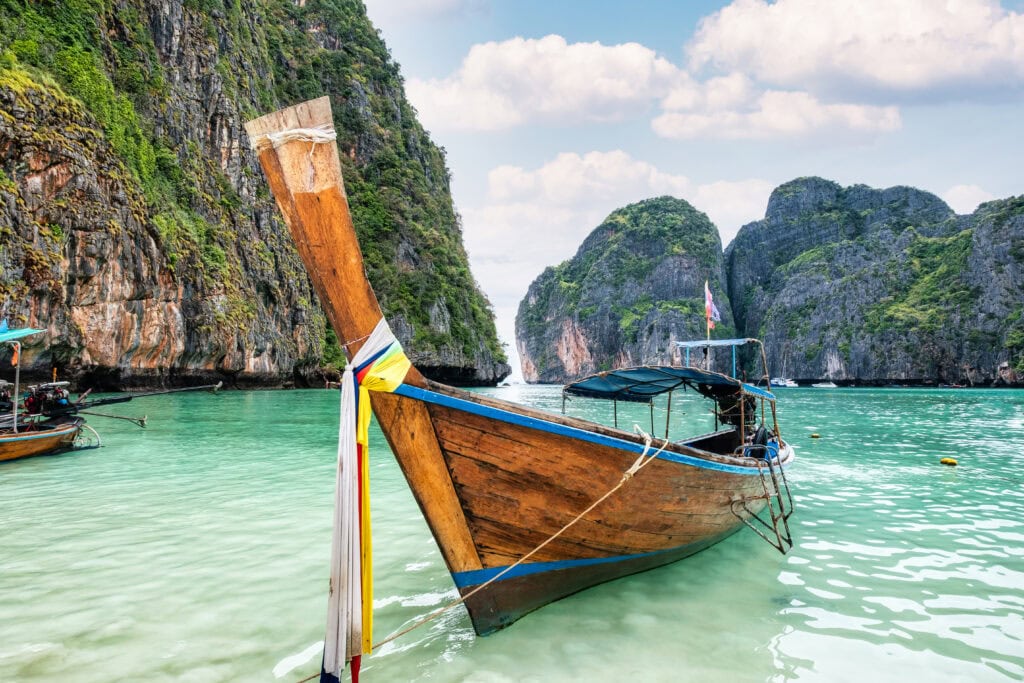
- Krabi: On the mainland but facing the same sea, Krabi (including Ao Nang and Railay) is known for its limestone cliffs and dramatic coastline. It feels slightly smaller in scale than Phuket, with a focus on scenery and boat excursions.
- Koh Phi Phi: A compact island group between Phuket and Krabi, often visited as a day trip or overnight stop. Its appeal lies in its coves, viewpoints and boat trips rather than large-town infrastructure.
- Koh Samui: An island with its own airport, ring road and a wide choice of bays. It offers a mix of busy beaches and quieter corners and works well if you prefer a slightly softer landscape than the Andaman cliffs.
- Nearby islands: Koh Phangan and Koh Tao are usually better suited to longer stays than a first-timer’s 10-day route, but some travellers include Koh Phangan for a night or two if they are already familiar with Thailand.
- If you value straightforward connections and a broad choice of coastal settings, Phuket or Samui, both with airports, fit a thailand route for beginners.
- If you are drawn to limestone cliffs and dramatic seascapes, Krabi and the surrounding islands deliver that distinctive Andaman scenery.
- If you prefer a single base rather than moving between islands, choose one main destination and explore nearby areas on day trips to avoid packing and unpacking repeatedly.
Structuring Each Day: Balancing Sightseeing and Rest
One risk of a short trip is overloading every day. A more sustainable thailand itinerary 10 days uses a simple rhythm: one main focus each day, supported by lighter, optional activities. In Bangkok, this might mean prioritising the Grand Palace and nearby temples in the morning, then leaving the late afternoon for a river cruise or a rooftop viewpoint rather than squeezing multiple districts into one stretch of heat and traffic. In Chiang Mai, consider anchoring each day around one element: a morning on Doi Suthep, an afternoon market visit, or a single workshop. Distances are small; there is no need to rush across the city repeatedly. On the islands, the climate encourages an early start and a slower afternoon. Morning boat trips or walks can be followed by time under shade or in the water rather than prolonged midday sun exposure. European travellers often underestimate the combination of humidity, heat and reflection from sand and sea. Leaving some unstructured time every couple of days also creates room for local discoveries—a café you pass in Chiang Mai, a quiet temple courtyard in Bangkok, or a small cove near your island base. This makes a 10 day Thailand itinerary feel less like a checklist and more like a first introduction you can deepen on future trips.Practical Travel Tips for a First-Timer Thailand Route
- Flight sequence: For a north–south arc, many travellers start in Bangkok, fly to Chiang Mai, then continue directly to Phuket, Krabi or Koh Samui before returning to Bangkok for the flight back to Europe.
- Domestic flight timing: Early to mid-morning departures are usually less affected by thunderstorms and allow time to settle in at your next stop before evening.
- Airport transfers in Bangkok: Suvarnabhumi Airport connects to the city by Airport Rail Link and taxis. For a first visit, combine the train with a short taxi ride to avoid peak-hour traffic.
- Moving around Bangkok: Use the BTS and MRT for main journeys, and fill gaps with short taxi or tuk-tuk rides to avoid extended traffic congestion.
- Walking comfort: Pavements can be uneven in parts of Bangkok and Chiang Mai. Closed shoes or sturdy sandals are more practical than flimsy footwear.
- Temple etiquette: Shoulders and knees should be covered when visiting temples. Lightweight trousers or long skirts and a light scarf are useful in both Bangkok and Chiang Mai.
- Heat management: Plan outdoor visits in the early morning or late afternoon, especially in Bangkok and on the islands. Reserve midday for shaded cafés, indoor museums or rest.
- Island transfers: If your itinerary includes boats (for example, to Koh Phi Phi), keep some flexibility in your schedule, as sea conditions can affect timings.
- Connectivity: Local SIM cards or eSIMs are widely used and make it easier to navigate, arrange transport and check opening hours while on the move.
- Local manners: A calm tone and patience go a long way. Public displays of frustration are frowned upon, and a polite greeting is appreciated even in basic interactions.
- Time difference: Thailand is several hours ahead of most European countries. Using the first light day in Bangkok gently helps manage jet lag before more structured sightseeing in subsequent days.
FAQs: Planning a Thailand Itinerary 10 Days
Is 10 days enough for a first trip to Thailand?
Ten days is enough for a focused introduction to Thailand if you limit yourself to a clear route such as Bangkok, Chiang Mai and one island area. You will not see the entire country, but you will experience urban life, northern culture and the coast within a manageable timeframe.How should I split a 10 day Thailand itinerary between Bangkok, Chiang Mai and the islands?
A common approach is three nights in Bangkok, three in Chiang Mai and three or four on the islands. This gives time to adjust on arrival, immerse yourself briefly in the north, then decompress by the sea before returning to Europe.Which islands work best for beginners: Phuket, Krabi or Koh Samui?
All three are suitable for a thailand route for beginners. Phuket and Koh Samui have airports and a wide range of beaches and day trips, making logistics straightforward. Krabi feels smaller and more focused on scenery, often combined with nearby islands such as Koh Phi Phi.Is it better to visit the islands before or after Chiang Mai?
For most travellers, it feels more natural to move north first, then south: Bangkok to Chiang Mai, then down to the islands. Ending with the coast allows you to slow down after the more active urban and cultural sections of your itinerary.Can I include both Phuket and Koh Samui in 10 days?
It is technically possible, but not ideal on a tight 10 day Thailand itinerary. Moving between the Andaman and Gulf coasts adds flights and transfers that can eat into your limited time. For a first visit, it is usually more satisfying to choose one region and explore it more calmly.Conclusion: A Coherent First-Timer Route Through Thailand
A carefully structured 10 day Thailand itinerary gives European travellers a balanced first impression of the country: the scale and energy of Bangkok, the slower northern rhythm of Chiang Mai, and the gentle close of a few days by the sea. The trade-off is breadth versus depth—you will see three distinct sides of Thailand, but only briefly. This route works best if you treat it as an introduction, learning the basic geography and rhythms so that any future visit can dive deeper into the regions that resonated most with you.Recommended next:
- Thailand Itinerary 14 Days: Classic Route with Beaches and Northern Culture
- Thailand in 7 Days: Bangkok + One Beach Base (No Rushing)
- Best Time to Visit Thailand: Month-by-Month Weather for Europeans
- Thailand Travel Costs: Realistic Daily Budget for European Travelers
- Thailand Travel Insurance Guide: What to Cover and What to Skip
- More in Thailand →