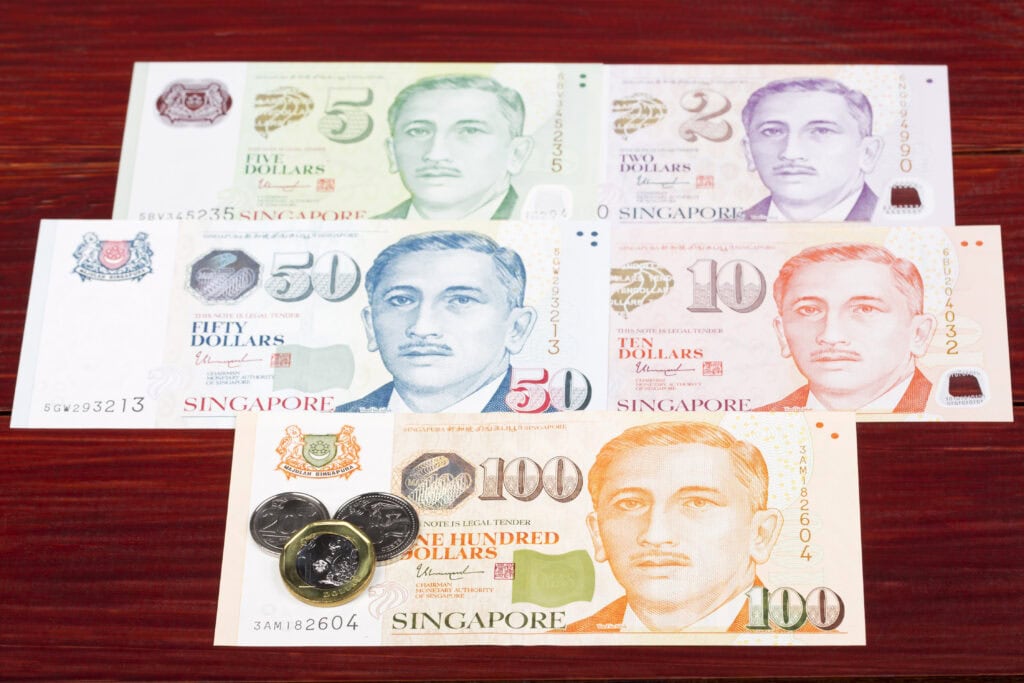
Singapore is generally straightforward for everyday spending, but visitors should not rely on a single payment method. Cards are commonly used, while cash remains useful at some food stalls, markets and smaller businesses. These money tips for Singapore explain how to combine cards, cash and ATMs without paying avoidable conversion fees.
Quick answer
Take at least one low-fee payment card, a backup card stored separately and a modest amount of Singapore dollars. Use cards for larger purchases and established businesses, but keep cash available for smaller merchants and situations where an overseas card or mobile wallet is not accepted.
Before travelling, check your bank’s foreign transaction fee, cash withdrawal fee and exchange-rate policy. At payment terminals and ATMs, paying in Singapore dollars is typically preferable to accepting conversion into euros, pounds or another home currency.
Singapore currency basics
Singapore uses the Singapore dollar, usually shown as SGD or with a dollar symbol. If a price is displayed only with a dollar sign, it will normally refer to Singapore dollars unless the merchant states otherwise.
Travellers arriving with euros, pounds or other European currencies should not expect shops to accept them directly. Convert money through a bank, licensed money changer or ATM, and compare the full cost rather than looking only at an advertised exchange rate.
Cash vs card in Singapore
| Payment method | Best used for | What to check |
|---|---|---|
| Credit or debit card | Hotels, shopping centres, restaurants and larger purchases | Foreign transaction fees, exchange-rate markup and merchant acceptance |
| Contactless card or mobile wallet | Fast everyday payments where the relevant network is accepted | Whether an overseas card can be added and whether the terminal supports it |
| Cash | Some hawker stalls, markets, small shops and backup spending | Carry manageable notes and avoid keeping all cash together |
| ATM withdrawal | Obtaining Singapore dollars after arrival | Your bank’s fee, any ATM operator fee and the conversion offered |
| Currency exchange | Converting physical euros, pounds or other currencies | The final amount received after commission and other charges |
When cards are practical
International card networks are commonly accepted by established businesses, particularly in central shopping, dining and accommodation areas. Acceptance is not universal, however, and an overseas card can occasionally be declined because of issuer controls, terminal compatibility or a merchant’s payment policy.
Visa and Mastercard tend to be the most practical networks for travellers, but acceptance can vary. If you use another network, carry an alternative card rather than assuming every merchant will support it.
When cash is still useful
Cash is worth carrying for small purchases, particularly at some food stalls, traditional markets and independent businesses. Local QR payment signs do not necessarily mean a European visitor can pay: some systems require a Singapore bank account, local wallet or compatible application.
A sensible approach is to withdraw or exchange enough for small daily expenses without carrying the entire trip budget in cash. Notes may also be easier to use if you receive smaller denominations rather than only large ones.
Using European cards in Singapore
Before departure, review your card’s terms for purchases outside Europe. A card advertised as fee-free at home may still apply a foreign transaction charge, exchange-rate markup or cash withdrawal fee in Singapore.
- Tell your card issuer about the trip if its current fraud-prevention guidance recommends doing so.
- Confirm that international and contactless payments are enabled.
- Check your daily purchase and ATM withdrawal limits.
- Bring a second card, ideally from a different issuer or network.
- Keep the issuer’s card-freezing and support options accessible without relying on the physical card.
If your account is denominated in euros, pounds or another currency, the card network or issuer will convert the Singapore-dollar transaction. The rate and any added markup depend on the card agreement.
Always check the payment currency
Some terminals may offer to convert a purchase into your home currency. This is commonly known as dynamic currency conversion. It provides an immediate home-currency total, but the merchant or payment provider sets the conversion terms.
Choosing SGD generally lets your card issuer handle the conversion instead. Compare your card’s terms, but do not assume that seeing the amount in euros or pounds makes it the cheaper option.
Singapore ATM fees and withdrawals
ATMs are widely associated with banks and commercial areas, but the cost of a withdrawal depends on both the machine and your own bank. Singapore ATM fees for visitors can involve several separate charges:
- A fee charged by your card issuer for using an overseas ATM.
- A percentage-based foreign exchange or cash withdrawal charge.
- An ATM operator fee, where applicable.
- A less favourable conversion rate if you accept dynamic currency conversion.
The ATM should show any operator charge or currency-conversion offer before you confirm when such a charge or service applies. Read the screen carefully and cancel if the terms are unclear.
How to reduce ATM costs
- Check your bank’s overseas cash withdrawal terms before leaving Europe.
- Prefer an ATM operated by a recognisable bank rather than an unbranded machine.
- Request the transaction in Singapore dollars if offered a choice of currencies.
- Make fewer planned withdrawals rather than many small ones, while staying within your card and ATM limits.
- Keep a backup payment method in case an ATM rejects your primary card.
A multi-currency or travel card may reduce issuer charges, but it does not automatically remove an ATM operator’s fee. Check withdrawal allowances and fair-use limits before travel.
Currency exchange in Singapore
Currency exchange is available through various banks and money changers, often including locations in transport hubs, shopping districts and commercial centres. Rates and commissions vary, so compare the amount of Singapore dollars you will actually receive.
An exchange counter advertising “no commission” may build its margin into the rate. Ask for the final SGD amount before handing over money, and check the transaction before leaving the counter.
Should you exchange money before departure?
Bringing a small amount of Singapore dollars can make arrival easier, especially if you want cash immediately. However, exchanging the full trip budget before departure is not essential for most visitors with suitable cards.
Compare the rate offered by your European bank or exchange provider with likely card and ATM costs. There is no single cheapest option for everyone because bank fees, card terms and exchange margins differ.
Tipping in Singapore
Tipping in Singapore is generally less central to everyday service than it is in some other destinations. A restaurant or hotel bill may already contain a service charge, so inspect the bill before adding anything.
An extra tip is usually optional rather than an automatic requirement. If you want to recognise particularly helpful service, you can choose an amount appropriate to the situation, provided the business allows staff to accept it.
Restaurants, taxis and hotels
- Restaurants: Check whether a service charge is already included. Do not assume the menu price is always the final total.
- Taxis and ride services: Review the metered, app-based or quoted total. Any extra amount should be voluntary.
- Hotels: Tipping practices vary by property and service. Check the bill and ask discreetly if you are uncertain.
There is no need to copy North American tipping percentages automatically. Focus on whether service is already included and whether you genuinely want to leave something extra.
Taxes, service charges and the displayed price
The amount advertised on a menu or booking page may not always be the final amount charged. Depending on the business and type of purchase, taxes, service charges, deposits or temporary card pre-authorisations may apply.
Check the final total before confirming. For accommodation, ask how deposits or incidental holds are handled, when they are released and whether debit cards are treated differently from credit cards. Policies vary by provider and card issuer.
Who each payment setup suits
Best for a short city break
Use a low-fee card for most purchases, carry a backup card and keep a modest cash reserve for food stalls and small merchants. This avoids exchanging more physical currency than you are likely to need.
Best for budget-focused travellers
Compare card conversion costs before departure, avoid unnecessary dynamic currency conversion and plan ATM withdrawals rather than making repeated small transactions. Accommodation location also affects the overall budget; see Best Areas to Stay in Singapore Without Breaking the Bank for practical neighbourhood planning.
Best for travellers who prefer cash
Exchange or withdraw money in stages instead of carrying the full budget. Keep a card available for accommodation, online purchases, deposits and merchants that discourage or do not accept cash.
Best for contactless-first travellers
Set up your mobile wallet before departure and carry the physical card as a fallback. Do not depend entirely on local QR codes, as access can depend on the app, bank account and registration requirements.
Practical money tips for European travellers
- Check whether your card converts directly from SGD or uses an additional conversion step.
- Do not confuse a fee-free purchase policy with fee-free ATM withdrawals.
- Keep cards from separate issuers in different places.
- Save digital copies of important bank contact details, but do not store PINs with card information.
- Retain receipts until transactions and hotel deposits have cleared.
- Keep some cash available for small merchants, even if you mainly use contactless payments.
- Check current card, ATM and transport payment conditions shortly before departure.
FAQ
Can I travel around Singapore without cash?
You may be able to complete much of a trip by card, particularly at established hotels, shops and restaurants. However, carrying some Singapore dollars is sensible because certain food stalls, markets and smaller businesses may prefer cash or local payment systems.
Do Singapore ATMs charge foreign cards?
Fees vary by ATM operator and card issuer. Your bank may charge for an overseas withdrawal even if the machine itself does not add a fee. Review the on-screen terms and your card agreement before confirming.
Should I choose SGD or euros at an ATM or card terminal?
Choosing SGD typically allows your card issuer to perform the conversion and avoids the merchant’s dynamic currency conversion rate. Check your own card terms, but compare carefully before accepting a home-currency amount.
Is tipping expected in Singapore?
Tipping is generally not treated as an automatic requirement. Check whether a service charge is already included, then leave something extra only if you wish and the business permits it.
Final recommendation
Use a low-fee card as your main payment method, bring a separately stored backup card and carry a modest amount of Singapore dollars. Check every transaction currency, avoid assuming local QR payments will work with a European account, and review ATM and card fees before travelling.
Last checked: 10 October 2026. Bank fees, payment acceptance and merchant policies can change, so confirm current terms with your card issuer and relevant provider.