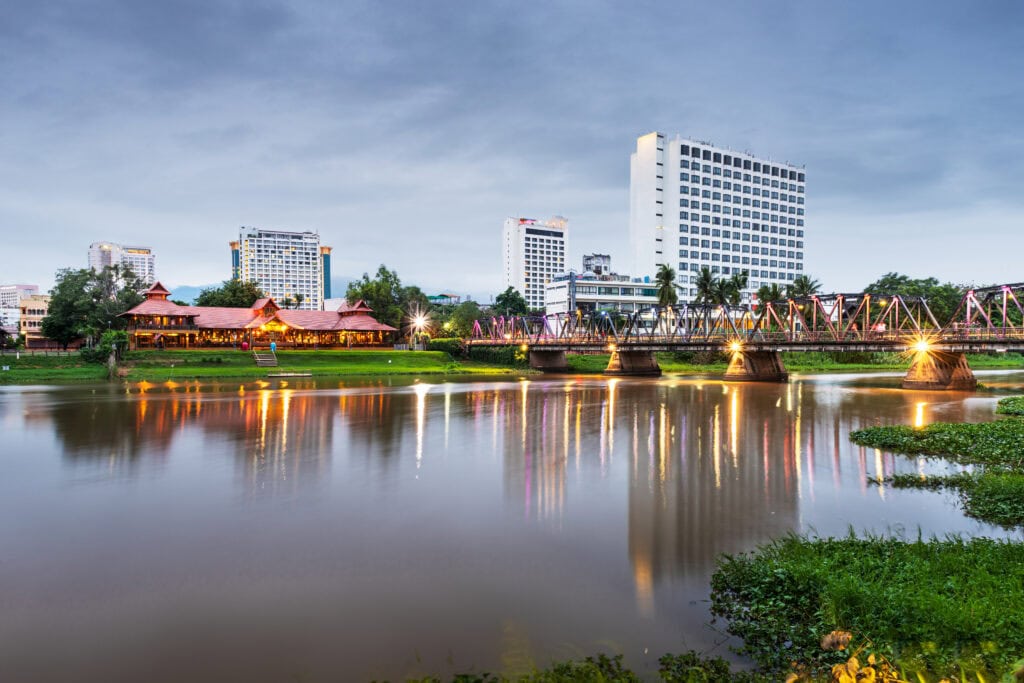
Design-Led Chiang Mai: A Calm Base for European Travellers
For European travellers, the best boutique hotels in Chiang Mai offer a gentler entry into Thailand: leafy courtyards instead of traffic-clogged avenues, hand-crafted textiles instead of generic lobbies, and neighbourhoods where you can walk to cafés, temples and night markets in minutes. This is a city that lends itself to slow mornings, wandering on foot and returning to a peaceful base at the end of the day.
Many visitors pair Chiang Mai with a stay in the capital, and it can be helpful to understand how the two cities complement each other in terms of atmosphere and neighbourhoods; an overview such as where to stay in Bangkok for first-time visitors gives useful contrast for planning your wider Thai itinerary. If Bangkok is energy and spectacle, Chiang Mai is all about scale: low-rise laneways, intimate design hotels and a sense of calm that makes the city feel immediately liveable.
Chiang Mai sits in northern Thailand, framed by green hills and accessible by a short flight from Bangkok. Most of the city’s best boutique hotels cluster in and around the walkable Old City, the riverside, and the creative Nimmanhaemin area just to the west.
Understanding Chiang Mai’s Boutique Hotel Neighbourhoods
Before choosing among the many Chiang Mai boutique hotels, it helps to understand how compact the central areas are. Chiang Mai’s moat-square Old City, the buzzy Nimmanhaemin neighbourhood and the more tranquil Riverside district are all within a 10–15 minute drive of one another, yet each offers a distinct atmosphere and different kind of walkability.
- Old City (within the moat) – The most atmospheric base for first-time visitors, with centuries-old temples, coffee shops, small galleries and massage studios in easy walking distance. Streets are narrow, pavements inconsistent but manageable, and traffic generally calmer than in Bangkok.
- Nimmanhaemin (Nimman) – West of the Old City, this design-conscious district is full of creative studios, cafés and co-working spaces. Pavements are better, there is more shade, and many of the best design hotels in Chiang Mai are tucked into quiet side streets just off the main road.
- Riverside – On the east side of the Old City, along the Ping River, this area feels slower and more residential. Walkability is pleasant along the riverside lanes, though distances between sights can be slightly longer. It suits travellers who prioritise calm and greenery over being in the absolute centre.
- Night Bazaar & Charoen Prathet – East of the Old City, between the moat and the river, this area is lively at night, with markets, bars and casual restaurants. Streets are busier and more commercial, but many boutique properties sit in cul-de-sacs or alleys that remain quiet once you step inside.
For most European visitors, the trade-off is between heritage charm and an easy walking environment in the Old City, and slightly more contemporary design and infrastructure in Nimman. Riverside and the Night Bazaar area sit somewhere in between, with a little more space and greenery but slightly less central positioning.
Old City Gems: Heritage-Focused Boutique Stays
Many of the best boutique hotels Chiang Mai has to offer are woven into the fabric of the Old City’s lanes, where traditional Lanna architecture, shuttered timber houses and quiet temple courtyards define the streetscape. These properties often repurpose historic buildings or take inspiration from them, pairing natural materials with contemporary comfort.
Staying here suits travellers who want to step out and be within minutes of major temples such as Wat Phra Singh, Wat Chedi Luang and the small neighbourhood wats that give Chiang Mai its contemplative character. The walkability is excellent in terms of short distances, though pavements can be uneven and you will often share the road with scooters and bicycles.
Typical Old City boutique hotels lean into texture: polished concrete floors, teak beams, handmade ceramic tiles, indigo-dyed cushions and woven baskets from northern Thai artisans. Courtyards are a common feature, often centred around a small pool or a frangipani tree, creating a pocket of calm away from the daytime heat.
Noise levels vary by micro-location. Properties on quiet sois (side streets) running perpendicular to the main moat roads tend to be the most tranquil, while those near popular night markets or bars may have more ambient sound in the evenings. If you value silence above all, look for hotels that sit slightly deeper into residential lanes rather than right on the main perimeter roads.
For food and daily rhythm, the Old City suits travellers who enjoy walking from their hotel to a new café each morning, breaking up sightseeing with coffee stops, and returning easily in the heat of the day for a rest. Evenings are relaxed, with small wine bars and low-key restaurants within a short stroll rather than big nightlife clusters.
Nimmanhaemin Design Hotels: Contemporary, Creative, Walkable
For travellers particularly interested in design hotels Chiang Mai offers a strong cluster in the Nimmanhaemin area, often simply called Nimman. This is the contemporary face of the city: independent boutiques, concept cafés, galleries and small creative studios lining a grid of side streets running off a main avenue.
Nimman’s boutique hotels tend to be more overtly design-forward than their Old City counterparts. Expect modern architecture, glass and steel balanced with greenery, rooftop terraces, contemporary art, and interiors that reference both Thai and broader Asian aesthetics. Many properties here feel closer in spirit to small European design hotels, which can be reassuring for first-time visitors to Thailand.
Walkability is one of Nimman’s strong suits. Pavements on the main streets are generally better maintained, street crossings more structured, and distances between cafés, restaurants and shopping centres short and manageable. Side streets can still be narrow, but traffic feels less chaotic than in many Asian cities. For European travellers used to strolling between neighbourhood highlights, Nimman’s layout will feel intuitive.
Nimman is also well-positioned for excursions. The road to Doi Suthep, Chiang Mai’s mountain temple and one of the region’s key viewpoints, begins just beyond the neighbourhood. Shared transport and taxis are easy to arrange, and journeys to the Old City rarely take more than ten minutes, allowing you to enjoy both historic ambience and modern comfort.
On the downside, Nimman lacks the deep heritage atmosphere of the Old City, and some travellers find its café culture a little international in feel. For those who appreciate a strong design language, reliable coffee and co-working-friendly spaces, however, it strikes an appealing balance.
Riverside and Night Bazaar: Calm Edges with Urban Access
Beyond the moat and Nimman, some of the best places to stay Chiang Mai offers for travellers seeking calm and space are located along the Ping River and around the Night Bazaar area. These neighbourhoods provide a different sense of walkability: less about dense clusters of sights, more about pleasant strolls and access to both local life and evening activity.
The Riverside area is characterised by leafy lanes, low-rise houses and occasional riverfront terraces. Boutique hotels here often emphasise greenery, with gardens, shade and river views taking priority. Interiors can range from minimalist contemporary to colonial-inspired, but the consistent quality is quiet: you are just outside the main urban grid, making this attractive for guests sensitive to noise.
Walkability here is comfortable within the immediate surroundings, though you may rely more on short taxi or ride-hailing journeys to reach the Old City or Nimman, especially in the heat. The upside is the sense of separation: days can begin with riverside breakfasts and end with cool breezes, making the area particularly appealing in the hotter months.
The Night Bazaar and Charoen Prathet corridor sit between the river and the Old City, with a more urban feel but plenty of small side streets. Boutique properties here often occupy renovated shophouses or low-rise blocks concealed behind understated façades. During the day, walking is straightforward, with a mix of local eateries, markets and shops. Nights are livelier around the main bazaar streets, but many hotels are set back enough to maintain a peaceful atmosphere once you step inside.
For travellers who enjoy having a mix of local markets and river access, but still want to be within a short drive of the Old City and Nimman, this part of Chiang Mai can offer a well-balanced base.
Design Details: What Sets Chiang Mai Boutique Hotels Apart
Chiang Mai boutique hotels distinguish themselves less through height or spectacle and more through intimacy, craftsmanship and a sense of place. For European visitors used to heritage properties and contemporary design in equal measure, this city delivers a nuanced mix of both.
Common design elements include warm woods, handwoven hill-tribe textiles, ceramics from local studios, and carefully framed views of courtyards or small gardens. Many properties integrate indoor-outdoor living, with open-air corridors, covered verandas and generous balconies that allow the subtropical climate to be enjoyed without excess exposure to sun or rain.
Lighting design is often soft and layered, favouring table lamps and floor lamps over harsh overhead fixtures, which enhances the impression of calm at night. Colour palettes frequently draw from natural tones – clay, sand, charcoal – accented by deep indigo or muted red from Lanna motifs. This creates a coherent visual thread as you move between lobby, rooms and public areas.
On the functional side, public spaces in Chiang Mai boutique properties typically include lounge-style lobbies, petite libraries or reading areas, and small pools rather than large resort-style complexes. The emphasis is on quiet corners rather than large crowds. Breakfast areas often open directly onto gardens, offering a sense of seclusion even within the city.
Environmentally conscious travellers will notice efforts such as refillable glass water bottles, local sourcing of amenities and attention to cross-ventilation. While standards vary, there is a broad awareness of sustainability among many of the city’s independently owned boutique hotels.
Walkability and Getting Around: Choosing the Right Base
For a city of its size, Chiang Mai feels remarkably manageable. Distances between key neighbourhoods are short, and traffic, while present, rarely reaches the density of Bangkok. For travellers focused on walkability, it is useful to think in terms of daily patterns rather than simply distance from a central point.
Staying in the Old City means your day-to-day movement can be almost entirely on foot: from your hotel to temples, cafés, small museums and massage studios. The grid of streets is easy to visualise, though pavements can be narrow, with occasional obstacles such as parked scooters. Even after dark, the area generally feels comfortable for walking, with a steady but not overwhelming presence of other travellers and locals.
In Nimman, walking is more about lifestyle than sightseeing: you will move between coffee shops, small malls, galleries and restaurants on foot, with occasional short taxi or songthaew rides to the Old City or the foothills of Doi Suthep. The presence of larger pavements and more regular crossings may feel more familiar to European visitors.
From Riverside and Night Bazaar areas, walking is pleasant in the immediate vicinity, particularly along the quieter lanes and by the river, but you are likely to rely more on ride-hailing apps or local red songthaew trucks for moving between districts. Fortunately, journeys are short, and traffic tends to be fluid outside of peak hours.
When evaluating the best boutique hotels Chiang Mai has for your needs, consider not only the neighbourhood but also micro-location: being on a quiet side street rather than a main road can have a significant impact on your sense of calm, while still keeping you within easy walking distance of the city’s main draws.
Practical Travel Tips for Boutique Stays in Chiang Mai
- Arriving from Europe: Most flights from Europe arrive into Bangkok or another regional hub; from there, a short domestic flight connects to Chiang Mai. The airport is close to the city centre, with taxi and ride-hailing journeys to the Old City or Nimman usually taking around 15–20 minutes.
- Best season for walking: The cool, dry months from roughly November to February are most comfortable for exploring on foot, with lower humidity and cooler evenings. March and April can be hazier due to regional burning, while the rainy season brings showers but also lush greenery.
- Getting from the airport: Official taxi counters and ride-hailing services are readily available at Chiang Mai Airport. For most boutique hotels, giving the neighbourhood name (Old City, Nimman, Riverside) plus the street is sufficient for drivers.
- Local transport: Red songthaew trucks act as shared taxis and are useful for short trips between the Old City, Nimman and the riverside. Agree the fare before boarding, and keep small notes ready. Ride-hailing apps offer a more direct alternative.
- Footwear for the city: Pavements can be uneven and sometimes disappear entirely, so comfortable closed shoes or sturdy sandals are advisable for daily walking, especially if you plan to explore temple grounds and markets.
- Temple etiquette: Many of Chiang Mai’s key sights are temples. Shoulders and knees should be covered when entering, and shoes removed at the entrance. Light scarves or shawls are useful to carry from your hotel when walking between temples.
- Noise considerations: Even in calm cities, Thailand’s scooters and occasional night markets can be audible. If you are a light sleeper, consider requesting a courtyard- or garden-facing room rather than one overlooking the street.
- Climate and hotel design: Many boutique hotels make use of natural ventilation and shaded outdoor spaces. Interiors can be cool, but carrying a light layer is useful for air-conditioned interiors such as cafés and shopping centres in Nimman.
- Accessibility: Traditional Lanna-style buildings sometimes involve stairs and raised thresholds. If step-free access is important, confirm lift availability and room access arrangements in advance, particularly in older or heritage-style properties.
- Cash and cards: Cards are widely accepted in hotels, cafés and many restaurants, but small shops, markets and tuk-tuks prefer cash. ATMs are plentiful in both the Old City and Nimman.
FAQs About Chiang Mai Boutique Hotels
Which area has the best boutique hotels in Chiang Mai for first-time visitors?
For most first-time visitors, the Old City offers the strongest combination of atmosphere, walkability and access to key sights. Here you will find many of the most characterful Chiang Mai boutique hotels, often in restored houses or low-rise buildings that reflect the city’s historic fabric.
Are design hotels in Chiang Mai mainly in Nimmanhaemin?
Nimmanhaemin has a particularly high concentration of contemporary design hotels in Chiang Mai, thanks to its creative, café-filled character. However, there are also thoughtfully designed boutique properties sprinkled throughout the Old City, Riverside and Night Bazaar areas, often blending traditional Lanna elements with modern interiors.
Is Chiang Mai walkable from most boutique hotels?
Yes, central Chiang Mai is compact and pleasantly walkable from most boutique hotels in the Old City and Nimman. Distances between cafés, temples and markets are short; however, pavements can be uneven, so comfortable footwear is recommended. From riverside properties, you may rely more on short rides for some journeys.
How many nights should I stay in a boutique hotel in Chiang Mai?
A stay of three to four nights allows enough time to enjoy the city’s cafés, temples and markets at a relaxed pace while returning each afternoon to your boutique hotel for a rest or a swim. Longer stays work well if you plan day trips to nearby mountains or craft villages.
Are Chiang Mai boutique hotels suitable for families?
Many boutique hotels in Chiang Mai cater primarily to couples and solo travellers, but some offer larger rooms or connecting options suitable for families. Layouts tend to be more intimate than resort-style properties, so it is worth considering how much space and facilities you require.
Conclusion: Balancing Design, Calm and Location in Chiang Mai
Chiang Mai’s boutique hotels reflect the city itself: human-scale, textured and quietly confident rather than showy. Whether you base yourself in the temple-lined Old City, the contemporary streets of Nimmanhaemin or the calmer Riverside edges, the main trade-off lies between deep heritage immersion and modern urban comfort.
For European travellers seeking a base that feels both rooted in place and thoughtfully designed, Chiang Mai offers an unusual degree of choice within a very compact area, making it easy to combine design, calm and walkability in a single stay.
Recommended next:
- Thailand Itinerary 10 Days: Bangkok, Chiang Mai & Islands for First-Timers
- Thailand Itinerary 14 Days: Classic Route with Beaches and Northern Culture
- Thailand in 7 Days: Bangkok + One Beach Base (No Rushing)
- Best Time to Visit Thailand: Month-by-Month Weather for Europeans
- Thailand Travel Costs: Realistic Daily Budget for European Travelers
- Thailand Travel Insurance Guide: What to Cover and What to Skip
- More in Thailand →