This guide is for European travellers planning their first stay in Singapore who seek clarity on where to base themselves. It focuses on the best areas to stay in Singapore, explaining neighbourhood character, practical transport details, and what to expect from a local perspective. The aim is to help you orientate quickly and choose a neighbourhood that fits the rhythm of your trip rather than sell a hotel or itinerary.
Understanding Singapore’s layout and neighbourhood clusters
Singapore is a compact city-state, but it is far from uniform. The island is organised into distinct neighbourhood clusters — the downtown core around Marina Bay, the shopping and embassy district centred on Orchard and Tanglin, the historic quarters of Chinatown and Little India, and quieter residential districts further from the centre. Distances are short by European standards, but the character, nighttime ambience and local amenities vary a great deal from one area to the next. Knowing the clusters helps you choose a base that matches your priorities: sightseeing convenience, late-night dining, quiet afternoons or an immersive cultural experience.
Where different types of travellers usually stay
Different traveller types favour different areas. Business and conference visitors often stay in the Marina Bay or Civic District for proximity to convention venues and corporate offices. Luxury and style-oriented travellers who want shopping and refined cafés often choose Orchard or Tanglin. Couples and culture-led visitors may prefer the atmospheric streets of Chinatown, Kampong Glam or Little India, where heritage buildings, galleries and street-food venues are a short walk away. Families and those seeking more relaxed evenings sometimes base themselves near River Valley or Robertson Quay, which offer quieter riverside dining and easy access to the central sights.
For first-time visitors wanting an efficient, pleasant experience, a central neighbourhood with good transport links will reduce daily transit time and make early mornings and late evenings easier to manage.
Marina Bay & Civic District — the central landmark base
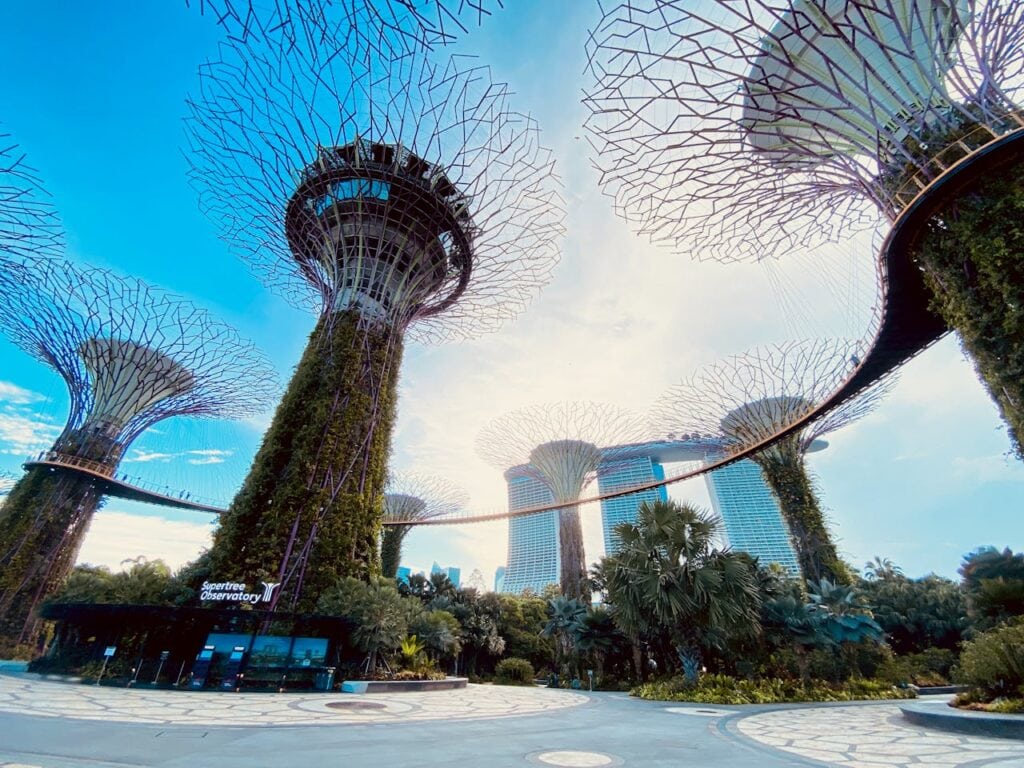
This is Singapore’s contemporary face: bold architecture, waterfront promenades and cultural institutions. Staying here means short walks to the national gallery, waterfront views and easy access to key attractions. The area is polished and well signed, ideal if you prefer a metropolitan atmosphere and like walking between major sights.
Practical notes: the Civic District remains lively during the day and early evening but quietens later at night. It is well connected by MRT (Mass Rapid Transit) and buses, so it is convenient for short city hops. For European travellers accustomed to central squares and museum clusters, Marina Bay offers a familiar logic with an emphasis on spectacle and civic space.
Orchard, Tanglin & River Valley — shopping, design and a refined base
Orchard Road is Singapore’s principal shopping axis, with Tanglin’s embassy gardens and River Valley’s riverside restaurants providing elegant alternatives to the downtown bustle. This cluster suits travellers who want a comfortable, cosmopolitan base with easy shops, high-quality cafés and a quieter evening scene than the waterfront.
Practical notes: Orchard is exceptionally well served by MRT and taxis, and many shops open late. Streets are broad and tree-lined, offering a different pace from the compact lanes of heritage quarters. For travellers from European capitals, this area feels familiar in its mix of shopping boulevards and leafy residential pockets.
Chinatown, Little India & Kampong Glam — heritage, food and atmosphere
These historic neighbourhoods are among the most rewarding for first-time visitors seeking local texture. Chinatown offers narrow streets, market stalls and restored shophouses; Little India presents colourful temples, spice shops and a more bustling street life; Kampong Glam is known for its Malay-Arab heritage, boutique stores and mosque backdrop. Staying here gives direct access to street-food hawker centres, small galleries and evening strolls through lit-up streets.
Practical notes: these areas are compact and highly walkable, though some side streets can be busier and more humid than the central business district. They provide a close encounter with the city’s multicultural life and are good choices if you prefer exploring neighbourhoods on foot and sampling a wide range of local cuisines.
Transport, walkability and planning considerations for European travellers
Transport is a major determinant of the best areas to stay in Singapore. The MRT network is efficient, safe and straightforward for first-time visitors; key tourist areas are generally within 1–3 stops of each other. Buses fill in the gaps and are well signed, and taxis or ride-hailing services are reliable and plentiful if you prefer point-to-point travel. Streets are well lit and pedestrian crossings are frequent, but the tropical climate affects the walking experience: midday humidity can make long walks less pleasant.
Planning considerations particularly relevant to European travellers include the season and daily rhythm. Singapore is equatorial and warm year-round; light clothing, sun protection and a plan for shade during peak heat make a difference. Europeans used to compact historic centres will find Singapore’s mixed urbanism — glass towers, low-rise shophouses and suburban estates — comfortable but varied. Allow an extra hour when moving between neighbourhoods for unfamiliar transfer points or a leisurely lunch, which is often central to a day here.
Local experience: what truly defines a neighbourhood
Neighbourhood character is shaped by daily rituals: morning hawker breakfasts, tea stalls, weekend markets and the rhythm of commuting. In Singapore the hawker centre is a social hub where different communities converge; staying near one offers a steady stream of morning and evening activity and a window into local routines. Parks and waterfront promenades define other neighbourhoods — for example, the Esplanade’s cultural events infuse the surrounding district with an evening arts scene, while riverfront quays create a quieter gastronomic atmosphere.
To experience local life, choose a neighbourhood with amenities that match your daily habits: proximity to a favourite style of food, easy access to parks if you walk or run, or short transit corridors if you have early departures. This alignment makes practical travel days feel unforced and comfortable.
Practical travel tips
- Use the MRT for most journeys; stations are frequent, air-conditioned and clearly signed in English.
- Carry a small umbrella and lightweight rainwear — showers can be sudden and brief even outside monsoon months.
- Plan walks for early morning or late afternoon to avoid the hottest part of the day.
- Wear comfortable shoes; even in well-paved areas you will walk more than expected between transit points and attractions.
- Learn basic local norms: remove shoes when entering some religious sites and follow queueing etiquette at hawker centres.
- Consider neighbourhoods with 24-hour convenience marts or pharmacies if you value late-night options.
- When mapping journeys, allow an extra 15–30 minutes for pedestrian crossings, lifts and station access in major hubs.
FAQs
Which area is best for first-time visitors who want to see all major sights?
A central neighbourhood such as Marina Bay, the Civic District or River Valley keeps you close to many top sights and easy transit links, reducing time spent moving between points.
Is Singapore walkable compared with European cities?
Yes, many central areas are highly walkable with good pedestrian infrastructure. However, tropical heat makes long daytime walks more tiring; plan shorter strolls or choose early/late hours for exploring on foot.
Which neighbourhoods are best for authentic food experiences?
Chinatown, Little India and Kampong Glam host long-established hawker centres and street-food stalls, while neighbourhood markets and food courts across the city showcase the multi-ethnic culinary scene.
Are the neighbourhoods safe at night?
Singapore has a very low crime rate and most central neighbourhoods feel safe after dark. Usual urban caution applies: keep an eye on possessions and prefer well-lit streets for late walks.
How important is proximity to an MRT station?
Being near an MRT station saves time and makes early departures and evening returns easier, so it is a useful factor when choosing where to stay for a short visit.
Conclusion: Choosing among the best areas to stay in Singapore depends on what you want from each day: proximity to sights, an immersive neighbourhood with culinary variety, or a refined, shopping-led base. Understanding the city’s layout, transport options and local rhythms helps European travellers align their choice of neighbourhood with the kind of trip they envision, turning practical logistics into a quieter, more enjoyable part of the journey.