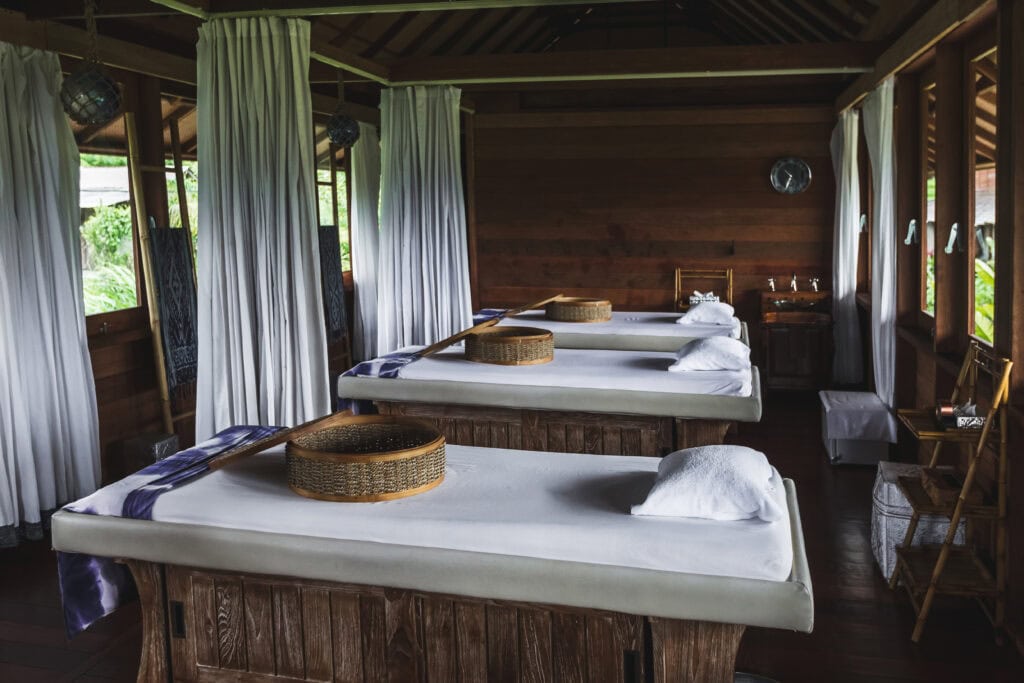
A Bali wellness retreat can mean very different things depending on where you stay. For some travellers, it is a week of yoga, plant-based cafés and spa treatments in Ubud. For others, it is slow beach mornings, ocean swims, sound healing, surfing, or simply choosing a hotel where the days feel unhurried.
This guide focuses on where to base yourself for a wellness-led trip to Bali, with practical area comparisons for European travellers planning yoga retreats Bali, spa retreats Bali, or a softer stay at wellness hotels Bali.
Quick answer
For a first Bali wellness retreat, Ubud is usually the easiest place to start if yoga, meditation, massage and retreat-style hotels are the priority. Sanur is often better for calm beach mornings and a gentler pace. Canggu suits travellers who want fitness studios, cafés and a social scene, while Uluwatu works well for ocean views, surf culture and quieter clifftop stays.
- Best overall wellness base: Ubud
- Best for calm beach stays: Sanur
- Best for yoga plus cafés and nightlife: Canggu
- Best for ocean views and surf wellness: Uluwatu
- Best for quiet nature: Sidemen or Munduk
- Best for resort-style spa comfort: Nusa Dua
If this is your first visit and you are choosing between wellness areas and general sightseeing bases, read our wider guide to Where to Stay in Bali for First-Time Visitors.
Best areas for a Bali wellness retreat
The right area matters more than the label on the hotel. A property can call itself a wellness hotel, but if it is far from the kind of mornings you want, the trip may feel more complicated than relaxing. Think first about your rhythm: yoga before breakfast, beach walks, spa time, healthy cafés, hiking, surfing, or simply quiet sleep.
Ubud: best for yoga, retreat culture and slow inland stays
Ubud is the classic choice for a Bali wellness retreat. It is inland, greener in feel than the main beach areas, and widely associated with yoga studios, meditation spaces, massage, holistic treatments, creative workshops and retreat-style accommodation.
It suits travellers who want a structured routine: morning yoga, breakfast at a health-focused café, a spa treatment, journalling, walking, or an afternoon class. Many visitors also use Ubud as a base for cultural sights and village landscapes, though traffic and crowds can vary, especially near the centre.
When choosing accommodation in Ubud, check whether you want to be walkable to restaurants and studios or prefer a quieter property outside the centre. Out-of-town stays can feel more peaceful, but you may rely more on taxis, hotel shuttles or drivers.
Sanur: best for calm beach mornings
Sanur is often a good match for travellers who want wellness without a heavy retreat schedule. The atmosphere is generally calmer than Bali’s busiest nightlife areas, and the beachfront setting makes it easier to build a simple routine around walking, swimming, reading and spa time.
This area can suit couples, solo travellers and older visitors who prefer a softer pace. It is also practical if you want access to cafés, shops and services without feeling too remote. For wellness hotels Bali with a beach-town feel, Sanur is worth comparing carefully.
Look for accommodation near the beach path if morning walks are important. If you are sensitive to noise, check recent guest reviews for comments on road noise, nearby building work or nightlife.
Canggu: best for fitness, cafés and a social wellness scene
Canggu is popular with travellers who want yoga, gyms, cafés, co-working, surf lessons and a social atmosphere in one area. It can work well if your idea of wellness includes movement, healthy food, meeting people and having plenty of choice nearby.
The trade-off is that Canggu can feel busy. Traffic, construction and nightlife vary by exact location, so this is not always the best choice for a silent or restorative retreat. If you choose Canggu, look closely at the neighbourhood and recent reviews rather than relying only on the hotel’s wellness wording.
For a calmer stay, consider properties set back from the busiest roads, and check whether the hotel offers a quiet pool, yoga space or easy access to studios you actually plan to use.
Uluwatu: best for clifftop views, surf and slower beach days
Uluwatu, on the Bukit Peninsula, is a strong choice if your wellness trip is built around ocean views, surf, sunsets and boutique stays. The area can feel more spread out than Ubud or Sanur, so transport planning matters.
It suits travellers who do not need to walk everywhere and are happy to move between beaches, cafés, spas and viewpoints by taxi, scooter with proper experience, or arranged transport. The terrain and distances can make it less convenient for those who want everything outside the hotel door.
When comparing spa retreats Bali in Uluwatu, pay attention to the exact location. Some places feel secluded and scenic, while others are more practical for restaurants and beach access.
Sidemen: best for quiet nature and rural calm
Sidemen is a good option if your ideal retreat is slow, green and low-key. It is often chosen by travellers who want rice-field views, local village atmosphere, gentle walks and fewer distractions.
This is not the place for a packed wellness studio schedule or a large choice of restaurants. It is better for reading, resting, massage at your accommodation, nature-focused stays and switching off. Check carefully what your hotel includes, because services can be more limited than in Ubud or the beach areas.
Munduk: best for cooler highland atmosphere and nature
Munduk can suit travellers who want a quieter highland stay with waterfalls, views and a cooler-feeling atmosphere than the coast. It is more about nature and rest than spa luxury or yoga variety.
Because it is less central for classic Bali beach days, Munduk is usually best as part of a split stay rather than the only base for a first wellness trip. Check access, transport and weather conditions before planning activities.
Nusa Dua: best for resort-style spa stays
Nusa Dua is often associated with polished resorts, larger hotels and a more controlled holiday environment. It can work well if you want a comfortable spa-focused stay, beach access, hotel facilities and less need to move around every day.
The area may feel less local or creative than Ubud, Canggu or Sidemen, so it is best for travellers who prioritise comfort, pools, treatments and an easy resort rhythm over independent exploring.
Bali wellness areas compared
| Area | Best for | Wellness style | Possible drawbacks |
|---|---|---|---|
| Ubud | Yoga, retreats, meditation, spa days | Structured wellness, holistic classes, green surroundings | Central areas can feel busy; rural stays may need transport |
| Sanur | Calm beach mornings and gentle routines | Walking, swimming, massage, relaxed hotels | Less dramatic scenery than some areas; quieter nightlife |
| Canggu | Fitness, cafés, social travel, surf | Yoga studios, gyms, healthy cafés, community feel | Can be busy; traffic and noise depend on exact location |
| Uluwatu | Ocean views, surf, boutique hotels | Beach days, sunset routines, spa treatments | Spread-out area; transport planning is important |
| Sidemen | Quiet rural escape | Rest, nature, simple massage, slow travel | Fewer studios, restaurants and services |
| Munduk | Nature, highland calm, walking | Cooler-feeling retreat, views, waterfalls | Less convenient for beaches and classic spa variety |
| Nusa Dua | Comfortable resort spa stays | Hotel facilities, pools, treatments, beach relaxation | Can feel less independent or local |
Who it suits: choosing your retreat style
If you want a true yoga retreat
Choose Ubud first, then compare Canggu if you prefer a more social coastal setting. For yoga retreats Bali, check whether the programme is fully residential or simply a hotel near yoga studios. Residential retreats can create more structure, while independent stays give you more freedom.
- Check the level of yoga offered, especially if you are a beginner or have injuries.
- Look for clear information on meals, class size, teacher credentials and included activities.
- Read recent reviews for atmosphere: silent, social, spiritual, fitness-focused or luxury-led.
If you want spa treatments and comfort
For spa retreats Bali, compare Ubud, Nusa Dua, Sanur and Uluwatu. Ubud often gives a more holistic setting, Nusa Dua is useful for resort facilities, Sanur feels easy and relaxed, and Uluwatu adds coastal scenery.
Before choosing, check whether the spa is on site, whether treatments require advance reservation, and whether wellness facilities are included or charged separately. Details can change, so confirm directly with the property before travel.
If you want slow mornings rather than a fixed programme
Sanur, Sidemen and Uluwatu are strong choices for unhurried mornings. Pick Sanur if you want beach walks and cafés nearby. Choose Sidemen if you want a quiet rural setting. Choose Uluwatu if you want sea views and do not mind moving around by transport.
If you want wellness with restaurants and social life
Canggu is usually the most obvious fit, with Ubud as a softer inland alternative. This style suits travellers who want movement, good coffee, healthy food, studio classes and the option to be social, rather than a quiet retreat where everything is arranged.
How to choose wellness hotels in Bali
Wellness hotels Bali range from simple guesthouses with massage services to high-end resorts with spa menus and daily classes. Instead of choosing only by photos, use a practical checklist.
- Location: Is it walkable to yoga, cafés or the beach, or will you need transport for everything?
- Noise: Check recent reviews for construction, road noise, clubs, roosters or nearby events.
- Wellness offer: Confirm what is actually included: yoga, meditation, spa access, breakfast, airport transfers or activities.
- Room comfort: For a restorative trip, air conditioning, mosquito protection, bedding and bathroom quality matter.
- Food: If you follow a specific diet, check whether the hotel can accommodate it rather than assuming.
- Outdoor space: A pool, garden, terrace or view can make slow mornings much easier.
- Recent reviews: Bali changes quickly, so newer guest feedback is often more useful than old awards or old photos.
If you compare properties on Booking.com or another hotel platform, use the map view as well as filters. A beautiful hotel just outside your preferred area may still be right, but only if you are comfortable with the transport needed.
Suggested Bali wellness stay combinations
A split stay often works better than trying to make one area do everything. Bali’s regions have different moods, and changing base can help you balance yoga, beach time and quiet recovery.
Classic first wellness trip
Start in Ubud for yoga, spa treatments and retreat culture, then move to Sanur for easier beach mornings. This combination works well if you want both inland calm and a gentler coastal finish.
Social and active trip
Combine Canggu with Uluwatu if you want studios, fitness, cafés, surf and ocean views. Choose accommodation carefully to avoid feeling overwhelmed by traffic or nightlife.
Quiet reset
Pair Ubud with Sidemen, or Sidemen with Sanur. This is a better fit for travellers who want reading, rest, massage, nature and a slower rhythm rather than a packed schedule.
Comfort-focused spa holiday
Combine Ubud and Nusa Dua, or stay mostly in one resort-style area if you prefer fewer transfers. This can suit travellers who value facilities, pools and spa treatments over independent exploring.
Practical tips for European travellers
- Plan for jet lag: Many European travellers arrive after a long journey. Keep the first full day simple rather than scheduling an early class or full-day excursion.
- Check entry rules before travel: Visa, passport validity and arrival requirements can change. Use official sources and your airline’s guidance before departure.
- Book your first transfer carefully: After a long flight, a pre-arranged airport transfer or clearly organised taxi can reduce stress, especially if arriving late.
- Think about travel insurance: If you plan yoga, surfing, hiking or scooter use, check what your policy actually covers.
- Be realistic about moving around: Distances on a map can look simple, but traffic and road conditions can make journeys feel slower than expected.
- Pack for humidity and rain: Lightweight layers, breathable clothing and sandals are useful. Weather patterns vary, so check the forecast close to departure.
- Bring adapters and check voltage needs: Many travellers from Europe find packing a universal adapter useful, but check your own devices before travel.
- Respect local customs: Bali has important religious and cultural traditions. Dress modestly at temples and follow local guidance when visiting sacred places.
Common planning mistakes
- Choosing Canggu for silence: It can be excellent for fitness and food, but not every part is quiet.
- Assuming all Ubud hotels are peaceful: Central Ubud can be lively, while rural Ubud may require transport.
- Booking a remote retreat without checking meals: If there are few nearby restaurants, the hotel’s food options matter more.
- Over-scheduling treatments and classes: A wellness trip should leave space for rest, especially after long-haul travel.
- Ignoring the exact map location: Two hotels in the same named area can feel completely different.
FAQ
What is the best area for a Bali wellness retreat?
Ubud is usually the strongest all-round choice for a Bali wellness retreat because it offers a wide mix of yoga, spa treatments, retreat-style stays and health-focused cafés. Sanur, Canggu, Uluwatu and Sidemen can be better depending on whether you want beach calm, fitness, surf or rural quiet.
Are yoga retreats in Bali suitable for beginners?
Many yoga retreats Bali welcome beginners, but the style, pace and level vary. Check the retreat description carefully, ask about beginner suitability, and mention injuries or health conditions before committing.
Should I choose a spa retreat or a wellness hotel?
Choose a spa retreat if treatments and a structured wellness schedule are the main focus. Choose a wellness hotel if you want comfort, flexibility and the option to add yoga, massage or healthy dining without following a fixed programme.
How many areas should I stay in for a wellness trip to Bali?
For a shorter trip, one or two bases usually feels more relaxing than moving often. For a longer trip, a split between Ubud and a coastal area such as Sanur, Canggu, Uluwatu or Nusa Dua can give a good balance.
Final recommendation
If you want the safest first choice for a Bali wellness retreat, start with Ubud and choose your hotel location carefully. Add Sanur for calm beach mornings, Canggu for a more social fitness scene, Uluwatu for ocean views, or Sidemen for deep quiet. The best retreat is not the one with the most promises; it is the one that matches the pace you want every morning.