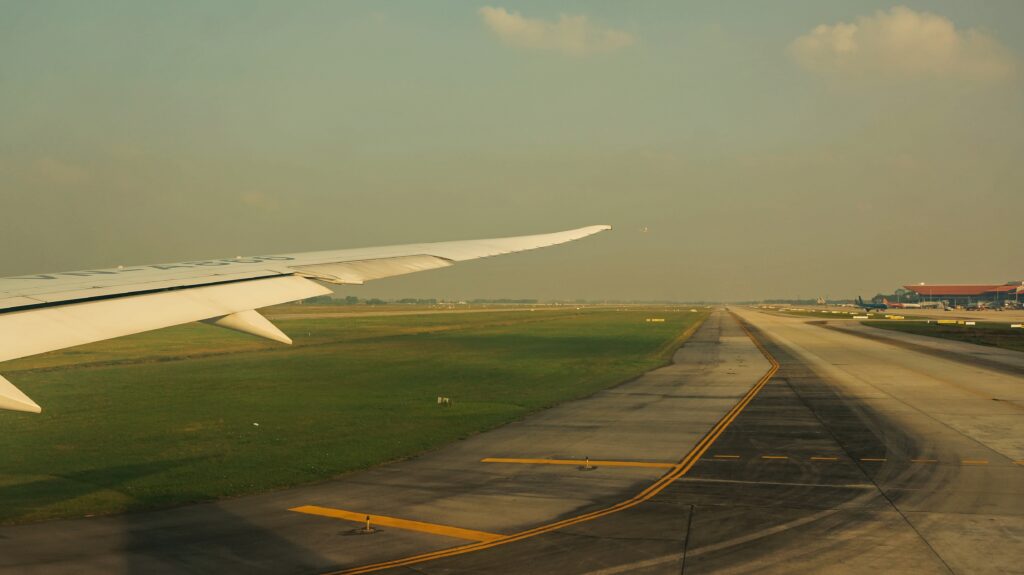
Arriving in Bali: First Steps from DPS
For many European travellers, the journey to Bali involves a long-haul flight, a time-zone shift and often a night-time arrival. The final stretch from Ngurah Rai International Airport (commonly called Denpasar or DPS) to your hotel can feel surprisingly intense after hours in the air, so understanding your Bali airport transfer options is an important part of planning.
This guide focuses on the logistics of arriving at DPS and travelling on to Seminyak, Canggu, Ubud and other popular areas, helping you decide which route and mode of transport best suits your style, energy levels and appetite for navigating Bali’s traffic.
Orientation: Ngurah Rai International Airport sits on Bali’s southern isthmus, between Kuta and Jimbaran, with Seminyak and Canggu further up the west coast and Ubud inland to the north.
Understanding DPS: Layout, Arrival Flow and First Impressions
Arriving at DPS after a European flight, you will pass through immigration, baggage reclaim and customs before emerging into the public arrivals hall. The airport is compact by international standards, but the atmosphere in the arrivals area can feel busy, with many drivers holding signs, taxi desks and travellers arranging local SIM cards.
There is a single main international terminal, so the way out is straightforward. After customs, you step into a wide hall where you will see:
- Official taxi counters and transport desks along one side.
- Hotel and villa representatives holding name boards.
- Independent drivers offering transfers and tours.
- ATMs and money changers for initial cash needs.
Traffic in the streets outside can be dense, particularly in the late afternoon and evening when many long-haul flights arrive, so journey times are often longer than the actual distance might suggest.
From DPS to Seminyak: The Classic First-Night Transfer
For many European visitors, Seminyak is the natural first base in Bali: beach sunsets, dining streets and a mix of small hotels and villas make it convenient after a long journey. Getting from Bali airport to Seminyak is one of the simpler transfers, as the distance is relatively short and the route is direct.
Most journeys follow the main coastal road from the airport through Kuta and Legian, then north into Seminyak. The drive can feel slow due to scooters, narrow streets and a constant flow of cars, but it is rarely confusing. Evening arrivals may encounter heavier traffic near the beach clubs and restaurant streets, particularly around sunset.
When considering the Bali airport taxi price for Seminyak, remember that costs are typically calculated either by fixed zone tariffs or by metered distance depending on the service you choose. Zone-based systems usually treat Seminyak as a distinct area from Kuta and Legian, reflecting the slightly longer journey.
Seminyak suits travellers who want to recover from jet lag without feeling too remote. The transfer is short enough that even a late-night arrival from Europe feels manageable, and the area is well-used to receiving guests at all hours.
DPS to Canggu: Surf Town Transfer with Traffic Considerations
The DPS to Canggu journey feels like a continuation of the Seminyak route, but with a notable shift in road character. Once you pass Seminyak and Batu Belig, streets grow narrower and more residential, with occasional rice fields and village intersections. Canggu is not a single, compact centre; it is a collection of beach and inland neighbourhoods such as Berawa, Batu Bolong, Pererenan and Seseh.
Transfer times from Bali airport to Canggu vary sharply depending on where you are staying and the time of day. Morning and early afternoon can be relatively fluid, while late afternoon and early evening see congestion around schools, beach clubs and key junctions near the shortcuts across rice fields.
The Bali airport taxi price to Canggu may be higher than for Seminyak, reflecting the extra distance and the fact that some drivers view Canggu as a more complex area with greater potential for delays. It is worth having the exact location of your accommodation ready, ideally with a map pin, as many smaller streets share similar names and can be confusing in the dark.
For European travellers, the main trade-off is comfort versus time: after a long flight, Canggu’s laid-back atmosphere is appealing, but the slightly longer and more intricate transfer may feel tiring if you are arriving late at night.
DPS Airport to Ubud: Inland Transfer into the Hills
The DPS airport to Ubud route takes you inland, away from the coastal sprawl and into a greener, cooler landscape. The drive begins on busy southern roads before gradually climbing through a patchwork of towns, villages and rice fields. Ubud itself spreads over a surprisingly wide area, with central streets, quiet river valleys and outer rice-terrace neighbourhoods.
Traffic can be dense near the airport and around southern junctions, then gradually thins as you approach the uplands, though bottlenecks can still occur in certain market towns and at key intersections. Arrival after dark is common for European flights, and the final approach to Ubud often feels calm, with fewer lights and quieter roads.
The Bali airport taxi price to Ubud reflects the longer distance compared to coastal areas like Seminyak and Kuta, and drivers factor in the extra time and fuel. Journey times can stretch during rush hours or peak holiday periods, so it is sensible to build in a margin if you have onward plans such as spa appointments or early tours the following morning.
For many travellers, however, the reward is significant: instead of a beach resort, your first glimpse of Bali may be temple gateways, lush ravines and roadside shrines, which can feel particularly magical after a long-haul flight from Europe.
Beyond the Classics: Nusa Dua, Sanur, Uluwatu and Other Directions
While Seminyak, Canggu and Ubud attract much of the attention, many European visitors head straight from DPS to other parts of southern and eastern Bali. The logistics can differ slightly depending on direction.
Nusa Dua and the southern peninsula are reached via a modern toll road that often provides one of the smoothest airport transfers on the island. Resorts are spread along long, gated beachfronts, so specific drop-off points can take extra time even after you have entered the general area.
Sanur lies on the opposite, eastern side of Denpasar. Routes from the airport cross urban areas, but once there, the town has a calmer pace, with a long beachfront promenade and older, more established hotels and villas. For those heading onward to the islands off Bali’s east coast, Sanur’s beach is often the departure point for boats, so a DPS to Sanur transfer may form part of a longer multi-stage journey.
Uluwatu and the Bukit peninsula require a drive up onto limestone cliffs and through a series of hilltop villages. Roads can be winding and, in places, narrow. If your villa or hotel is tucked down a side lane, the last part of the journey may involve very small streets and steep gradients, especially close to the clifftops.
Each of these directions has its own rhythm and atmosphere. When planning your Bali airport transfer, it helps to consider not only distance but also the style of roads and how comfortable you feel arriving in a more secluded area after dark.
Types of Bali Airport Transfer: Taxis, Apps and Private Drivers
Several forms of Bali airport transfer are available, each with their own advantages and trade-offs for European travellers.
- Official airport taxis
These are available from designated counters in the arrivals hall. They generally work on a zone-based system, with standardised fares for common destinations such as Kuta, Seminyak, Canggu and Ubud. The process is simple: give your destination, receive a fare, then follow the driver to the vehicle. This can be particularly reassuring after a long flight. - Ride-hailing apps
Ride-hailing services operate widely in Bali, but pick-up rules at the airport can change and may involve designated meeting points away from the main taxi ranks. For travellers used to these apps in Europe, they can feel familiar, but they require mobile data, some patience in locating your driver and a certain comfort with local pickup nuances. - Pre-arranged private drivers
Many visitors choose to arrange a driver in advance through accommodation or trusted local contacts. A named driver typically waits at arrivals with a sign, and the vehicle and route are planned ahead. This option offers a calmer, more predictable arrival, particularly for families, larger groups or those arriving at unusual hours. - Hotel or villa transfers
Some properties coordinate their own transfers with partner drivers. These are often similar in experience to private drivers, with the added benefit that the driver usually knows the exact location of your accommodation.
Whichever option you choose, it is helpful to have your accommodation address written clearly, along with a digital map saved offline, as not all drivers will recognise smaller guesthouses or villa names immediately.
Arrival Timing, Jet Lag and Choosing the Right First Stop
For travellers arriving from Europe, timing plays a major role in how comfortable the first journey on Bali feels. Many flights land in the late afternoon or late evening, just as local traffic surges and fatigue sets in after long hours in the air.
If your main interest lies inland, you might still prefer to travel directly from DPS airport to Ubud, accepting a longer drive in exchange for waking up amidst rice terraces and temples. Others choose to stay the first night in Seminyak or another nearby coastal area, splitting their overland travel into shorter segments.
Jet lag can also influence your choice. Those arriving from Western Europe often land in the evening, when your internal clock may feel closer to mid-afternoon. In that case, a straightforward coastal transfer to Seminyak or Canggu can feel manageable. Travellers from Eastern Europe may arrive in the small hours local time, in which case a shorter transfer to an easily accessible area can be gentler.
Your comfort level with busy streets is another consideration. The first hour on Bali’s roads can be an adjustment: scooters weaving, narrow lanes and frequent U-turns all contrast with many European cities. If you prefer a calmer experience, a pre-arranged driver in a comfortable vehicle, with time for a brief stop to buy water or snacks, can make the adjustment smoother.
Practical Travel Tips for DPS Arrivals and Transfers
- Save your accommodation location offline on a mapping app, including a dropped pin, in case mobile data is slow on arrival.
- Have a written version of your address to show the driver, including nearby landmarks, as many streets share similar names.
- Expect a crowd of drivers and signs in the arrivals hall; take a moment to orient yourself before committing to any offer.
- Use ATMs in the terminal to withdraw a small amount of local currency for tolls or small purchases en route.
- Traffic around DPS is often heaviest late afternoon and early evening; allow extra time if your arrival coincides with local rush hour.
- Keep hand luggage light and compact; smaller vehicles may have limited boot space, especially if you travel as a group.
- Dress in light, breathable layers for the transfer; humidity can be high even after dark and air conditioning varies by vehicle.
- Respect local driving norms: do not request high speeds or risky overtakes to shorten the journey.
- If you are sensitive to motion, consider taking a seat in the front on winding roads towards Ubud or the Bukit peninsula.
- Carry a small bottle of water and a snack from the airport in case of unexpected traffic delays.
FAQs on Bali Airport Transfers
How long does it take from DPS airport to Ubud?
Travel time from DPS airport to Ubud typically ranges from around an hour to significantly longer, depending on traffic and the exact location of your accommodation. Central Ubud is usually quicker to reach than more remote valley or village settings.
Is it easy to get from DPS to Canggu at night?
Yes, transfers from DPS to Canggu are common at all hours, but late-night journeys can involve quieter, darker roads and some narrow village lanes. Having your location pinned on a map and a driver who knows the area well can make the experience smoother.
What affects the Bali airport taxi price the most?
The main factors influencing the Bali airport taxi price are distance, traffic conditions and whether the fare is based on a fixed zone or a meter. Longer routes to areas such as Canggu, Ubud or Uluwatu are usually priced higher than shorter rides to Kuta or central Denpasar.
Should I pre-book a Bali airport transfer or arrange it on arrival?
Both approaches are common. Pre-booking can provide reassurance after a long-haul flight, especially if you arrive late or are travelling with children. Arranging a transfer on arrival via official airport taxis or local drivers offers more flexibility if your plans are still fluid.
Can I combine my airport transfer with a short sightseeing stop?
Many private drivers are happy to include a brief stop en route, such as at a viewpoint or temple, provided this is agreed in advance. If you arrive from Europe feeling tired, it may be more restful to travel directly to your accommodation and explore once you are rested.
Conclusion: Balancing Convenience, Comfort and First Impressions
Planning your Bali airport transfer is less about finding the quickest route and more about aligning the journey with your energy levels, comfort preferences and chosen first base on the island. Shorter drives to Seminyak or Canggu suit those who want to ease into Bali gently, while a direct trip from DPS airport to Ubud delivers an immediate immersion in the island’s inland landscapes.
Whichever direction you choose, understanding the layout of DPS, the character of local roads and the nuances of taxi and driver services allows you to arrive with realistic expectations. That clarity helps transform the final leg of a long journey from Europe into a considered introduction to Bali rather than a stressful hurdle.
Recommended next:
- Where to Stay in Bali for First-Time Visitors
- Bali Itinerary 7 Days: Ubud + Beaches with Smooth Transfers
- Bali Itinerary 10 Days: Add Nusa Islands and Slow-Luxury Days
- Bali in 5 Days: Best Highlights Without Feeling Rushed
- Best Time to Visit Bali: Month-by-Month Weather and Crowd Reality
- Bali Travel Costs: Daily Budget for Comfortable (Not Backpacker) Trips
- More in Bali →