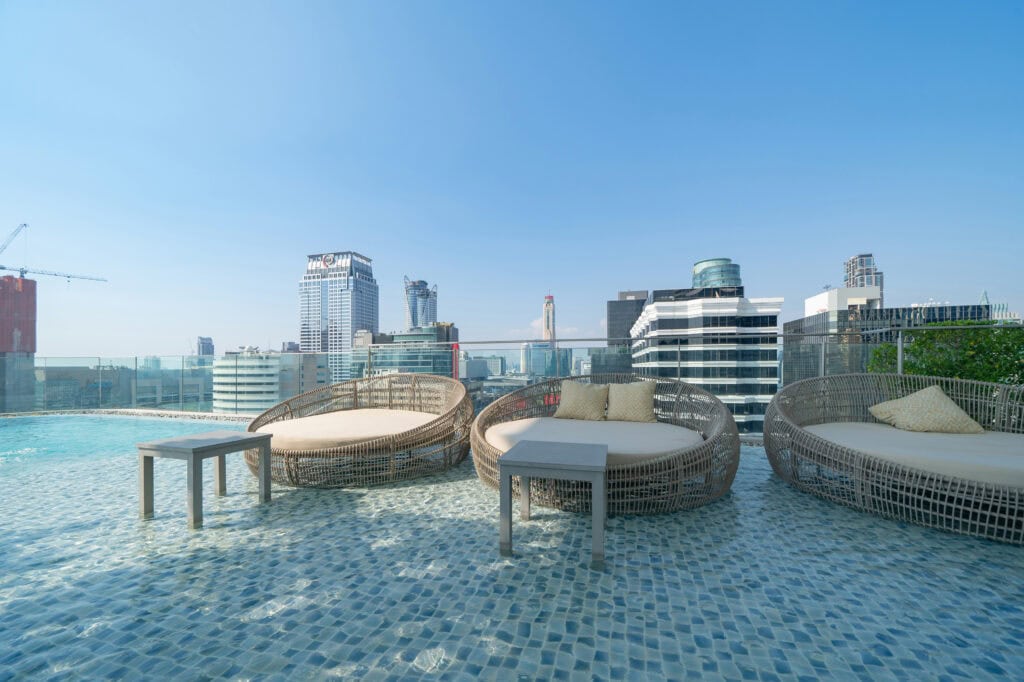
Bangkok Rooftop Pools: A Skyline-Focused Stay for European Travellers
For many European travellers, Bangkok is the first stop in Southeast Asia, and choosing a hotel with a rooftop pool is often about more than a swim: it becomes your private viewing platform onto one of Asia’s most cinematic skylines. This guide is for visitors who value atmosphere, perspective and calm, and who want their hotel to frame the city rather than simply sit within it.
Bangkok’s rooftop pool scene is centred on central districts like Sukhumvit, Silom–Sathorn and the riverside, where high-rise hotels open dramatically to the sky. If you are still deciding which neighbourhood to base yourself in, an area overview such as this detailed introduction to where to stay on a first visit to Bangkok offers helpful context before narrowing down to rooftop and skyline priorities.
Orientation: Bangkok sits in central Thailand on the Chao Phraya River, with its most striking rooftop vistas stretching from the old riverside and historic core across to the modern high-rises of Sukhumvit and Sathorn.
Understanding Bangkok’s Rooftop Pool Landscape
When searching for bangkok hotels rooftop pool options, it helps to think in terms of viewpoints rather than just amenities. Different districts offer distinct perspectives: the river brings sweeping horizontal views, Sathorn offers a canyon of glass towers, while Sukhumvit reveals a patchwork of neighbourhoods stretching toward the horizon.
Rooftop pool Bangkok hotels tend to fall into a few broad categories. Some offer full-length infinity edges that emphasise drama and photographable lines; others focus on more intimate decks with landscaped corners, shaded loungers and quieter atmospheres. In many cases, the pool shares space with a rooftop bar or restaurant, which shapes the tone of the area, especially in the evenings.
European travellers often arrive after a long-haul flight and appreciate an immediate sense of openness and sky. In this climate, the rooftop becomes both a jetlag recovery zone and a gentle introduction to Bangkok’s scale: from above, the city feels more legible and less overwhelming than it does at street level.
Best Districts for Rooftop Pool Views
Bangkok infinity pool hotels cluster in districts that combine height, transport access and varied skyline silhouettes. Each area has a different character and trade-off between drama, convenience and atmosphere.
Sukhumvit: Urban Energy and Long-Range Horizons
Sukhumvit is a linear corridor running east from the city centre, threaded by the BTS Skytrain. Rooftop pools here look over a dense sea of towers, low-rise houses and side streets, with particularly wide panoramas around Asok, Phrom Phong and Thonglor.
This is one of the most convenient areas for European visitors who want city energy, nightlife, dining and straightforward transport. Many of the best views bangkok hotel experiences in Sukhumvit face west for sunsets or north across the Skytrain tracks, creating a layered sense of movement below. The trade-off is that views can feel more urban than scenic; you see the living city in all its contrasts rather than a neatly composed postcard.
Silom–Sathorn: Skyscraper Canyons and Business-District Drama
Silom and Sathorn form Bangkok’s main business district, lined with corporate towers and architectural landmarks. Rooftop pools here tend to be framed by glass and steel, delivering close-up, almost theatrical views of neighbouring skyscrapers.
The impression from these rooftops is vertical and modern, ideal for travellers who enjoy contemporary cityscapes. Because this area straddles both the BTS and MRT networks, it works well if you plan to explore across the city. The atmosphere is quieter at weekends when office workers leave, turning rooftop pools into relatively peaceful retreats with strong skyline drama.
Riverside: Classic Silhouettes and Open Skies
Bangkok’s riverside, following the Chao Phraya, offers some of the most expansive rooftop pool vistas. Instead of being surrounded by tall neighbours, many riverside hotels look out over a broad ribbon of water with ferries, longtail boats and the historical skyline beyond.
From elevated pools here, the city feels both grand and spacious, with classic temples, bridges and low-rise districts providing a softer backdrop than in the commercial core. The trade-off is slightly longer travel times inland; however, river boats and shuttles to the Skytrain help maintain reasonable connectivity for day trips and evening outings.
What to Expect from a Premium Rooftop Pool Experience
For a premium skyline stay, the quality of the rooftop pool experience depends on more than the height of the building. Layout, orientation, and how the space is managed day-to-day all influence how enjoyable it feels for European guests.
Infinity-edge pools emphasise the boundary between water and sky, and in Bangkok’s humid climate, this design can be particularly striking around sunset when the light softens. Many bangkok infinity pool hotels also incorporate underwater seating, partially shaded zones and integrated Jacuzzis to make the space more usable in the middle of the day.
The ambience shifts by hour. Mornings are often quiet and reflective, with local residents and long-stay guests swimming laps before the sun becomes too intense. Afternoons are more social, with sun loungers, music at a low volume and occasional daytime events. After dark, some rooftops transform into candlelit lounges, making the water more of a decorative element while still providing a tranquil vantage point over the lit-up city.
Premium doesn’t always mean party-oriented. Many of the best-designed rooftop pools in Bangkok deliberately keep noise levels low and separate bar areas from the main swimming zone, allowing guests to choose between lively and serene corners on the same level.
Matching Rooftop Views to Your Travel Style
The ideal rooftop pool bangkok hotel depends on what you most want to see when you look out over the city, and how you plan to spend your time between swims and sightseeing.
For First-Time Explorers
If you are visiting Bangkok for the first time, you may appreciate a rooftop that helps you orient yourself. Pools near central transport hubs such as Asok, Siam, or Saphan Taksin offer clear views of major roads, rail lines and clusters of landmarks. Watching the city from above makes it easier to understand how neighbourhoods connect, which in turn helps when planning daily itineraries.
In these areas, you can usually step out of the hotel and quickly access Skytrain or river boat lines, making it straightforward to move between modern shopping districts, old town temples and riverside promenades.
For Nightlife and Dining
Travellers prioritising restaurants, bars and later evenings might value rooftop pools in Sukhumvit or Silom, where you can transition easily from daytime swimming to dinner and drinks nearby. Here, the skyline takes on a more neon-lit, dynamic quality after dark, with animated billboards, illuminated towers and headlights streaming along main roads.
These rooftops tend to be visually energetic rather than tranquil, though many still maintain a relaxed poolside section away from the liveliest corners, suitable for a quiet late-night swim or a final nightcap overlooking the city lights.
For Quieter, Reflective Stays
If your trip centres on rest, spa time and slower city exploration, river-facing or slightly off-centre rooftops often provide calmer surroundings. From these pools, you typically see more open sky and water, fewer billboards and less intense traffic activity below, which some visitors find more restorative.
Distance from nightlife hubs means you may rely more on river ferries or taxis in the evenings, but in exchange, you gain views that emphasise Bangkok’s more contemplative side: temples glowing softly at dusk, boats gliding under bridges and the gradual darkening of the horizon.
Practical Considerations: Sun, Shade and Seasonality
Bangkok’s climate plays a crucial role in how and when you will use a rooftop pool. For European travellers accustomed to milder weather, understanding sun patterns, rainy seasons and daily rhythms helps set realistic expectations.
Rooftops oriented west receive stronger afternoon sun and dramatic sunsets, but can be very warm between midday and late afternoon, especially between March and May. Those facing east are more comfortable in the morning, ideal if you are adjusting from a European time zone and waking early; the poolside area then enters shade earlier in the day, which can be welcome in the humid months.
The main rainy period, broadly May to October, often brings intense but brief showers. During these times, the city can look particularly atmospheric from above, with cloudscapes, distant rain shafts and reflective surfaces on nearby towers. Staff may temporarily close the pool during lightning or heavier downpours, so it is wise to remain flexible in your daily schedule.
Evenings tend to be the most comfortable time to enjoy a bangkok hotels rooftop pool, with temperatures easing and the city’s lights slowly turning on. For many guests, this becomes a daily ritual: returning from sightseeing, cooling off in the water and watching the skyline shift from late afternoon haze to a clear grid of illuminated streets.
Using Rooftop Pools as Urban Viewing Platforms
Beyond swimming and sunbathing, a rooftop pool in Bangkok can serve a similar role to a dedicated observation deck. From here, you can trace the sinuous line of the river, identify temple spires, follow Skytrain lines and observe how the old town, riverside neighbourhoods and modern districts mesh together.
Some rooftops provide subtle design features that encourage this: raised daybeds facing outward, glass balustrades with minimal frames, or carefully positioned seating areas that highlight particular vistas. Others may offer quiet corners set back slightly from the pool where you can watch thunderstorms roll in or enjoy the muffled sounds of traffic from far below.
Photography-minded visitors usually appreciate the soft light just after sunrise or before sunset; the city appears less harsh, colours emerge more clearly and reflections on the pool surface are easier to capture. At night, longer exposures can reveal patterns in traffic and illuminate architectural details that are less noticeable during the day.
Practical Travel Tips for Rooftop Pool Stays in Bangkok
Plan around the heat: Use early mornings and late afternoons for longer pool sessions; keep midday swims short, especially between March and May when temperatures peak.
Consider pool orientation: If you are sensitive to strong sun, an east-facing or partially shaded rooftop can be more comfortable than a fully exposed western deck.
Combine with transport access: For easier sightseeing, look for rooftop pools in areas close to BTS stations like Asok, Siam, or Saphan Taksin, which link quickly to major neighbourhoods.
Allow for rainy-season interruptions: During the monsoon months, expect occasional short-term pool closures during storms; use these times for spa visits, indoor dining or exploring covered markets.
Respect local norms: Swimwear is accepted at rooftop pools, but more conservative cover is expected when walking through lobbies or shared indoor areas to and from the pool.
Adapt to jetlag: If flying in from Europe, use early-morning wake-ups for quiet laps and sunrise views before the rooftop becomes busier later in the day.
Hydrate and shade: The combination of heat, humidity and sun on exposed rooftops can be tiring; drink water regularly and alternate between sun and shade.
Noise awareness: Rooftops that double as popular evening venues may be livelier at night; if you prefer a tranquil atmosphere, ask in advance about typical music levels and opening hours of adjacent bars.
FAQs About Bangkok Hotels with Rooftop Pools
Are rooftop pools in Bangkok open all year round?
Most rooftop pools in Bangkok operate year-round due to the consistently warm climate. Occasional closures may occur during heavy rain, electrical storms, or scheduled maintenance, but it is rare for pools to shut for an entire season.
Which area offers the best views from a Bangkok hotels rooftop pool?
The answer depends on your preferences. Riverside rooftops offer wide, scenic vistas over the Chao Phraya and historic areas, Silom–Sathorn provides dramatic skyscraper canyons, and central Sukhumvit delivers long-range cityscapes with strong sunset potential.
What is the difference between a rooftop pool and an infinity pool in Bangkok hotels?
A rooftop pool simply refers to a pool located on a roof or upper deck, while an infinity pool uses a disappearing edge design to create the illusion of water blending into the skyline. Many bangkok infinity pool hotels combine both, but some rooftop pools are more traditionally edged or enclosed.
Is it possible to enjoy a quiet experience at a rooftop pool Bangkok hotel?
Yes. While some rooftops emphasise social spaces and music, others focus on calm, with separated lounging and bar areas, lower volume levels and more residential settings. Riversides and slightly off-centre districts tend to offer quieter atmospheres.
Are rooftop pools in Bangkok suitable for children?
Policies vary by hotel. Many rooftop pools welcome families but may have depth restrictions, designated shallow areas or guidelines for children’s supervision. If travelling with younger guests, it is worth confirming family suitability and any time limitations for children’s use.
Conclusion: Balancing Skyline Drama and Daily Practicalities
Bangkok hotels with rooftop pools offer a distinct way to experience the city, turning a standard hotel stay into a series of elevated encounters with the skyline. Whether you choose riverside openness, business-district drama or Sukhumvit’s layered horizons, each setting frames Bangkok differently and shapes how you remember the city.
The key is to balance the appeal of views with practical considerations such as transport access, climate, daily rhythm and the atmosphere that best suits your travel style. Approached with this in mind, a rooftop pool becomes more than an amenity: it becomes a calm vantage point from which to understand Thailand’s capital at your own pace.
Recommended next:
- Thailand Itinerary 10 Days: Bangkok, Chiang Mai & Islands for First-Timers
- Thailand Itinerary 14 Days: Classic Route with Beaches and Northern Culture
- Thailand in 7 Days: Bangkok + One Beach Base (No Rushing)
- Best Time to Visit Thailand: Month-by-Month Weather for Europeans
- Thailand Travel Costs: Realistic Daily Budget for European Travelers
- Thailand Travel Insurance Guide: What to Cover and What to Skip
- More in Thailand →