Family-friendly hotels in Bangkok: an orientation for European travellers
Bangkok can feel overwhelming on a first visit, especially with children in tow. This guide is for European travellers looking for calm, comfortable bases and family friendly hotels in Bangkok that keep journeys short to sights, malls and transport hubs.
Bangkok spreads along the Chao Phraya River in central Thailand, with distinct districts ranging from riverside heritage quarters to modern shopping hubs; understanding these neighbourhoods is essential when deciding where to stay as a family. For a broader area overview, you can pair this guide with a citywide look at where to stay in Bangkok for first-time visitors, then return here to focus on family needs and comfort.
Compared with many European capitals, Bangkok’s pavements, traffic and humidity can be demanding for children, so choosing the right district – not only the right hotel – can make the difference between a tiring city and an enjoyable base.
How to choose the best Bangkok area for your family
When comparing Bangkok hotels for families, the first decision is not star rating but location. Distances on the map can be deceptive; short taxi rides can become long in peak-hour traffic, and walking with children in the heat is often impractical. Prioritising direct access to the BTS Skytrain or MRT underground usually makes days smoother and more predictable.
Most family-oriented visitors narrow their choices to five main areas: the shopping hub of Siam, the long Sukhumvit corridor, the calmer Bangkok Riverside, the business-and-dining zone of Silom–Sathorn, and the historic Old Town near the Grand Palace. Each has a distinct character and rhythm, along with different trade-offs between atmosphere, convenience and family comfort.
Consider the age of your children, how much time you plan to spend in malls or water play areas, and whether you prefer a quiet retreat or a lively, urban feel. These factors will guide which Bangkok family areas feel most natural for your stay.
Siam: central, walkable and mall-based comfort
For many, Siam is the most straightforward answer to the question of kid friendly Bangkok accommodation. This is the city’s modern shopping heart, where large, air-conditioned malls sit side by side, linked by elevated walkways and directly connected to Skytrain stations. The result is a compact, walkable environment where families can move between activities with minimal exposure to traffic or heat.
Families staying in Siam find that daily logistics become simple. Major malls such as Siam Paragon, Siam Center and CentralWorld provide food courts, international supermarkets, cinemas, indoor play zones and plenty of child-friendly facilities. This reduces the pressure to seek out standalone attractions; much of what young children need is concentrated in a few adjoining buildings.
From a comfort angle, Siam suits families who value climate-controlled environments, predictable meal options and minimal transfers. The trade-off is that it feels more international than distinctly local, and green spaces are limited. However, with direct BTS access, short rides to the riverside, Old Town and Sukhumvit remain easy, keeping sightseeing journeys relatively brief.
Sukhumvit: flexible bases along the Skytrain
Sukhumvit is a long avenue running east from central Bangkok, lined with residential lanes, malls, restaurants and many of the most established Bangkok hotels for families. Different stretches of Sukhumvit have different moods, but what they share is excellent BTS coverage, making it straightforward to reach major sights with one or two train changes.
For family comfort, the mid-Sukhumvit area around Asok, Phrom Phong and Thong Lo is particularly appealing. Here, international supermarkets, playgrounds tucked into malls, child-friendly cafes and quieter side streets create an environment that many European families find easy to settle into. Hotels often come with pools, and some offer family rooms or suites designed for longer stays.
The advantages of Sukhumvit include variety and flexibility: you can choose a calmer, more residential side-street while still being within a few minutes’ walk of the BTS, and short rides by train connect you to both Siam and the river. The drawback is that road traffic is intense, and pavements are uneven in places, which can be tiring with a buggy. Using the Skytrain lifts and planning routes that minimise street-level walking helps maintain comfort.
Bangkok Riverside: calmer stays and scenic boat rides
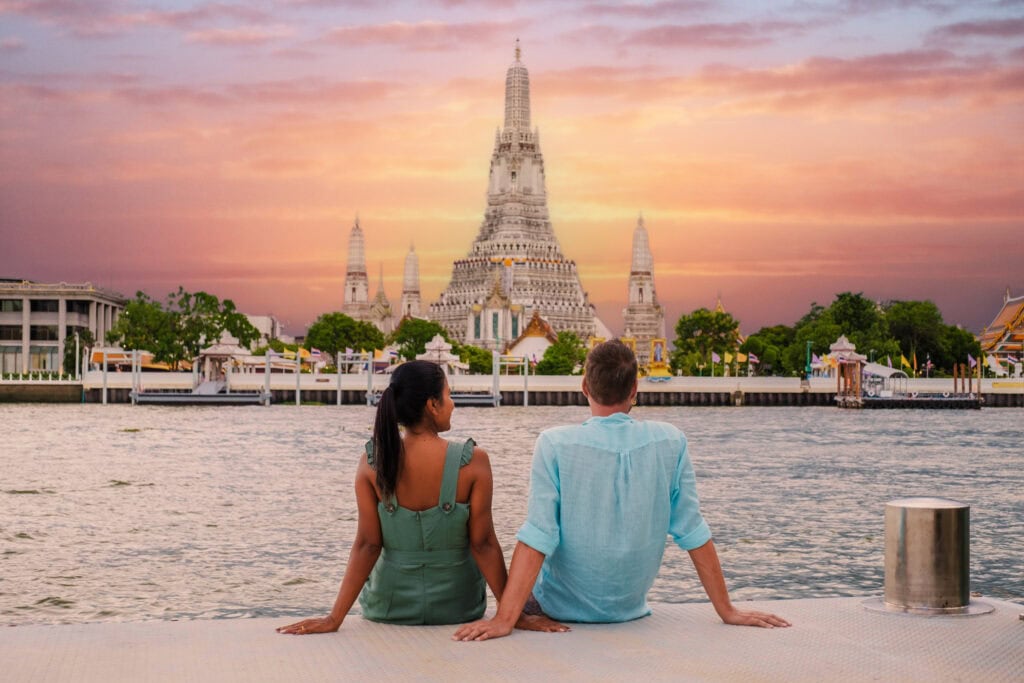
For families who prefer a slower pace and a sense of space, the Bangkok Riverside offers a very different atmosphere. Set along the Chao Phraya River, this area combines larger hotel grounds, pools and gardens with views of boats and temples, often with cooling breezes that take the edge off the humidity.
Many riverside properties feel more like urban resorts, which can be especially welcome with younger children who may not want to be out in the city all day. Staying here means that downtime around the pool, riverside walks and watching the river traffic become part of the experience, rather than simply a retreat from it.
In terms of logistics, river hotels often operate private boats to central piers linked with the BTS, offering scenic transfers that children tend to enjoy. These short rides on the river can replace longer journeys by road. The main compromise with the riverside is that you are slightly removed from the densest shopping districts; reaching Siam or Sukhumvit usually involves a boat plus a train. For many families, this is an acceptable trade for a quieter, more spacious base at the end of each day.
Silom–Sathorn: business skyline, green escape and family practicality
Silom and Sathorn form a mixed district of offices, hotels and restaurants just south of the city’s main commercial core. While on paper this sounds more business-oriented than family focused, the area offers some advantages for those prioritising comfort and short travel times.
Firstly, Silom sits between two forms of transport: the BTS Skytrain and the MRT underground, making cross-city journeys efficient. Secondly, the presence of Lumpini Park – one of Bangkok’s few sizeable green spaces – provides a useful outdoor escape. Children can run, cycle or watch the famous monitor lizards, while adults enjoy a break from traffic and concrete.
Family-friendly hotels in this area often cater to business and leisure travellers together, which typically translates into good soundproofing, pools and reliable service standards. The neighbourhood has a mix of quiet streets and busier main roads, with many simple restaurants that welcome children. The trade-off is that evenings can feel office-district subdued compared with Sukhumvit, and sightseeing still requires short rides on public transport or by taxi.
Old Town (Rattanakosin): heritage setting with more complex logistics
The Old Town, or Rattanakosin, is the historic heart of Bangkok, home to the Grand Palace, Wat Pho and many of the city’s most iconic temples. For families drawn to culture and history, staying here can reduce daily travel time to these major landmarks, turning morning temple visits into short strolls or quick tuk-tuk rides.
However, from a family-comfort perspective, this area has some considerations. Public transport is less convenient: there is no direct BTS or MRT coverage within the old core, and most longer journeys rely on taxis, tuk-tuks or river ferries. Streets can be busy during the day and quiet at night, with pavements that are not always buggy-friendly.
On the plus side, children often find the temples, river views and occasional canal-side walks engaging, and staying nearby can mean returning to your hotel easily for rest in the heat of the day. Families who choose this area usually accept slightly more complex logistics in exchange for immersion in Bangkok’s historic layer, often combining a few nights here with time in a more modern, transport-rich district.
Balancing child-friendly activities with adult comfort
Whichever Bangkok family areas you consider, it is worth thinking in terms of daily rhythm rather than isolated attractions. With the climate and traffic, a realistic pace for families is one or two main outings per day, interspersed with pool time or indoor breaks.
Areas such as Siam and central Sukhumvit naturally support this pattern. Here, hotels are often within walking distance of malls that offer indoor play spaces, aquariums, soft-play centres and cinemas, allowing children to reset after cultural visits. Parents benefit from easy access to cafes, quieter corners of large malls and predictable transport back to the hotel.
Along the riverside and in Silom–Sathorn, the focus shifts from mall-based entertainment to outdoor spaces and hotel facilities. River views, boat trips and parks become the main kid friendly Bangkok experiences close to your base. In Old Town, cultural sights and river ferries provide the interest, but you may wish to plan more deliberate breaks back at the hotel, given the relative scarcity of fully air-conditioned public spaces.
In all districts, pools are valuable for cooling off and keeping children happy after a hot day, and many family friendly hotels in Bangkok build their entire guest experience around this daily pattern of outing and retreat.
Practical tips for family comfort in Bangkok
Prioritise access to BTS or MRT: In Siam, Sukhumvit and Silom–Sathorn, staying within a short, straightforward walk of a station keeps journeys shorter and more predictable with children.
Use river transport where possible: Along the Bangkok Riverside, rely on hotel boats and public ferries to reach central piers; they are often cooler and more enjoyable than taxis in traffic.
Avoid peak-hour road travel: Morning and late-afternoon rush hours can turn short distances into lengthy drives. Time taxi rides outside these windows, especially with younger children.
Plan around the heat: Schedule outdoor temple visits early in the morning, then retreat to air-conditioned malls in Siam or Sukhumvit, or to riverside pools, during the hottest hours.
Expect varied pavements: Sidewalks in many areas, particularly Old Town and parts of Sukhumvit, can be uneven or crowded. Lightweight, foldable buggies and baby carriers are more practical than larger prams.
Allow extra time for Skytrain lifts: BTS and MRT stations have lifts, but they can be busy or located at one end of the platform, so factor in an extra few minutes when travelling with a buggy.
Dress for modesty at temples: In Old Town, shoulders and knees should be covered for both adults and older children visiting major temples, so pack lightweight shawls or long trousers despite the heat.
Use hotel pools strategically: Choose properties with pools in every area; plan a daily swim to cool down and give children a reliable point of enjoyment.
Introduce Thai food gradually: Even in family-friendly areas, some dishes may be spicier than expected. Start children with milder options such as fried rice, satay or simple noodle dishes before exploring more adventurous flavours.
Keep essentials to hand: In Bangkok’s climate, carry water, light snacks, sun protection and a small hand towel or cloth for each outing, as distances between shaded spots can be longer than anticipated.
FAQs about family friendly hotels in Bangkok
Which area is best in Bangkok for families visiting for the first time?
For first-time visitors, Siam and central Sukhumvit are often the most practical choices. Both areas combine good BTS access with family-oriented malls, a wide choice of restaurants and easy connections to major sights, making them convenient and comfortable bases.
Are Bangkok hotels for families mainly in the city centre?
Most larger Bangkok hotels for families cluster in central districts such as Sukhumvit, Siam, Silom–Sathorn and along the river, where transport links and facilities are best. However, there are also smaller options in Old Town for those who prioritise proximity to historic sights over extensive facilities.
Is Bangkok kid friendly for younger children?
Bangkok can be very kid friendly when days are paced sensibly. Indoor attractions, hotel pools, river cruises and parks balance the city’s busier aspects. Choosing a district with easy transport and nearby amenities is key to avoiding long, tiring journeys for younger children.
How many days should a family stay in Bangkok?
A stay of three to five nights works well for most families, allowing time for major temples, river experiences, a few mall-based outings and relaxed pool breaks, without overloading children with daily sightseeing.
Is it better to stay by the river or in the shopping areas with kids?
Riverside stays offer a calmer, scenic environment and resort-style comfort, while shopping areas like Siam and Sukhumvit offer maximum convenience for everyday needs. Families who value tranquillity and hotel space tend to favour the river; those who prioritise very short walks to activities and food often prefer the central shopping districts.
Conclusion: weighing comfort, character and convenience
Bangkok offers several distinct districts that work well for families, each balancing comfort and convenience in different ways. Siam and Sukhumvit emphasise ease of movement, air-conditioned escapes and a broad choice of services, while the riverside focuses on space, quiet and scenic transfers. Silom–Sathorn blends business infrastructure with park access, and Old Town delivers immersion in heritage with more complex logistics.
By aligning your choice of area with your family’s rhythm, your children’s ages and your preferred balance between cultural exploration and downtime, Bangkok can become a manageable and enjoyable stop in a wider journey through Thailand rather than an exhausting detour.
Recommended next:
- Thailand Itinerary 10 Days: Bangkok, Chiang Mai & Islands for First-Timers
- Thailand Itinerary 14 Days: Classic Route with Beaches and Northern Culture
- Thailand in 7 Days: Bangkok + One Beach Base (No Rushing)
- Best Time to Visit Thailand: Month-by-Month Weather for Europeans
- Thailand Travel Costs: Realistic Daily Budget for European Travelers
- Thailand Travel Insurance Guide: What to Cover and What to Skip
- More in Thailand →