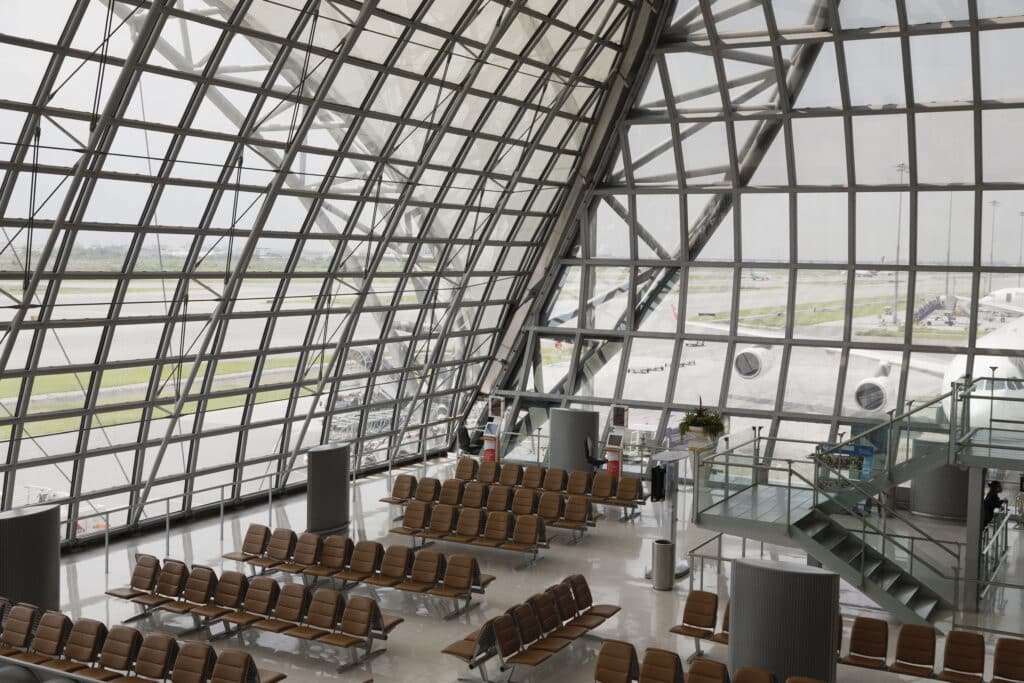
Arriving in Bangkok: How to Get from Airport to City
This guide is written for European travellers arriving in Bangkok for the first time and wanting a calm, structured overview of how to get from the airport into the city. The way you handle your Bangkok airport transfer often shapes your first impressions of Thailand, especially after a long-haul overnight flight from Europe.
Bangkok has two main airports: Suvarnabhumi (BKK), the primary international hub to the east of the city, and Don Mueang (DMK), the older airport in the north largely serving regional and low-cost carriers. Understanding the transfer options from each airport to central Bangkok makes your arrival noticeably smoother and helps you match transport to where you are staying. For a broader sense of neighbourhoods and city layout, it is useful to read an orientation-focused overview such as where to stay in Bangkok for first-time visitors in parallel with your transfer planning.
In simple terms, BKK connects to the city via an airport rail link and regulated taxis, while DMK relies on road transport and commuter rail. Both airports sit outside the central districts, so journey times can vary significantly with traffic and time of day.
Orientation: Bangkok’s Airports and Key City Areas
Before choosing between taxi, train or other options, it is useful to place the airports in relation to the main areas of Bangkok where visitors usually stay. This is part of arrival logistics, as your best transfer from BKK to city or from DMK to Bangkok depends heavily on the final neighbourhood.
- Suvarnabhumi Airport (BKK): Around 30 km east of central Bangkok. Direct rail link to the city and extensive taxi facilities. Often used for long-haul flights from Europe.
- Don Mueang Airport (DMK): Around 24 km north of central Bangkok. No direct metro, but connected via highway and a commuter rail line. Frequently used for regional or low-cost connections.
- Sukhumvit: Long, linear district served by BTS Skytrain, popular with many first-time visitors. Convenient if you connect from airport rail or highway routes.
- Silom/Sathorn: Central business and dining area, served by BTS and MRT. Straightforward for taxis and reasonably accessible via rail combinations.
- Riverside and Old Town: More atmospheric areas along the Chao Phraya River and around the Grand Palace. Transfers usually involve taxis or a mix of train and river boat.
Bangkok’s rail network does not yet provide a single seamless line from either airport to every central area, so most rail-based arrivals involve at least one interchange or a short taxi ride at the end.
Bangkok Airport Transfer from BKK: Train, Taxi and Hybrid Options
Suvarnabhumi is the better-connected of Bangkok’s two airports, offering a dedicated rail service plus well-organised taxi queues. When travellers search for “BKK to city” solutions, they are generally deciding between the airport rail link and a taxi, or a mixture of both.
Airport Rail Link from BKK
The Airport Rail Link runs from the lower levels of Suvarnabhumi into the eastern part of central Bangkok. It connects to both the BTS Skytrain and MRT underground networks, which is useful if you are staying near a station.
- Who it suits: Travellers with light to medium luggage, comfortable with navigating rail transfers, and staying near Phaya Thai, Sukhumvit or connections to the BTS and MRT.
- Advantages: Predictable journey time regardless of traffic, simple station layout at the airport, and a clear sense of orientation as you arrive.
- Limitations: No direct service to riverside or Old Town areas, busy during peak commuter hours, and some stair or escalator use when changing lines or exiting.
Taxi from Suvarnabhumi into Bangkok
Taxis remain the most straightforward door-to-door option from BKK to city hotels and apartments. The official taxi rank is clearly signposted on the arrival level and organised by queueing machines and designated lanes.
- Who it suits: Long-haul travellers with larger luggage, families, or anyone preferring not to navigate rail interchanges on arrival.
- Advantages: Direct to your accommodation, air-conditioned comfort, and no need to manage bags in crowded trains.
- Limitations: Journey time can increase sharply during rush hour or heavy rain, and navigation within dense areas like Sukhumvit can be slow.
Train + Taxi Combinations
For many visitors, especially those familiar with European public transport, a hybrid approach works well. Taking the Airport Rail Link into the city and then switching to a short taxi ride reduces both journey time and exposure to traffic.
- Use the train to reach a central interchange such as Phaya Thai.
- Transfer to a BTS Skytrain line if your hotel is near a station.
- Alternatively, exit to street level and take a short taxi ride for the final kilometre or two.
This approach balances comfort with efficiency and often makes sense for stays in Sukhumvit, Siam and the business districts along Silom and Sathorn.
Transfers from Don Mueang (DMK) to Bangkok
Don Mueang is smaller and lacks a direct city rail link, so most travellers focus on taxi-based options when planning a DMK to Bangkok transfer. However, there are still several ways to approach the journey depending on your confidence and luggage.
Taxis from Don Mueang
Taxis are the dominant option from DMK. The airport has a designated taxi area with queueing systems and signage. As with Suvarnabhumi, the taxis are metered and operate under airport rules.
- Who it suits: Almost all first-time visitors, particularly after regional flights when energy levels may be lower.
- Advantages: Direct transfer, relatively simple process, and good coverage of the city’s main districts.
- Limitations: The route into central Bangkok passes through some of the city’s most congested roads. Journey times are sensitive to time of day and day of the week.
Commuter Rail and Bus Options
For travellers used to regional trains in Europe, the idea of a suburban train from DMK into the city may be appealing. There is a commuter rail station near the airport, with services running towards central Bangkok railway hubs. However, this remains a more local experience than a dedicated air-rail link.
- Pros: Avoids some road traffic, offers a glimpse of everyday Bangkok, and can be useful if you are comfortable with basic station infrastructure and fewer signs in English.
- Cons: Less intuitive layout, steps or uneven platforms, and further transfers required to reach popular hotel areas.
A small number of bus routes also connect DMK to various parts of the city, but these are best suited to repeat visitors or those with very light luggage who are accustomed to Bangkok’s public bus system.
Bangkok Airport Taxi vs Train: Choosing for Your Arrival Style
Many new visitors compare Bangkok airport taxi vs train options in advance, especially when arriving from Europe after a long flight. The right choice depends less on budget and more on your tolerance for transfers, luggage weight and the area you are staying in.
When Train-Based Options Work Best
- Clear onward connections: If your accommodation is within easy walking distance of a BTS or MRT station connected to the Airport Rail Link, the train offers predictable timing.
- Daytime arrivals: Using rail during daylight hours can be more comfortable if you prefer to orient yourself while you can see the cityscape.
- Light luggage: Backpacks or small suitcases are ideal. Larger or multiple pieces can become cumbersome on escalators and in busy carriages.
When Taxis Offer the Better Experience
- Late-night or very early arrivals: A direct taxi reduces hassle at times when rail services may be less frequent or you are most tired.
- Riverside and Old Town hotels: These areas are less integrated with the rail system. Door-to-door taxi transfers avoid complicated connections.
- Travelling with children or in a group: Staying together in one vehicle streamlines the arrival and keeps luggage in one place.
In practice, many experienced visitors take the train into town on daytime arrivals and favour taxis when landing late or staying near the river and historic centre.
Timing, Traffic and Local Patterns
Bangkok’s road traffic has a substantial impact on arrival logistics. Understanding patterns helps you set realistic expectations for any Bangkok airport transfer, whether from BKK or DMK.
- Morning peak: Weekday mornings can be busy in both directions. Arriving in the early hours may allow a quicker taxi journey before commuter traffic builds.
- Evening rush hour: Late afternoon and early evening are particularly congested heading into central Bangkok, especially on routes from Don Mueang.
- Rainy season: Intense showers can slow traffic dramatically, sometimes more than doubling travel time by road.
- Public holidays: Some days feel noticeably calmer, while the eve of major holidays can be unusually busy as residents travel.
Rail-based segments offer a degree of certainty when traffic is unpredictable, which is why some travellers consciously build a train leg into their arrival or departure days.
Arrival Practicalities: Language, Wayfinding and Local Norms
While Bangkok is very used to international visitors, the first hour after landing can feel disorienting. A few local details make airport-to-city transfers feel calmer and more controlled.
- Language: Airport signage is in Thai and English. Most official staff at taxi counters and rail stations at BKK and DMK manage basic English for essential information.
- Addresses: It helps to have your hotel name and address written in both English and Thai script, which you can usually obtain from the property’s website or confirmation email.
- Navigation apps: Many visitors check their route on mapping apps during taxi rides, using them as orientation rather than for micromanaging the driver.
- Forms of payment: Cash remains widely used for taxis, particularly on arrival. Contactless and digital options may be available in some rail systems, but cash is the most flexible backup.
- Personal space: Trains can be crowded at peak hours, especially around interchange stations. This is normal in Bangkok and worth factoring into decisions if you prefer a quieter arrival.
Practical Travel Tips for Bangkok Airport Transfers
- Keep a printed or offline copy of your accommodation address in both English and Thai to show taxi drivers on arrival.
- Note which airport you land at and depart from; BKK and DMK are far apart, and transfer planning differs between them.
- Allow extra time when travelling from DMK to Bangkok’s central areas during weekday rush hours, when the northern highways can be especially slow.
- If using the Airport Rail Link from Suvarnabhumi, check where to change for BTS or MRT in advance to reduce confusion with luggage.
- Pack essentials such as a light change of clothes and a small toiletries kit in your hand luggage in case of humid conditions and longer-than-expected journeys.
- Use airport restrooms and drinking water stations before leaving the terminal, particularly if heading into traffic from Don Mueang.
- When taking a taxi, confirm that the meter is being used at the beginning of the journey and keep your hotel’s phone number available in case directions are needed.
- For riverside stays, consider a combination of rail or taxi to a central pier followed by a river boat for your onward journeys after the first night.
- Weather can influence comfort on rail links; carriages are air-conditioned, but platforms and walkways can be warm and humid.
- Arrive at the airport earlier than you might in smaller European cities when departing Bangkok, as city traffic can be slow and airport queues fluctuate.
FAQs: BKK and DMK Airport Transfers into Bangkok
Is it better to take a taxi or train from BKK to the city?
For travellers staying near BTS or MRT stations and arriving during the day, the train from Suvarnabhumi is efficient and predictable. If you are staying by the river, in Old Town, or arriving late at night, a taxi generally offers a more comfortable, direct transfer.
How long does it take to get from Don Mueang (DMK) to central Bangkok?
Travel time varies with traffic, but journeys from DMK to Bangkok’s central districts usually range from around half an hour in light traffic to significantly longer during peak periods or heavy rain. Planning generous buffer time is advisable, especially for connections.
Can I use public transport for my Bangkok airport transfer if I have large luggage?
It is possible but less comfortable. The Airport Rail Link and connecting lines are equipped with escalators and some lifts, but carriages can be crowded. Travellers with large or multiple suitcases often find a taxi or a mixed approach (train plus short taxi ride) more practical.
Is it easy to find the rail link from Suvarnabhumi Airport?
Yes. The Airport Rail Link is well signposted within the terminal, with clear English-language directions to the lower floors where the platforms are located. Ticket machines and counters are straightforward, and staff are used to first-time visitors.
Are taxis from Bangkok airports reliable for new visitors?
Official taxis from the airport ranks at both BKK and DMK are regulated and metered, and they form a normal part of arrival logistics for locals and visitors. Having your accommodation details written clearly, and being aware of expected routes, helps the journey feel more relaxed.
Conclusion: Balancing Comfort, Time and Orientation
Transfers from Bangkok’s airports into the city are shaped by three main factors: which airport you use, where you are staying, and how you prefer to arrive after a long flight. Suvarnabhumi offers the structure of a dedicated rail link, while Don Mueang relies more on taxis and road connections. Choosing between train, taxi or a combination allows you to balance comfort with journey time and to align your arrival with the character of Bangkok’s different neighbourhoods. Understanding these options ahead of time turns a potentially tiring transition into a measured first encounter with the city.
Recommended next:
- Thailand Itinerary 10 Days: Bangkok, Chiang Mai & Islands for First-Timers
- Thailand Itinerary 14 Days: Classic Route with Beaches and Northern Culture
- Thailand in 7 Days: Bangkok + One Beach Base (No Rushing)
- Best Time to Visit Thailand: Month-by-Month Weather for Europeans
- Thailand Travel Costs: Realistic Daily Budget for European Travelers
- Thailand Travel Insurance Guide: What to Cover and What to Skip
- More in Thailand →