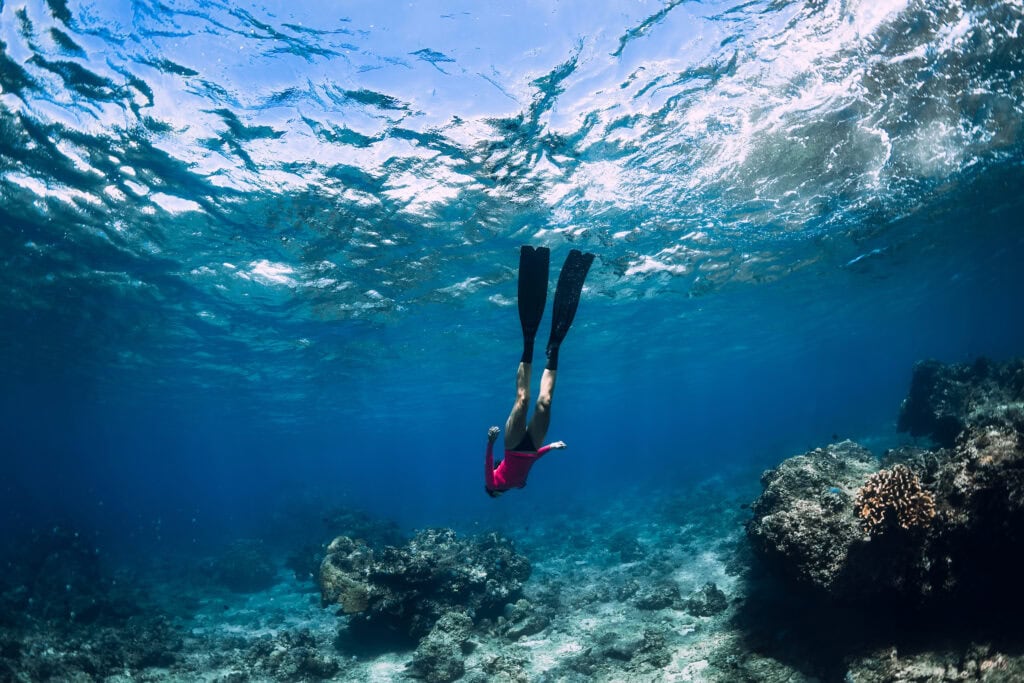
Snorkeling in Bali ranges from easy shore entries in Amed to boat trips around the Nusa Islands, where stronger currents and open-water conditions require more care. Divers have an equally varied choice, including reefs, walls and wreck sites.
The right base depends on your experience, the time available and whether you prefer independent shore snorkeling or an organised boat trip. Conditions can change quickly, so current local advice matters more than any fixed list of supposedly perfect sites.
Quick answer
Amed is the most practical all-round choice for relaxed shore snorkeling, with several bays and local operators along Bali’s east coast. Nearby Tulamben is better known among divers, although snorkellers can also explore suitable areas when sea conditions allow.
Choose the Nusa Islands if seeing manta rays is a priority, but treat any encounter as a possibility rather than a guarantee. The surrounding channels can have strong currents, swell and cooler water. Padang Bai is convenient for short boat outings, while Pemuteran and Menjangan suit travellers willing to visit Bali’s quieter northwest.
| Area | Best for | Typical access | Main consideration |
|---|---|---|---|
| Amed | Shore snorkeling, beginners and mixed groups | Beach or local boat | Entry conditions differ between bays |
| Tulamben | Wreck diving and experienced snorkellers | Mostly shore-based outings | Stony entries and possible surge |
| Nusa Penida and Nusa Lembongan | Manta trips, drift diving and varied boat sites | Organised boat | Currents, swell and changing conditions |
| Padang Bai | Reef trips and combining water activities with east Bali | Beach or boat, depending on the site | Boat traffic and variable currents |
| Pemuteran and Menjangan | Quieter reef-focused stays | Shore snorkeling and organised boats | Remote location and extra journey time |
Best places for snorkeling and diving in Bali
Amed: the easiest base for repeated snorkeling
Amed refers to a string of coastal villages and bays rather than one compact resort. Jemeluk Bay is among the commonly used snorkeling areas, but visibility, waves and boat activity vary from day to day.
The main advantage of Amed snorkeling is flexibility. In suitable conditions, you can enter from shore rather than committing to a full boat excursion. This makes Amed particularly useful for couples or families whose members have different levels of confidence in the water.
Beach entries can include pebbles, rocks or uneven ground. Water shoes may help on shore, but fins are still the appropriate equipment once you begin swimming. Ask locally where to enter and exit without crossing fishing-boat routes or standing on coral.
Amed also has dive centres offering introductory experiences and certified dives. Before choosing one, ask about group size, the planned site, equipment checks and how the operator responds if conditions change.
Tulamben: Bali’s best-known wreck area
Tulamben, northwest of Amed, is associated with shore-access wreck diving. It is a logical addition for certified divers staying on the east coast and is often included in discussions of the leading diving Bali spots.
Some areas may also be visible to snorkellers when the surface is calm, but depth, visibility and surge affect what can realistically be seen. Do not assume that a famous dive site will automatically provide an easy snorkeling experience.
The shoreline is generally less forgiving than a sandy beach. Discuss entry conditions with a local operator, especially if you have limited mobility, are carrying a camera or are not comfortable in breaking waves.
Nusa Penida and Nusa Lembongan: manta trips and dynamic water
The waters around Nusa Penida, Nusa Lembongan and Nusa Ceningan offer some of the region’s most memorable boat-based snorkeling and diving. Trips often combine several sites, selected according to swell, current, visibility and passenger ability.
A Nusa Penida manta snorkel usually targets coastal cleaning or feeding areas known to local operators. Manta rays are wild animals, so sightings cannot be promised. Responsible trips should avoid chasing, touching, feeding or blocking the animals’ path.
These islands are not automatically suitable for first-time snorkellers. Water can be choppy, entries may be directly from a boat, and currents can be difficult to judge from the surface. Tell the crew honestly about your swimming ability and use a flotation aid if offered and appropriate.
For divers, the area is known for drift-style experiences and sites exposed to moving water. Site choice should match certification, recent experience and current conditions rather than the desire to visit a famous name. Cooler patches of water are also possible, so ask the operator what exposure protection is suitable.
Padang Bai: a convenient east-coast option
Padang Bai is both a coastal town and a departure point for boats. Nearby reef areas, including those commonly marketed under the Blue Lagoon name, attract snorkellers and divers. Exact trip routes vary, and operators may change sites according to conditions.
This area can work well if you want a water activity without moving as far east as Amed or northwest to Menjangan. However, convenience does not mean every site is calm. Ask about currents, boat traffic, surface supervision and whether the trip is appropriate for children or nervous swimmers.
Pemuteran and Menjangan: reefs in northwest Bali
Pemuteran is a quieter coastal base in northwest Bali, while Menjangan-area outings are generally organised by boat. The region appeals to travellers who want reef-focused days and are comfortable allocating more of their itinerary to a remote part of the island.
Menjangan is usually considered more practical as a planned excursion than an improvised beach stop. Access arrangements and conservation requirements can change, so confirm the current process with an established local operator before travelling.
Pemuteran also offers shore-based possibilities, although conditions and reef health vary by location. Ask accommodation staff or a dive centre which entry points are currently suitable rather than relying on an old map or review.
Which area suits you?
Best for first-time snorkellers
Amed is generally the most flexible choice because several bays can be assessed locally and some snorkeling is possible from shore. Beginners should still avoid going alone and should choose a guided introduction if they are uncomfortable with fins, masks or open water.
Best for manta encounters
Choose an organised Nusa Penida or Nusa Lembongan boat trip, while accepting that wildlife sightings and access to particular sites depend on nature and sea conditions. The best operator is one willing to cancel or change the route rather than enter unsuitable water.
Best for certified divers
Tulamben, Amed and the Nusa Islands offer contrasting experiences. Tulamben is useful for shore diving, Amed provides a mixed reef base, and the Nusa area is better suited to divers prepared for more dynamic conditions. Your certification alone is not a substitute for recent experience.
Best for a quieter coastal stay
Pemuteran is the strongest option if you want to spend several nights in northwest Bali and arrange a Menjangan-area excursion. It is less convenient for a rushed itinerary based around southern Bali.
Best for a short east-coast excursion
Padang Bai can be practical for travellers already moving through east Bali. Compare what operators include, where they expect to go and how much in-water supervision is provided.
How to plan Amed and the Nusa Islands in one trip
Amed and the Nusa Islands are on different parts of the east Bali travel circuit. Trying to combine both as consecutive day trips from southern Bali can create unnecessary road and boat transfers.
A more comfortable plan is to stay several nights in Amed, then allocate a separate island stay or organised excursion for Nusa Penida or Nusa Lembongan. Keep the day after a major transfer relatively light, particularly after arriving from Europe.
For a broader route that includes recovery time and the islands, see Bali Itinerary 10 Days: Add Nusa Islands and Slow-Luxury Days.
Transport connections and sea crossings are subject to weather, operator procedures and local disruption. Check current arrangements before travel and avoid building a tightly timed flight connection immediately after an island crossing.
Snorkeling independently or joining a guide
Independent shore snorkeling can be appropriate in a sheltered bay when you have confirmed the entry, exit and current conditions. It offers flexibility and is useful for short sessions.
A guide is the better choice when the site requires a boat, currents are present, you are unfamiliar with local traffic patterns or you want help identifying a safe route. Guided trips should include a clear briefing covering signals, buddy arrangements, site boundaries and what to do if separated.
Do not select an excursion solely by its list of famous sites. A shorter itinerary with suitable conditions and attentive supervision is more valuable than rushing through several exposed locations.
Practical tips for European travellers
- Allow time to recover from the long journey and time-zone change before a demanding boat or dive day.
- Check that your travel insurance covers the exact activities you plan, including scuba depth and any certification requirements.
- Bring proof of diving certification and recent dive records if an operator requests evidence of experience.
- Ask your dive provider about recommended intervals between diving and flying, and plan your final dives accordingly.
- Use sun-protective clothing and choose reef-conscious sun protection where possible. Avoid touching or standing on coral.
- Carry drinking water and protect yourself from sun exposure, especially on boats with limited shade.
- If you are prone to motion sickness, seek appropriate medical advice before the trip rather than waiting until the boat has departed.
- Inspect rental masks, fins, buoyancy equipment and regulators before entering the water. Report fit or function problems immediately.
- Keep valuables and electronics in a suitable dry bag, but do not assume every bag is fully waterproof.
- Check current weather, sea conditions and operator messages on the day of departure.
Choosing a responsible operator
Look for clear communication rather than promises of guaranteed wildlife. The operator should ask about swimming ability or dive experience, explain the likely conditions and be willing to substitute a site.
For scuba diving, confirm that guides hold appropriate professional credentials and that the centre follows recognised training-agency procedures. Ask how large the group is likely to be, whether equipment is checked on site and what emergency arrangements are in place.
For manta snorkeling, choose a crew that explains wildlife etiquette and controls how guests enter the water. Avoid touching marine animals, crowding them or pursuing them for photographs.
Frequently asked questions
Is Amed or Nusa Penida better for snorkeling?
Amed is better for flexible shore snorkeling and travellers who want repeated, relatively simple sessions. Nusa Penida is more appropriate for organised boat trips and the possibility of manta encounters, but its exposed conditions can be more demanding.
Can beginners snorkel with manta rays near Nusa Penida?
Some operators accept beginners, but suitability depends on the day’s swell, current, entry method and the swimmer’s confidence. Ask for an honest assessment, request flotation support where appropriate and do not enter if conditions feel beyond your ability.
Do I need a diving certificate in Bali?
Certification is normally required for independent certified-d diver trips. Dive centres may offer supervised introductory experiences for people without certification, subject to medical screening and operator rules. Confirm requirements directly before booking.
Can I snorkel in Bali throughout the year?
Snorkeling is offered in many areas across the year, but rainfall, wind, swell, currents and visibility vary by coast and by day. No month guarantees ideal water. Check local conditions shortly before each outing and keep an alternative plan.
Final recommendation
For a first snorkeling trip to Bali, base yourself in Amed and choose bays according to current local advice. Add a carefully selected Nusa Islands boat excursion if manta rays are a priority and you are comfortable in open water. Divers can combine Amed or Tulamben with the Nusa area, provided the sites match their recent experience and the conditions on the day.