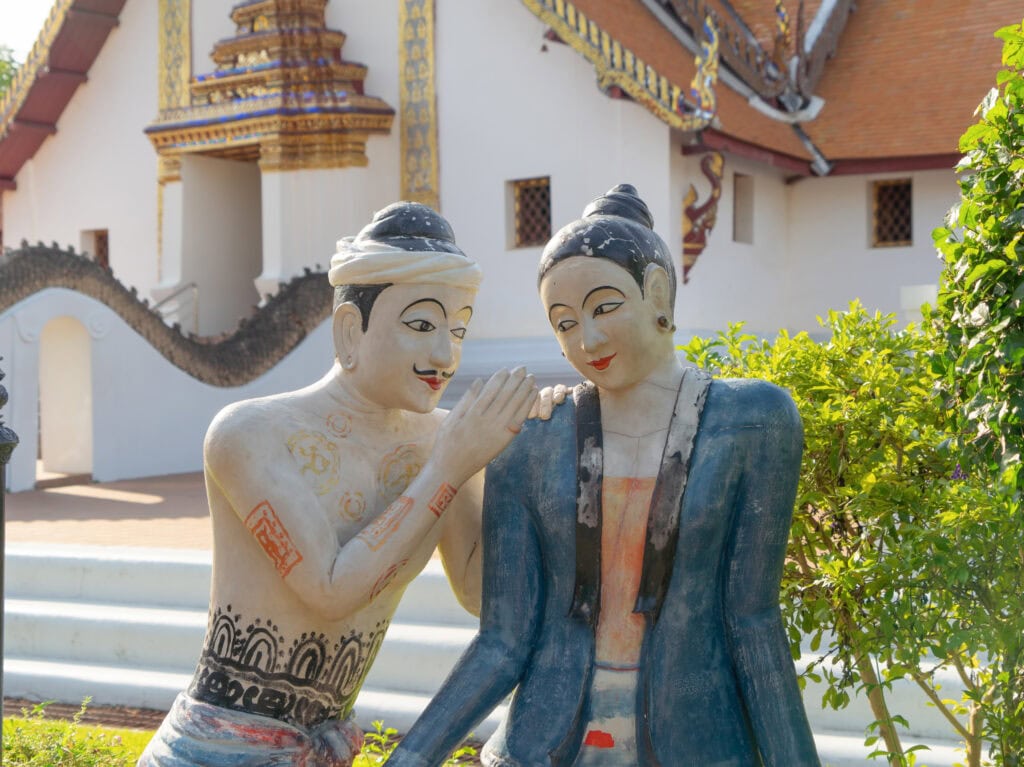
Visiting temples is one of the most memorable parts of travelling in Thailand, but it is also a moment to slow down and be respectful. The good news is that Thai temple etiquette is easy to follow if you know the basics before you arrive.
This practical guide explains the Thailand temple dress code, what to wear in Thai temples, how to behave around Buddha images and monks, and the small details that help European visitors feel confident rather than awkward.
Quick answer
For most temple visits in Thailand, dress modestly: cover your shoulders, cover your knees, avoid revealing or see-through clothing, and remove your shoes before entering temple buildings where signs or local practice indicate it. Speak quietly, do not climb on sacred structures, do not point your feet at Buddha images or people, and ask before taking photos when rules are unclear.
Some major royal temples and high-profile sites apply a stricter Thailand dress code for tourists than small local temples, so it is sensible to carry a light scarf, sarong, or long-sleeved layer.
Who this guide suits
- First-time visitors to Thailand who want simple, respectful rules.
- European travellers packing for heat, humidity, and temple days.
- Couples, families, and solo travellers planning Bangkok, Chiang Mai, Ayutthaya, Phuket, Krabi, or island temple visits.
- Travellers combining sightseeing and temples who need practical clothing that works all day.
If your Thailand trip includes Bangkok temple sightseeing, you may also find this Bangkok Old Town guide useful: Where to Stay in Bangkok Old Town: Temples, Riverside Walks and Local Food.
Thailand temple dress code: what to wear
The safest approach is modest, lightweight clothing. Thailand is often hot and humid, so choose breathable fabrics rather than heavy formal clothing.
For women
- Cover shoulders with a T-shirt, blouse, light shirt, or scarf.
- Wear trousers, a long skirt, or a dress that covers the knees.
- Avoid low-cut tops, crop tops, very short shorts, mini skirts, and see-through fabrics.
- Carry a light scarf or sarong if your outfit may not be accepted at stricter sites.
For men
- Wear a T-shirt, polo shirt, or light shirt that covers the shoulders.
- Choose long trousers or knee-covering shorts where appropriate.
- Avoid going shirtless, wearing singlets, or wearing very short sports shorts.
- For major temples, long trousers are often the more respectful and safer choice.
For children
Children are usually treated with more flexibility, but modest clothing is still a good idea. Light T-shirts, longer shorts, dresses, or leggings are practical for temple visits and sun protection.
What to wear in Thai temples: quick comparison
| Clothing item | Usually respectful | Risky at stricter temples |
|---|---|---|
| Shoulders | T-shirt, blouse, polo shirt, light shirt | Vest tops, spaghetti straps, strapless tops |
| Legs | Long trousers, midi skirt, maxi dress, knee-covering shorts | Short shorts, mini skirts, beachwear |
| Fabric | Light cotton, linen, breathable travel fabrics | See-through or very tight clothing |
| Footwear | Sandals, trainers, slip-on shoes that are easy to remove | Complicated boots or shoes you do not want to leave outside |
| Beach clothing | Covered up before entering temple grounds | Swimwear, bare chest, open beach cover-up only |
Shoes, socks and entering temple buildings
In many Thai temples, you remove your shoes before entering the main prayer hall or any interior sacred space. Look for shoe racks, signs, or what local visitors are doing.
Slip-on shoes are useful because you may take them off several times in one day. Socks are optional, but some travellers prefer them because temple floors can be warm or dusty.
Do not step on thresholds if you notice people avoiding them. Step over carefully and follow the local flow.
Essential Thai temple etiquette
Thai temple etiquette is mostly about calm behaviour, modest body language, and respect for sacred spaces.
| Situation | Respectful behaviour |
|---|---|
| Inside temple halls | Speak quietly, move slowly, and avoid blocking worshippers. |
| Buddha images | Do not climb, lean on, touch, or pose disrespectfully with Buddha images. |
| Your feet | Avoid pointing your feet at Buddha images, monks, or other people. |
| Sitting down | Sit with legs folded to the side or kneel if comfortable; avoid stretching feet forward. |
| Photos | Check signs first, avoid flash where inappropriate, and never interrupt worship. |
| Noise | Keep phone volume off and avoid loud conversations. |
How to act around monks
Monks are highly respected in Thai society. You do not need to be nervous, but you should behave politely.
- Keep a respectful distance unless invited closer.
- Do not touch a monk, especially if you are a woman, as physical contact is generally avoided.
- If offering something to a monk, follow local practice or ask temple staff if unsure.
- Do not take close-up photos of monks without permission.
- On public transport or in waiting areas, monk-only seats may be marked; leave them free.
Photography rules in Thai temples
Photography is often allowed in temple grounds, but rules vary by temple and by specific building. Some interiors, Buddha images, murals, or ceremonies may have restrictions.
Before taking photos, check for signs and watch what other respectful visitors are doing. Avoid posing with your back pressed against Buddha images, imitating sacred gestures for fun, or using temples as a fashion shoot location.
If people are praying, give them space and do not photograph them directly without permission.
Common mistakes tourists make
- Arriving in beachwear: This is especially common in island destinations. Cover up before entering temple grounds.
- Assuming all temples are tourist attractions only: Many are active religious places used by local communities.
- Pointing feet forward while sitting: Feet are considered the lowest part of the body, so avoid aiming them at sacred objects or people.
- Touching Buddha statues: Even if others are taking photos nearby, touching or climbing on sacred images is not respectful.
- Being too loud: Keep voices low, especially inside prayer halls.
Practical packing tips for European travellers
Packing for Thai temples can feel tricky because many European travellers are also packing for beaches, heat, and city sightseeing. The best solution is a small temple-ready kit that fits in your day bag.
- Light scarf or shawl: Useful for covering shoulders, but it may not replace proper clothing at stricter sites.
- Sarong or wrap skirt: Helpful for emergency knee coverage, particularly in hot weather.
- Loose long trousers: Linen or lightweight travel trousers are practical for both temples and evenings.
- Easy shoes: Sandals or slip-ons save time when removing shoes repeatedly.
- Small bag: Useful for carrying sunglasses, hat, and valuables when entering temple buildings.
- Sun protection: Temple grounds can be exposed; use a hat outside, then remove it where appropriate inside sacred spaces.
Thailand dress code for tourists beyond temples
Thailand is generally relaxed in many tourist areas, but context matters. Swimwear is normal at the beach or pool, not in towns, markets, restaurants, or religious sites. In cities and local neighbourhoods, modest casual clothing tends to feel more comfortable and respectful.
For temple days, dress for the most conservative stop on your route. That way you do not need to change between sightseeing, markets, and religious sites.
Temple etiquette in Bangkok, Chiang Mai and island areas
Bangkok
Bangkok has some of Thailand’s most visited temples, and high-profile sites can be stricter about clothing. If visiting royal or major tourist temples, wear clothing that clearly covers shoulders and knees rather than relying only on a small scarf.
Chiang Mai and northern Thailand
Chiang Mai temples often feel calm and local, but the same respect applies. If visiting mountain temples or older temple complexes, wear comfortable shoes and clothing that works for both walking and worship areas.
Phuket, Krabi and islands
In beach destinations, the main mistake is arriving in swimwear or very casual resort clothing. Bring a cover-up that genuinely covers shoulders and knees before entering temple grounds.
Step-by-step: how to visit a Thai temple respectfully
- Check your clothing before entering the temple grounds.
- Remove hats and sunglasses when entering sacred interiors if it feels appropriate or signs request it.
- Take off shoes where required and place them neatly.
- Step inside quietly and avoid blocking doorways.
- Sit or stand respectfully, keeping feet away from Buddha images.
- Observe signs before taking photos.
- Give worshippers, monks, and ceremonies plenty of space.
- Leave calmly and put shoes back on away from the entrance flow.
FAQ
Can I wear shorts in Thai temples?
It depends on the temple and the length of the shorts. Knee-covering shorts may be accepted in some places, but long trousers or a long skirt are a safer choice, especially at major temples.
Do I need to cover my shoulders in every Thai temple?
You should plan to cover your shoulders for temple visits. Some places may be relaxed, but covered shoulders are the respectful default and reduce the chance of being refused entry at stricter sites.
Can I wear sandals to a temple in Thailand?
Yes, sandals are often practical because shoes are commonly removed before entering temple buildings. Choose sandals that are secure and easy to take off.
Are tattoos a problem in Thai temples?
Visible tattoos are not automatically a problem everywhere, but tattoos of religious imagery can be sensitive. If in doubt, cover them in temple settings and behave respectfully.
Final recommendation
The easiest way to follow the Thailand temple dress code is to dress modestly from the start of your sightseeing day: covered shoulders, covered knees, easy-to-remove shoes, and a calm attitude. When rules are unclear, follow posted signs, observe local visitors, and choose the more respectful option.