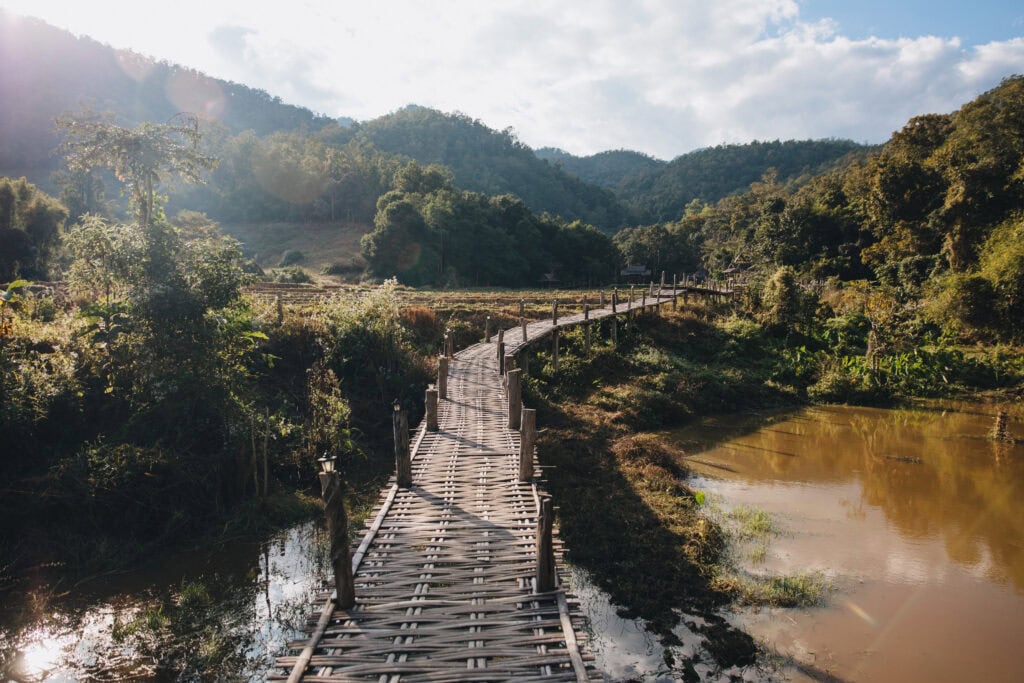
The Mae Hong Son Loop is one of Northern Thailand’s classic mountain road trips, linking Chiang Mai with Pai, Mae Hong Son and Mae Sariang through forested hills, valleys, viewpoints and small towns.
It is also a route that deserves respect. The roads are winding, weather can change quickly, and the relaxed backpacker image of Pai can make the journey sound easier than it is. This mae hong son loop guide focuses on who should do it, how to pace it, and where to stop overnight without rushing.
Quick answer
For most travellers, the Mae Hong Son Loop is best done over several days from Chiang Mai, with overnight stops in Pai, Mae Hong Son town and Mae Sariang. Confident riders often do it by motorbike, while travellers who prefer more comfort or less risk should consider a car with an experienced driver, a private transfer plan, or buses between the main towns.
The route suits travellers who enjoy mountain scenery, slow travel, local towns and flexible road trips. It is less suitable for nervous drivers, first-time scooter riders, anyone short on time, or travellers who dislike winding roads.
Who should do the Mae Hong Son Loop?
Best for
- Travellers who enjoy mountain road trips more than beach-style holidays.
- Experienced motorbike or scooter riders who are comfortable with steep, twisting roads.
- Couples or friends who want a flexible Northern Thailand itinerary from Chiang Mai.
- Photographers and nature-focused travellers who like viewpoints, valleys and quiet towns.
- Repeat visitors to Thailand who have already seen the main islands and cities.
Who should think twice
- First-time scooter riders. This is not an ideal place to learn.
- Travellers who are nervous on mountain roads or prone to motion sickness.
- Visitors with only one or two spare days in Chiang Mai.
- Anyone planning to ride without suitable insurance, protective clothing or the correct documents.
- Travellers expecting luxury facilities in every overnight stop.
If this is your first trip to Thailand and you are deciding how Northern Thailand fits with Bangkok and the islands, you may find it useful to compare the loop with a broader route such as Thailand Itinerary 14 Days: Classic Route with Beaches and Northern Culture.
Mae Hong Son Loop route overview
The classic loop starts and ends in Chiang Mai. A common direction is Chiang Mai to Pai, then Mae Hong Son town, then Mae Sariang, and finally back to Chiang Mai. Some travellers do it in the opposite direction to avoid following the most popular flow at certain points.
The Pai Mae Hong Son route is the most famous section, but the full loop is more varied than Pai alone. You move from busy Chiang Mai into mountain roads, backpacker-friendly Pai, quieter provincial Mae Hong Son town, rural valleys around Mae Sariang and then back towards Chiang Mai.
| Stop | Why stay there | Good for | Watch out for |
|---|---|---|---|
| Chiang Mai | Main start and finish point with vehicle rental, transport links and trip supplies. | Preparation, rest before and after the loop. | City traffic can be busy, especially when leaving or returning. |
| Pai | A popular mountain town with guesthouses, cafes and easy day trips nearby. | First overnight stop, social travellers, gentle sightseeing. | The road from Chiang Mai is very winding and can be tiring. |
| Mae Hong Son town | A quieter provincial base near lakes, temples and mountain scenery. | Slower travel, local atmosphere, breaking up the route. | Evenings are quieter than Pai; plan expectations accordingly. |
| Mae Sariang | A practical stop on the southern side of the loop with a calmer feel. | A sensible overnight before returning to Chiang Mai. | Facilities can feel simpler than in Chiang Mai or Pai. |
| Khun Yuam or smaller towns | Useful if you want to break long riding days further. | Slower itineraries and fatigue management. | Accommodation and food options may be more limited; check ahead. |
Suggested Mae Hong Son Loop itinerary
There is no single correct mae hong son loop itinerary. The right pace depends on your confidence, weather, luggage, and how often you want to stop. The key rule is simple: avoid making each day a test of endurance.
Option 1: A balanced 4-night loop
- Night 1: Pai. Leave Chiang Mai after preparing your vehicle, documents and luggage. Treat the first mountain section as a slow introduction rather than a race.
- Night 2: Mae Hong Son town. Continue through the hills with plenty of breaks. This is a good night to choose a central guesthouse or hotel so you can walk to dinner.
- Night 3: Mae Hong Son town or nearby. A second night lets you rest, visit viewpoints or temples, and avoid making the loop feel like a constant transfer.
- Night 4: Mae Sariang. Head south and use Mae Sariang as a calm overnight stop before the final return towards Chiang Mai.
- Return: Chiang Mai. Finish the loop with enough time to return the vehicle, shower, and avoid connecting directly to a same-day flight if possible.
Option 2: A slower 5-night loop
A slower version works well if you are riding a motorbike, travelling as a couple with luggage, or want more time for side trips. Add an extra night in Pai, Mae Hong Son town, or a smaller midpoint stop depending on how you feel on the road.
This is often the better choice for European travellers coming from a long-haul flight and adjusting to heat, time difference and Thai road conditions.
Option 3: A short loop
A shorter version is possible, but it is less forgiving. You may spend much of your time on the road and have fewer chances to wait out rain, fatigue or stomach issues. If you only have a small amount of time, consider visiting Pai from Chiang Mai and returning, or using public transport between selected towns instead of attempting the full loop.
Driving or riding: what to consider
Motorbike or scooter
Riding gives the most freedom, but it also carries the most responsibility. The loop includes long sections of bending mountain road, changing surfaces and local traffic. Choose this only if you already ride confidently and are comfortable with defensive driving.
Before setting off, check your travel insurance, licence requirements, rental agreement and whether you are covered for the type of bike you plan to use. Rules and insurance wording can vary, so confirm before you travel rather than relying on advice from other travellers.
Car hire
A car can be more comfortable in rain and better for luggage, but the roads are still winding and require concentration. It may suit couples, small groups and travellers who want air conditioning and more protection from weather. Check rental conditions carefully, especially for mountain driving, deposits and insurance excess.
Driver, transfers or buses
If you want the scenery without riding yourself, consider arranging transport between the main towns. Buses and shared transport commonly connect key places, though comfort, schedules and luggage rules can vary. Private drivers may be an option for travellers who prefer a tailored route, but confirm the itinerary and conditions in advance.
| Transport style | Pros | Cons | Best suited to |
|---|---|---|---|
| Motorbike or scooter | Flexible, scenic, easy to stop. | Higher exposure to weather and road risk. | Experienced riders with suitable cover. |
| Car | More comfortable, better for luggage. | Still demanding on mountain roads; parking varies. | Couples, friends, cautious road-trippers. |
| Public transport | No need to drive, simpler for solo travellers. | Less flexible and can be uncomfortable on bends. | Travellers who want main stops only. |
| Private driver | Flexible without self-driving. | Usually needs advance planning and clear agreement. | Families, non-riders, comfort-focused travellers. |
Timing: when to do the Mae Hong Son Loop
Northern Thailand has seasonal patterns that affect road trips. Conditions vary from year to year, so check local weather and road updates close to your departure.
Cooler dry months
The cooler dry period is often considered the most comfortable time for a Chiang Mai road trip. Mountain mornings and evenings can feel fresh, especially on a bike, so pack a light layer as well as sun protection.
Hot and smoky periods
Some months in Northern Thailand can be very hot, and the region can experience seasonal haze or smoke. Visibility and air quality may affect how enjoyable the views and riding feel. If you have asthma or are sensitive to poor air quality, check current conditions before planning the loop.
Rainy season
Rain brings greener landscapes, but it can also mean slippery surfaces, reduced visibility and occasional disruption. If travelling in the wetter months, build in extra time, start early, and avoid pushing on through heavy rain simply to keep to a schedule.
Safe overnight stops: how to choose them
No overnight stop can be described as risk-free, but some towns are more practical than others because they offer accommodation, food, fuel, basic services and other travellers. For most visitors, the sensible overnight stops are Pai, Mae Hong Son town and Mae Sariang.
What makes a good overnight stop?
- Arriving before dark. Mountain roads are easier to manage in daylight, especially if you are tired.
- Central accommodation. Staying near restaurants reduces the need to ride again after dinner.
- Secure parking. Ask accommodation in advance if you are travelling with a motorbike or car.
- Fuel and food nearby. Do not assume every small village has what you need late in the day.
- Flexibility. Choose stops where adding a rest night is possible if the weather or fatigue changes your plan.
Pai
Pai is the best-known overnight stop on the loop. It has a wide range of simple guesthouses, cafes and traveller services. It is a comfortable first stop for many people, but do not underestimate the ride or drive from Chiang Mai. Arrive with enough energy to check in calmly rather than treating Pai as a late-night target.
Mae Hong Son town
Mae Hong Son town is quieter and often feels more local than Pai. It works well as a rest point after the northern mountain sections. A central stay is useful because you can walk around the lake area, find dinner and take a break from riding.
Mae Sariang
Mae Sariang is a practical southern stop and a good way to split the journey back to Chiang Mai. It is not as famous as Pai, but that is part of the appeal for travellers who prefer calmer evenings and simpler logistics.
Practical tips for European travellers
- Do not plan the loop immediately after landing. Long-haul travel from Europe can leave you tired and jet-lagged. Spend at least some time in Chiang Mai first if your schedule allows.
- Check insurance wording carefully. Many policies have conditions for motorbike engine size, helmet use, licensing and alcohol. Read the policy, not just the headline cover.
- Pack light. Large suitcases are awkward on this route. Use a small backpack or soft bag if riding.
- Carry layers. Mountain air can feel cooler than Bangkok or the islands, especially in the morning.
- Use offline maps. Mobile coverage may not be consistent everywhere. Download maps before you leave Chiang Mai.
- Keep cash available. Cards are widely useful in Thailand’s larger cities, but smaller towns and roadside stops may be more cash-based.
- Avoid alcohol before riding. Even a small amount is a poor match for mountain bends, heat and unfamiliar roads.
- Respect local pace. This is not a route to rush. Let faster vehicles pass when safe and take breaks before you feel exhausted.
Common planning mistakes
Trying to do too much in one day
The map can make distances look manageable, but mountain roads are slower and more tiring than flat highways. Plan fewer stops and leave space for breaks.
Choosing a bike based only on price
Condition, brakes, tyres, lights and insurance matter more than saving a small amount. Inspect the vehicle and take photos before departure.
Leaving Chiang Mai too late
A late start can push you into afternoon heat, rain or darkness. Prepare the day before where possible, especially if hiring a vehicle.
Ignoring the return to Chiang Mai
The final day still requires concentration. Avoid scheduling an important flight, train or non-refundable plan immediately after finishing the loop unless you have allowed a comfortable buffer.
FAQ
Is the Mae Hong Son Loop suitable for beginners?
It is not ideal for beginner riders. The route has many bends, hills and changing road conditions. Beginners are usually better off using public transport, hiring a driver, or gaining experience elsewhere before attempting the loop.
How many days do you need for the Mae Hong Son Loop?
Many travellers allow several days rather than rushing it. A slower itinerary with nights in Pai, Mae Hong Son town and Mae Sariang is more comfortable than trying to cover the full loop quickly.
Is Pai enough, or should I do the full loop?
Pai is worthwhile if you have limited time or do not want a long mountain road trip. The full loop gives a broader view of Northern Thailand, with quieter towns and more varied landscapes beyond the popular Pai section.
Can I do the Mae Hong Son Loop without riding a motorbike?
Yes, in many cases you can use a car, public transport between main towns or a private driver. You will have less freedom than on a bike, but it can be a better choice if you are not a confident rider.
Final recommendation
The Mae Hong Son Loop is best treated as a slow mountain journey, not a box to tick from Chiang Mai. If you are an experienced rider or a careful driver, plan several nights, stop in Pai, Mae Hong Son town and Mae Sariang, and keep your schedule flexible. If you are unsure about the roads, choose transport that lets you enjoy Northern Thailand without taking on more risk than you are comfortable with.