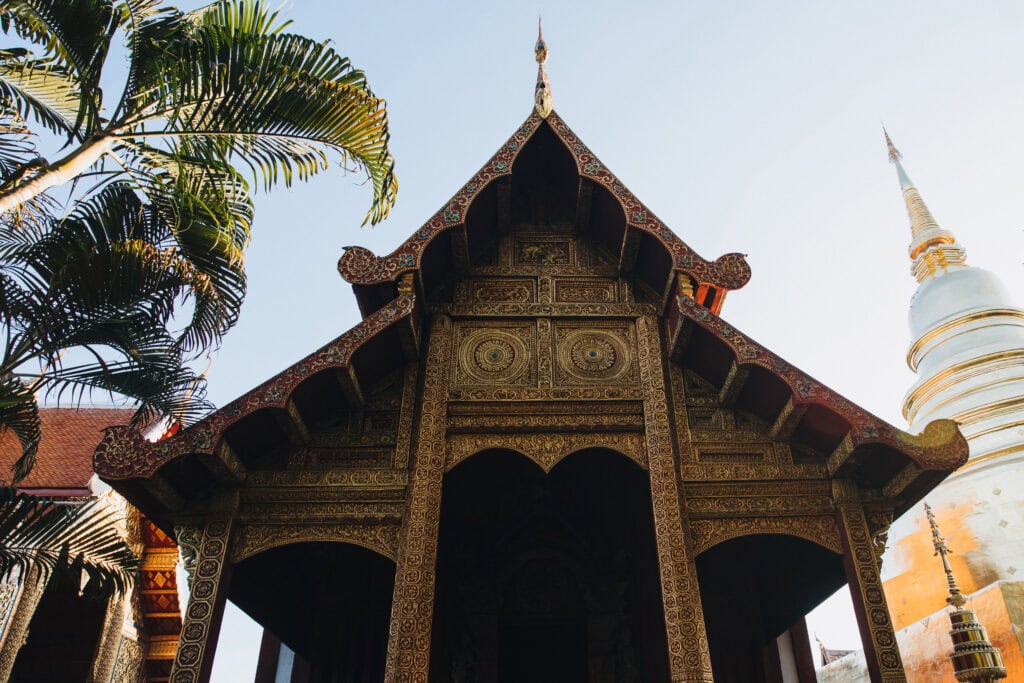
Chiang Rai is often treated as a quick add-on to Chiang Mai, but it works best when you slow down. With two days, you can see the headline temples, spend time in the compact city centre, eat well, and avoid turning the trip into a rushed checklist.
This Chiang Rai 2 day itinerary is designed for European travellers using the city as a north Thailand side trip. It keeps the pace realistic, gives you options for different travel styles, and leaves room for changing weather, temple opening times and transport delays.
Quick answer
The best Chiang Rai 2 day itinerary spends day one in and around the city, with the Blue Temple, riverside coffee stops, the Clock Tower area and an evening market. Day two is best for the White Temple Chiang Rai, followed by either a cultural museum-style stop, a countryside café, or a longer excursion depending on your energy.
Stay near the Clock Tower or Night Bazaar if you want easy food and transport. Stay slightly outside the centre if you prefer a quieter base and do not mind using taxis, tuk-tuks, rideshare apps where available, or a private driver.
If Chiang Rai is part of a longer Thailand route, you can pair it with Bangkok, Chiang Mai and the islands. For a wider route idea, see our Thailand Itinerary 14 Days: Classic Route with Beaches and Northern Culture.
Chiang Rai in two days: at a glance
| Day | Main focus | Best for | Pace |
|---|---|---|---|
| Day 1 | Blue Temple, city centre, local food, night market | Arrivals, first impressions, easy sightseeing | Relaxed |
| Day 2 | White Temple, optional extra sights, slow evening | Iconic photos, culture, countryside feel | Moderate |
Who this Chiang Rai itinerary suits
Best for
- Travellers who want a calmer northern Thailand stop after Chiang Mai.
- First-time visitors who want to see the White Temple and Blue Temple without rushing.
- Couples and solo travellers who prefer walkable evenings and simple logistics.
- European visitors adjusting to heat, jet lag or a slower travel rhythm.
Less ideal for
- Travellers who want beach nightlife or a resort-style holiday.
- Visitors trying to cover Chiang Rai only as a very long day trip with no overnight stay.
- Anyone wanting to see every out-of-town sight in two days without using a private driver.
Day 1: Arrive, Blue Temple and a slow Chiang Rai evening
Morning or early afternoon: arrive and settle in
If you are coming from Chiang Mai, Bangkok or elsewhere in Thailand, use the first part of the day to arrive and check in. Chiang Rai is not a difficult city to understand, but it is better enjoyed when you are not racing around with luggage.
Choose accommodation close to the Clock Tower, Night Bazaar or bus station area if you want simple access to cafés, restaurants and local transport. If your hotel is outside the centre, check before arrival how you will get around in the evening.
Afternoon: visit the Blue Temple
The Blue Temple, also known as Wat Rong Suea Ten, is one of the easiest major sights to fit into your first day. Its deep blue interior and ornate details make it very photogenic, but it is still a place of worship, so dress respectfully and move calmly around the main hall.
Opening times and visitor arrangements can change, so check current details before you go. If you arrive during a busy period, take your time outside first and wait for a quieter moment inside rather than pushing through for photos.
Late afternoon: coffee, river area or city wandering
After the Blue Temple, keep the rest of the afternoon light. Chiang Rai has a slower feel than Bangkok or Chiang Mai, and that is part of the appeal. Look for a café, wander the riverside area if convenient, or return to your hotel for a break before dinner.
This is also a good time to organise transport for the next day. The White Temple sits outside the immediate city centre, so many visitors use a taxi, rideshare option if operating locally, a rented vehicle, or a driver arranged through their accommodation. Always confirm the route, waiting time and total cost before setting off.
Evening: Clock Tower, Night Bazaar and northern Thai food
Base your first night around the Clock Tower and Night Bazaar area. The area is convenient, easy to navigate and suitable for a low-pressure first evening. You can try northern Thai dishes, browse stalls and get a sense of the city without needing a complicated plan.
If you are tired after travelling, do not overload the night. Two days in Chiang Rai works better when you save your energy for the White Temple and any extra excursions on day two.
Day 2: White Temple Chiang Rai and optional extras
Morning: White Temple Chiang Rai
Start day two with the White Temple Chiang Rai, officially known as Wat Rong Khun. This is the city’s most famous landmark and the sight most travellers plan their Chiang Rai itinerary around.
The temple is striking, symbolic and very different from traditional Thai temple architecture. Expect detailed white surfaces, mirrored elements and strong visual contrasts. It is popular with tour groups, so going earlier in the day often feels more comfortable, although you should still check current opening information before you travel.
Dress modestly, follow signs on site, and be patient with photography. Some areas may have specific rules, and these can change. If you are travelling independently, arrange your return transport in advance or agree a clear pick-up plan.
Late morning or early afternoon: choose one extra stop
After the White Temple, choose one additional activity rather than trying to do everything. This keeps the day manageable and gives you time to enjoy Chiang Rai instead of sitting in transport.
| Option | Why choose it | Considerations |
|---|---|---|
| Black House area | Good for travellers interested in unusual art, architecture and darker visual themes | Check current visitor information before going |
| Countryside café or viewpoint | Best for a slow afternoon and a softer northern Thailand atmosphere | You may need arranged transport |
| Golden Triangle-style excursion | Suits travellers interested in border geography and a longer day out | Can make the day much longer, so start early and plan carefully |
| Return to the city | Best if you prefer markets, massage, cafés and low-effort exploring | Less dramatic, but often more relaxing |
Afternoon: slow down rather than add too much
Chiang Rai rewards unhurried travel. If you have already visited the White Temple and one extra stop, consider returning to town for a rest. Heat, humidity and strong sun can make sightseeing more tiring than it looks on a map, especially if you have recently arrived from Europe.
A practical afternoon could include a café, a short walk, a massage, or time to repack if you are leaving the next morning. If you are flying or taking onward transport, check your departure arrangements before dinner.
Evening: second night in the city
Use your final evening for food rather than more transport. Return to the Night Bazaar area, try a different local restaurant, or have a quiet drink near your accommodation. Chiang Rai’s nightlife is generally more low-key than Thailand’s larger tourist centres, which is exactly why many travellers enjoy it.
Where to stay in Chiang Rai
Where to stay in Chiang Rai depends on whether you want convenience or quiet. For a first visit and a two-night stay, the city centre is usually the simplest choice.
| Area | Who it suits | Pros | Things to check |
|---|---|---|---|
| Clock Tower and Night Bazaar area | First-time visitors, short stays, food-focused travellers | Walkable evenings, easy restaurants, practical base | Street noise can vary by location |
| Near the bus station | Travellers arriving overland or leaving early | Convenient for transport and simple logistics | Choose accommodation with recent reviews |
| Riverside or slightly outside the centre | Couples, slower travellers, quieter stays | More relaxed atmosphere in many cases | You may need taxis or hotel transport |
| Countryside-style stays outside town | Travellers with more time or a private vehicle | Scenic, quiet and slower paced | Less convenient for markets and evening meals |
Before choosing a hotel, check the exact map location, recent guest comments about transport, and whether reception can help arrange drivers or taxis. Do not assume that every property outside town will be easy to reach at night.
How to get around Chiang Rai
For a two-day stay, you do not need to overcomplicate transport. The city centre is manageable for short walks, but the main temples and countryside sights usually require a vehicle.
- Taxi or rideshare-style services: convenient where available, especially for temple visits. Confirm the price or app estimate before travelling.
- Private driver: useful if you want the White Temple plus extra stops in one day. Agree the itinerary, waiting time and total cost in advance.
- Motorbike or scooter: only suitable if you are experienced, properly licensed and comfortable with local road conditions. Check insurance requirements before riding.
- Hotel-arranged transport: often the easiest option for short stays, especially if you are not confident negotiating locally.
If you are travelling with luggage, do not plan temple stops between hotel check-out and onward travel unless you have confirmed where your bags can be stored safely.
Practical tips for European travellers
- Plan around the climate: northern Thailand can still feel hot and humid compared with much of Europe. Carry water, sun protection and breathable clothing.
- Dress for temples: cover shoulders and knees where required, and remove shoes when signs or local practice indicate it.
- Allow recovery time: if you have flown long-haul into Thailand, Chiang Rai is a good place to slow down rather than schedule early starts every day.
- Carry some cash: cards are useful in many travel situations, but smaller food stalls, local transport and markets may prefer cash.
- Use current sources: check temple opening times, transport options and any travel requirements before departure, as details can change.
- Respect photography rules: some religious or cultural sites restrict photos in certain areas. Look for signs and follow staff instructions.
Suggested 2-day Chiang Rai itinerary
Day 1
- Arrive in Chiang Rai and check in.
- Visit the Blue Temple in the afternoon.
- Take a café or riverside break.
- Spend the evening around the Clock Tower and Night Bazaar.
Day 2
- Visit the White Temple in the morning.
- Choose one extra stop, such as the Black House area, a countryside café or a longer excursion.
- Return to town for a relaxed afternoon.
- Enjoy a final slow dinner in Chiang Rai.
Common mistakes to avoid
- Trying to see too much: two days is enough for the highlights, not every sight in the province.
- Leaving transport vague: the White Temple and some extra stops are easier when you plan the vehicle in advance.
- Staying too far out without a plan: quiet hotels can be lovely, but check how you will get to dinner and back.
- Ignoring temple etiquette: Chiang Rai’s famous temples are photogenic, but they are not only photo backdrops.
- Booking onward travel too tightly: leave a buffer if you have a flight, bus or connection after sightseeing.
FAQ
Is two days enough for Chiang Rai?
Yes, two days is enough for a first Chiang Rai itinerary if you focus on the Blue Temple, White Temple, the city centre and one optional extra. If you want slow countryside travel or several out-of-town excursions, add another night.
Can you visit Chiang Rai as a day trip from Chiang Mai?
It is possible in many cases, but it can be a long and tiring day. Staying overnight gives you a calmer experience, especially if you want to enjoy the evening market and avoid rushing the White Temple.
Where should I stay in Chiang Rai for two nights?
For most first-time visitors, the Clock Tower, Night Bazaar or central bus station area is the most practical. These areas make it easier to find food, arrange transport and enjoy the city without needing a vehicle at night.
Is the White Temple worth visiting?
For most visitors, yes. The White Temple Chiang Rai is one of northern Thailand’s most distinctive sights. Go with realistic expectations, follow site rules, and combine it with a slower afternoon rather than making the whole day a photo rush.
Final recommendation
The best Chiang Rai 2 day itinerary keeps things simple: Blue Temple and a local evening on day one, White Temple and one carefully chosen extra on day two. Stay central if convenience matters, plan transport for the out-of-town sights, and let Chiang Rai be the slower northern Thailand side trip it does so well.