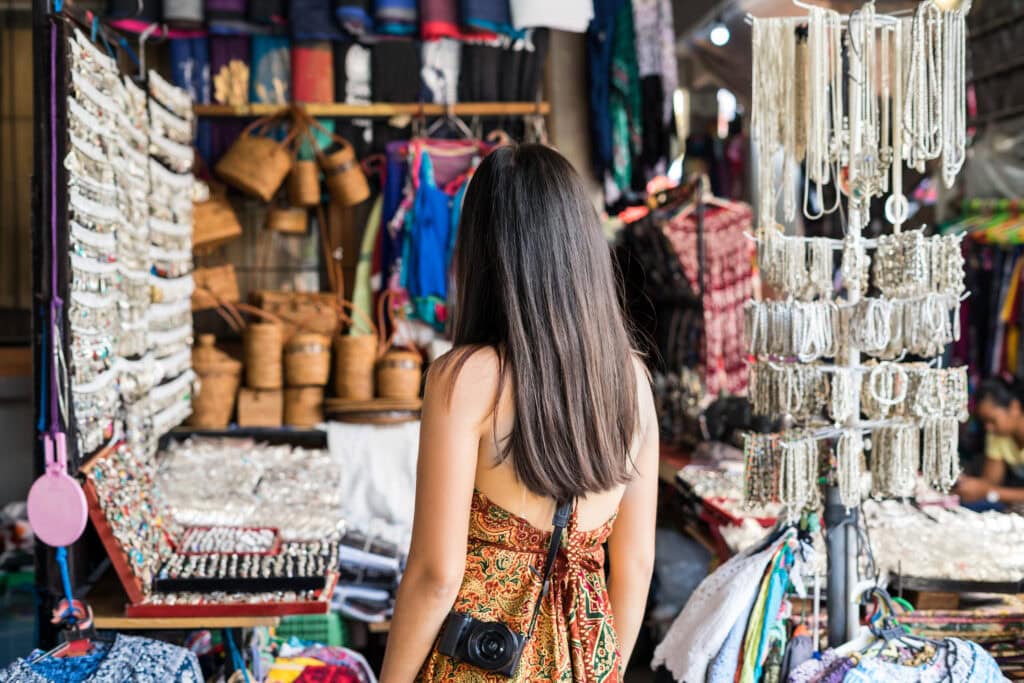
Bali is one of Southeast Asia’s most enjoyable places to shop, especially if you like handmade objects, relaxed markets and independent boutiques rather than only big malls. This Bali shopping guide focuses on what to buy, where to browse and how to shop sensibly without filling your suitcase with things you do not need.
You will find beachwear and homeware in tourist areas, paintings and woodwork around Ubud, textiles in traditional markets, and a growing choice of stylish local and international labels in Seminyak and Canggu. Quality varies, so it pays to compare, ask questions and leave space in your luggage.
Quick answer
For first-time visitors, the best shopping in Bali is usually split between Ubud for crafts and art, Seminyak for boutiques and resort wear, Canggu for contemporary labels and surf-influenced style, and traditional markets for affordable Bali souvenirs. If you only have limited time, choose one market and one boutique area rather than trying to cover the whole island.
- Best for local crafts: Ubud and nearby craft villages.
- Best for stylish boutiques: Seminyak and Canggu.
- Best for easy souvenir browsing: Ubud, Sanur, Kuta and Legian market streets.
- Best for a more local market feel: Denpasar and larger traditional markets, if you are comfortable with busier settings.
- Best shopping tactic: carry some cash, compare quality, bargain politely where appropriate and use fixed prices in boutiques and malls.
What to buy in Bali
The most rewarding Bali souvenirs are usually practical, locally made or easy to pack. Avoid buying fragile or restricted items unless you are confident about transport and customs rules in your home country.
Textiles, sarongs and clothing
Sarongs, light cotton clothing, linen pieces and beach cover-ups are easy to find across Bali. Traditional markets often sell casual textiles, while boutiques are better for finished garments, resort wear and more contemporary design. Check stitching, fabric feel and washing instructions before buying.
Homeware and ceramics
Bali is known for rattan-style baskets, carved bowls, ceramics, lampshades and decorative objects. These can be beautiful but bulky, so think about luggage space and fragility. If a shop offers shipping, ask clearly what is included and keep written details.
Wood carvings and craft objects
Wooden masks, small statues and carved panels are common around Ubud and nearby craft areas. Choose well-finished pieces and be cautious with untreated wood or anything that may be restricted when entering Europe. Always check customs rules before travelling home.
Jewellery and silver
Silver jewellery is widely available, from simple market pieces to more polished studio designs. If buying higher-value jewellery, ask for details about materials and keep receipts. For inexpensive pieces, judge them mainly as souvenirs rather than investments.
Art and paintings
Ubud and surrounding villages have many galleries, studios and art shops. Small works on canvas or paper are easier to carry than framed pieces. If you are buying original art, ask how it should be packed and whether any documentation is needed for travel.
Skincare, incense and spa products
Natural-style soaps, oils, incense and spa products are popular gifts. Check ingredients if you have allergies, and remember airline liquid rules and your checked-luggage limits when flying back to Europe.
Where to shop in Bali: main areas compared
| Area | Best for | Shopping style | Who it suits |
|---|---|---|---|
| Ubud | Crafts, art, textiles, homeware | Markets, galleries, craft shops and small boutiques | Travellers who want handmade-feeling souvenirs and cultural browsing |
| Seminyak | Resort wear, interiors, jewellery, design-led boutiques | Polished boutiques and lifestyle stores | Visitors looking for stylish pieces rather than bargain hunting |
| Canggu | Contemporary clothing, swimwear, surf style, cafés plus shopping | Independent labels and casual boutique streets | Younger travellers, digital nomads and beach-area shoppers |
| Kuta and Legian | Simple souvenirs, T-shirts, beach items | Market-style shops, malls and tourist streets | Visitors staying nearby who want quick, convenient shopping |
| Sanur | Relaxed souvenir browsing, beachwear, gifts | Lower-key shops and market streets | Couples and families who prefer a calmer shopping pace |
| Denpasar | Traditional market goods and more local shopping | Busier markets and city shopping | Confident travellers who enjoy less tourist-focused places |
Bali markets: what to expect
Bali markets range from tourist-friendly souvenir markets to busy local markets selling food, textiles and household items. They are good places to compare items, learn what is common and pick up small gifts, but quality and prices can vary widely.
In many traditional or tourist markets, bargaining is part of the process. Keep it light, friendly and realistic. If a price feels too high, smile, say thank you and walk away. In boutiques, malls and many design shops, prices are usually fixed.
Ubud markets and craft streets
Ubud is one of the easiest places to combine shopping with sightseeing. You will find textiles, bags, wooden objects, paintings, jewellery and decorative homeware. The central market area can feel busy, so go with a short list and take time to inspect quality.
Beach-area markets
Tourist areas such as Kuta, Legian, Seminyak and Sanur often have small market streets or clusters of souvenir shops. These are convenient for last-minute gifts, sandals, sarongs and beachwear. They are not always the cheapest overall, but they are easy if you are staying nearby.
Traditional city markets
Denpasar and other larger towns can offer a more local shopping experience. These markets may feel more chaotic than boutique areas and are better suited to travellers who enjoy navigating crowds and informal transactions. Dress comfortably and keep valuables secure, as you would in any busy market.
Stylish boutiques in Bali
If your idea of Bali souvenirs is something you will actually wear or use at home, focus on boutiques rather than only markets. Seminyak and Canggu are especially strong for swimwear, linen, sandals, jewellery, homeware and lifestyle brands.
Expect a different shopping experience from the markets: clearer sizing, changing rooms in many stores, card payments more often accepted and less bargaining. Prices are generally more like boutique prices than market-stall prices, but quality can also be more consistent.
Best for: shopping by traveller type
First-time visitors
Choose Ubud for one craft-focused shopping session and Seminyak or Canggu for boutiques. This gives you a balanced view of Bali shopping without needing to travel all over the island.
Couples
Combine shopping with restaurants, cafés or a beach walk. Seminyak, Canggu and Sanur are practical options because you can browse slowly without making shopping the whole day.
Families
Look for easy-to-pack souvenirs such as small textiles, simple toys, postcards, soaps or lightweight clothing. Avoid fragile homeware unless you have good packing materials and space.
Design and interiors lovers
Prioritise Ubud and Seminyak, where you are more likely to find decorative objects, ceramics, baskets and homeware. Measure your luggage space before you fall in love with a large lamp or carved piece.
How to shop well in Bali
- Set a loose budget: Bali shopping can be tempting because many items are small and easy to justify individually.
- Use cash and card wisely: Smaller markets often prefer cash, while boutiques may accept cards. Check card fees with your bank before travelling.
- Inspect before paying: Look for stains, loose seams, cracks, missing parts or colour transfer.
- Buy early if shipping is needed: If you plan to ship furniture or large artworks, allow time to ask questions and compare providers.
- Do not assume everything is handmade: Some market items are mass-produced. If local production matters to you, ask direct questions.
- Keep receipts: They can help with returns, customs questions or insurance if you buy higher-value pieces.
Practical tips for European travellers
Bali uses the Indonesian rupiah, so it is useful to become familiar with the currency before your first market visit. Carrying a small amount of cash can make market shopping easier, but avoid carrying more than you need for the day.
Before travelling, check your airline’s baggage rules, especially if you plan to buy ceramics, homeware, framed art or extra clothing. Overweight luggage can make a bargain much less appealing.
European travellers should also check their home country’s customs allowances and restrictions before bringing back food, plant products, shells, coral, untreated wood, animal-derived materials or large quantities of goods. Rules can change, and restrictions may differ by country.
If you are still planning your overall Bali budget, this guide pairs well with Bali Travel Costs: Daily Budget for Comfortable (Not Backpacker) Trips.
A simple Bali shopping list
Use this list to stay focused and avoid buying duplicates:
- One lightweight sarong or beach cover-up.
- A small piece of jewellery or silverwork.
- Locally styled soap, oil or incense, checked for ingredients.
- A compact textile item such as a cushion cover, scarf or pouch.
- A small artwork, print or postcard set.
- One practical clothing item you will wear at home.
- A small homeware piece only if it is easy to pack safely.
What to avoid buying
Be careful with items that may cause problems at the airport or border. This can include shells, coral, certain animal products, plant materials, untreated wood, very large liquids and anything that looks like a protected natural object. If in doubt, do not buy it or check official guidance before you travel.
Also avoid buying expensive items under pressure. Take a photo, note the shop name and return later if you still want it. A calm second look is often the best shopping filter.
FAQ
What are the best Bali souvenirs to bring home?
Good Bali souvenirs include sarongs, small textiles, jewellery, soaps, incense, compact artwork, simple ceramics and lightweight homeware. The best choices are items you can pack safely and use after the trip.
Can you bargain in Bali markets?
In many traditional and tourist markets, bargaining is common. Keep it polite and friendly. In boutiques, malls and many design shops, prices are usually fixed, so bargaining is not normally expected.
Where is the best shopping in Bali for boutiques?
Seminyak and Canggu are often the most convenient areas for stylish boutiques, swimwear, linen, jewellery and modern lifestyle shops. Ubud is better if you want crafts, art and a more traditional shopping feel.
Should I bring an extra suitcase for shopping in Bali?
Only if you know you plan to buy clothing, textiles or homeware. Check your airline baggage allowance first, and remember that fragile or bulky pieces may be difficult to carry safely back to Europe.
Final recommendation
For a balanced Bali shopping trip, spend time in Ubud for crafts and art, then browse Seminyak or Canggu for higher-quality boutiques. Buy fewer, better items, check customs and baggage rules before flying home, and treat markets as part of the travel experience rather than just a place to find the lowest price.