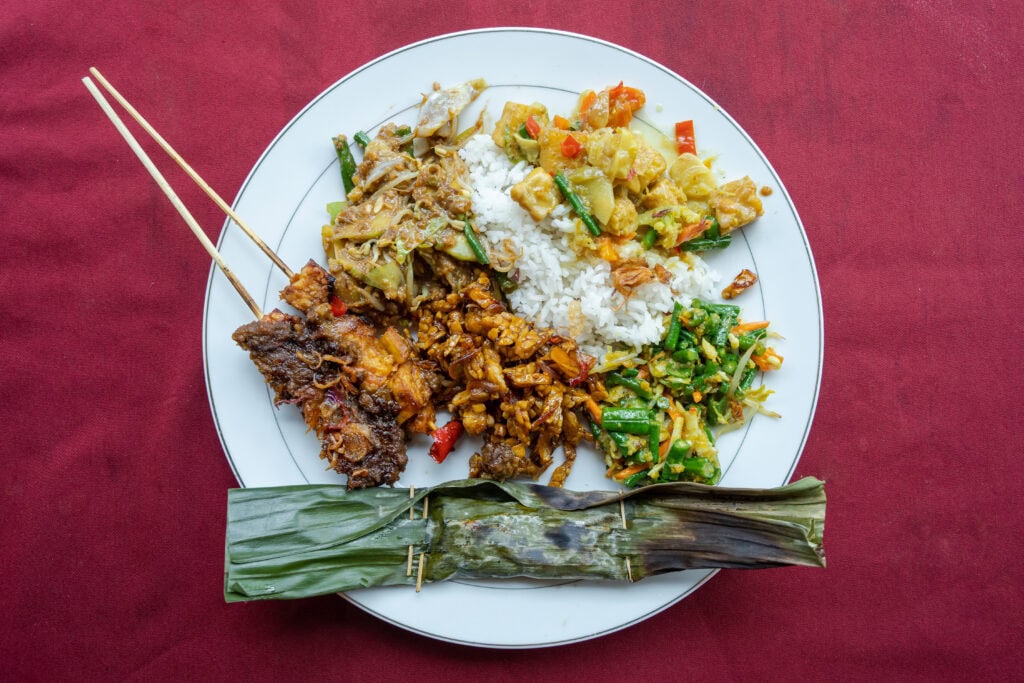
Bali is one of Indonesia’s easiest places for first-time visitors to eat well, but the best meals are not always found in resort restaurants. For many travellers, the most memorable food comes from a small family-run warung, a busy market stall, or a simple plate of rice with sambal, vegetables and grilled meat or fish.
This Bali food guide explains what to eat in Bali, which Balinese dishes are worth looking for, and where different types of travellers are most likely to find good local food. It is written as a practical primer rather than a restaurant ranking, because opening days, menus and quality can change quickly.
Quick answer
If you only have a few days in Bali, start with nasi campur Bali, babi guling if you eat pork, sate lilit, ayam or bebek betutu, lawar, sambal matah, and a sweet dish such as bubur injin. Look for them in busy local warungs, morning markets, night markets, and simple family restaurants away from the most tourist-focused beachfront strips.
Ubud is useful for a broad introduction to Balinese food, Denpasar and Gianyar are good for market eating, Sanur is convenient for relaxed local meals, and Jimbaran is well known for grilled seafood. Canggu and Seminyak have excellent international food scenes, but you may need to look a little harder for traditional warungs among the cafés and restaurants.
What makes Balinese food different?
Balinese cooking is part of Indonesia’s wider food culture, but it has its own flavours and religious influences. Pork is common in many Balinese dishes, unlike in some other parts of Indonesia, although you will also find chicken, duck, fish, tofu and tempeh.
Common flavours include chilli, shallot, garlic, turmeric, ginger, galangal, lemongrass, lime, coconut and shrimp paste. A key flavour base in many dishes is often a spice paste known as basa gede, though the exact recipe varies by cook and household.
Meals are often built around rice, vegetables, sambal and small portions of meat, fish, egg, tofu or tempeh. For European travellers used to starter-main-dessert menus, local warung meals can feel more casual: you may simply point at what looks good, choose rice, and add side dishes.
Balinese dishes to try
Nasi campur Bali
Nasi campur means mixed rice, and it is one of the easiest entry points for visitors. A plate typically includes rice with several small portions such as shredded chicken, vegetables, peanuts, egg, tempeh, sambal and sometimes pork or sate.
It is a good choice when you want to taste several things at once. In local warungs, the options are often displayed in a glass cabinet, so you can point to what you want if there is no English menu.
Babi guling
Babi guling is Balinese roast suckling pig, usually served with rice, crackling, spiced meat, vegetables and sambal. It is one of the island’s most famous local dishes and is especially associated with Balinese ceremonies and family gatherings.
If you eat pork, this is a dish to seek out at a dedicated babi guling warung rather than ordering it as an afterthought in a generic tourist restaurant. Portions and spice levels vary, so ask before ordering if you prefer milder food.
Ayam betutu and bebek betutu
Betutu is a richly spiced Balinese preparation used for chicken or duck. The meat is usually seasoned with a complex spice paste and cooked until tender. It can be aromatic, spicy and filling.
You may see ayam betutu, made with chicken, or bebek betutu, made with duck. Some places require advance ordering for duck, so check before making a special trip.
Sate lilit
Sate lilit is a Balinese style of satay made from minced meat or fish mixed with spices, then wrapped around a skewer, often lemongrass or bamboo. It is different from the peanut-sauce satay many travellers know from elsewhere in Southeast Asia.
Fish sate lilit is common in coastal areas, while chicken or pork versions may appear in local warungs. It is often served as part of nasi campur rather than by itself.
Lawar
Lawar is a traditional mixed dish usually made with finely chopped vegetables, coconut, spices and sometimes meat. There are many versions, and some are much spicier or more intense than others.
If you are unsure, ask what type it is before ordering. Vegetarian-looking lawar may still contain meat, shrimp paste or other animal ingredients, so vegetarians should check carefully.
Sambal matah
Sambal matah is a raw Balinese sambal usually made with shallots, chilli, lemongrass and oil. It is fresh, sharp and fragrant, and it pairs especially well with grilled fish, chicken and rice.
Even if you do not want very spicy food, try a small amount on the side. Warungs may be happy to serve sambal separately if you ask.
Nasi jinggo
Nasi jinggo is a small portion of rice with simple toppings, often wrapped in a banana leaf. It is typically eaten as a snack or light meal rather than a full restaurant dish.
You may find it at small stalls, roadside sellers and local food shops. Availability varies by area and time of day.
Tipat cantok
Tipat cantok is a Balinese dish made with rice cakes, vegetables and peanut sauce. It can be a good option if you want something meat-free, though you should still check whether shrimp paste or other non-vegetarian ingredients are used.
It is a useful dish to know if you are travelling with someone who prefers simple, vegetable-focused food.
Pepes ikan
Pepes ikan is fish seasoned with spices and wrapped in banana leaves before cooking. It is not exclusive to Bali, but it is widely found in Indonesian food culture and fits well with Bali’s coastal setting.
Look for it in simple seafood warungs, especially away from heavily tourist-focused menus.
Bubur injin
Bubur injin is a black rice pudding, often served with coconut milk. It is one of the most approachable Balinese desserts for visitors and is usually less sugary than many Western desserts.
You may find it in local restaurants, traditional dessert stalls, and some hotel breakfast spreads, though availability varies.
Where to find local food in Bali
| Place to eat | Best for | What to know |
|---|---|---|
| Local warungs | Nasi campur, betutu, lawar, everyday meals | Choose busy places with high turnover. Menus may be simple or partly in Indonesian. |
| Morning markets | Snacks, fruit, breakfast dishes, local atmosphere | Go earlier in the day. Hygiene and comfort levels vary from stall to stall. |
| Night markets | Grilled foods, snacks, mixed rice, desserts | Check current opening days and times locally, as they can vary. |
| Specialist warungs | Babi guling, betutu, sate, seafood | A single-dish specialist can be more rewarding than a long tourist menu. |
| Beach seafood areas | Grilled fish, prawns, squid, sambal matah | Ask how seafood is priced and check what is included before ordering. |
| Modern cafés | Vegetarian, vegan, coffee, international comfort food | Useful between local meals, but not always the best place for traditional Balinese dishes. |
Best areas in Bali for food-focused travellers
Ubud: best for first-time food exploring
Ubud is one of the easiest bases for visitors who want a mix of Balinese food, Indonesian classics, vegetarian cafés and cooking classes. It is touristy in parts, but there are still many local warungs if you walk beyond the most obvious restaurant streets.
For a first taste, try nasi campur Bali, sate lilit, betutu and black rice pudding. Ubud is also a practical place to take a market visit or cooking class, although you should check what is included before booking.
Denpasar: best for local market eating
Denpasar is Bali’s capital and feels more local than the island’s main resort areas. It can be rewarding for travellers who are comfortable navigating busy streets and less tourist-focused food settings.
This is a good area to look for markets, traditional snacks and everyday Indonesian-Balinese meals. It is less polished than resort Bali, so go for curiosity and local flavour rather than a relaxed holiday dining scene.
Gianyar: best for night-market-style food
Gianyar is often associated with local night market eating and simple Balinese dishes. It can be a good option if you are staying in or near Ubud and want a more local food experience.
As with any market, check current opening patterns locally and choose stalls that are busy and cooking food fresh.
Sanur: best for relaxed meals without too much effort
Sanur is a convenient area for travellers who want a gentler base, with a mix of local warungs, cafés and seaside restaurants. It is not the most adventurous food destination in Bali, but it is easy and comfortable.
Look beyond the beachfront for better everyday meals. Sanur can work well for couples, older travellers and families who want local food without the intensity of busier areas.
Jimbaran: best for grilled seafood
Jimbaran is known for seafood restaurants and beach dining. It can be atmospheric, but it is worth checking how pricing is explained before you order, especially when seafood is sold by weight or by selection.
For a more local-style meal, look for simple fish warungs as well as the better-known beach setups.
Canggu and Seminyak: best for cafés plus selected local food
Canggu and Seminyak are strong for coffee, brunch, international restaurants and health-conscious menus. They are less straightforward if your main goal is traditional Balinese food, but good warungs still exist between the cafés, villas and shops.
If you are staying there, search out busy local places at lunchtime rather than relying only on the main restaurant strips.
If you are still choosing your base, this food guide pairs well with our broader guide to Where to Stay in Bali for First-Time Visitors.
Best for: matching food experiences to your travel style
| Travel style | Best food approach | Good areas to consider |
|---|---|---|
| First-time visitors | Start with nasi campur and a few well-reviewed warungs | Ubud, Sanur |
| Adventurous eaters | Try markets, specialist pork warungs and local breakfast dishes | Denpasar, Gianyar, Ubud outskirts |
| Vegetarians | Use modern cafés plus local dishes such as tipat cantok, tempeh and vegetable sides | Ubud, Canggu, Sanur |
| Seafood lovers | Look for grilled fish, pepes ikan and sambal matah | Jimbaran, Sanur, coastal villages |
| Families | Choose simple warungs with rice dishes, noodles and mild options | Sanur, Ubud, Nusa Dua area |
| Coffee and brunch travellers | Balance cafés with local lunches at warungs | Canggu, Seminyak, Ubud |
How to find the best warungs in Bali
The best warungs Bali has for your trip are not always the most famous ones online. A warung that is excellent for a local lunch may be basic, busy and not designed for long, leisurely dining. That is part of the appeal.
- Look for turnover: Busy places where food is replenished often are usually a better bet than quiet displays sitting for a long time.
- Go at local meal times: Many warungs are best around breakfast or lunch, not late in the evening.
- Check the menu length: A short menu or a specialist dish can be a good sign.
- Ask about spice: Balinese sambal can be hot. Ask for sambal on the side if you are unsure.
- Use recent reviews carefully: They can help with directions and current experiences, but do not rely only on star ratings.
- Carry small cash: Smaller local places may not accept foreign cards or contactless payments.
Street food and market eating tips
Street food in Bali can be a highlight, but it helps to be selective. Choose stalls cooking food fresh in front of you, especially grilled items, fried snacks and noodle dishes. If something looks like it has been sitting out for a long time, choose another stall.
For fruit, whole fruits you peel yourself are often the simplest choice when you want a low-risk snack. Fresh juices, ice and pre-cut fruit can be fine in many places, but standards vary, so use your judgement and consider your own tolerance.
Bring hand sanitiser, especially for markets and roadside stalls. If you have allergies, write the ingredient in Indonesian and show it clearly, but remember that cross-contamination can still happen in small kitchens.
Vegetarian, vegan and allergy notes
Bali is one of the easier Indonesian islands for vegetarian and vegan travellers, especially in Ubud, Canggu, Seminyak and Sanur. However, traditional Balinese food is not automatically vegetarian even when it looks vegetable-based.
Ask about shrimp paste, fish sauce, meat stock, egg and pork if these matter to you. Tempeh, tofu, vegetable dishes, rice cakes and peanut sauce can be useful, but recipes vary. Vegan travellers may find modern cafés easier for strict requirements, while still trying local flavours in carefully chosen dishes.
For allergies, do not assume that staff will understand European allergy labelling norms. Carry a translated allergy card and check each dish individually.
Practical tips for European travellers
- Expect spice variation: A dish described as mildly spicy by local standards may still taste hot if you are not used to chilli.
- Plan around jet lag: After a long journey from Europe, start with simple cooked dishes such as rice, soup, grilled fish or noodles before jumping into very spicy food.
- Stay hydrated: Bali’s heat and humidity can make rich or spicy meals feel heavier than they would at home.
- Check payment options: Tourist restaurants often accept cards, but small warungs and markets may prefer cash.
- Respect local customs: Some traditional foods are linked to ceremonies and community life. Be curious, but avoid treating religious or family events as a food spectacle.
- Be cautious with tap water: Travellers commonly use bottled or filtered water. Check with your accommodation about safe drinking water options.
- Use local names: Knowing words like nasi, ayam, babi, ikan, sayur and sambal makes ordering much easier.
Useful food words in Bali
| Word | Meaning | Helpful example |
|---|---|---|
| Nasi | Rice | Nasi campur, nasi goreng |
| Ayam | Chicken | Ayam betutu |
| Babi | Pork | Babi guling |
| Ikan | Fish | Pepes ikan |
| Bebek | Duck | Bebek betutu |
| Sayur | Vegetables | Useful when asking about side dishes |
| Pedas | Spicy | Ask if a dish is pedas |
| Tanpa | Without | Useful for simple dietary requests |
Common mistakes to avoid
- Eating only in hotel restaurants: Convenient, but you may miss the island’s most interesting everyday food.
- Assuming all Indonesian food is Balinese: Nasi goreng and mie goreng are useful staples, but they are not the whole story.
- Ignoring breakfast: Markets and simple local shops can be at their best early in the day.
- Ordering seafood without checking the basis: If seafood is priced by weight or selection, clarify before committing.
- Expecting identical dishes everywhere: Family recipes vary, so the same dish can taste different from one warung to another.
FAQ
What food is Bali most famous for?
Bali is especially known for babi guling, betutu, sate lilit, nasi campur Bali, lawar and sambal matah. If you do not eat pork, focus on chicken betutu, fish dishes, tempeh, tofu, vegetable sides and nasi campur without pork.
Is Bali good for vegetarian travellers?
Yes, Bali can be good for vegetarian travellers, particularly in Ubud, Canggu, Seminyak and Sanur. However, traditional dishes may contain shrimp paste, meat stock or egg, so check ingredients rather than relying on appearance.
Where should I eat local food in Bali?
Local warungs, markets and specialist food stalls are often the best places to start. Ubud is convenient for first-timers, Denpasar and Gianyar are good for more local eating, and Jimbaran is a popular area for seafood.
Is Balinese food very spicy?
Some Balinese food is spicy, especially dishes served with sambal. Not every dish is extremely hot, but spice levels vary. Ask for sambal on the side if you prefer to control the heat.
Final recommendation
For a balanced first Bali food experience, combine one or two comfortable meals in your hotel or a modern café with several local warung meals. Start with nasi campur Bali, try a specialist dish such as babi guling or betutu, visit a market if you are comfortable with busy local settings, and leave room for sambal matah, sate lilit and black rice pudding. The best Bali food guide is ultimately your own curiosity, guided by busy stalls, fresh cooking and a willingness to step beyond the resort menu.