Introduction: A Quiet Bay for Sunset-Focused Stays
This guide to where to stay in Jimbaran is written for European travellers who prefer soft-sand beaches, long seawall walks and unhurried evenings over crowded nightlife. Jimbaran Bay offers a quieter, more local-feeling stretch of Bali’s south coast, yet still keeps you within easy reach of the airport and the island’s wider highlights.
Jimbaran matters as a base because it combines three things that are often hard to find together in Bali: swimmable, gently shelving sea, wide west-facing sands for sunset, and an authentic working village atmosphere, with fishing boats and seafood warungs lining the shore. Geographically, Jimbaran sits just south of Bali’s international airport on the isthmus that leads toward the Bukit peninsula and Uluwatu.
For travellers considering jimbaran hotels as a sunset beach base, the key question is not whether to stay in Jimbaran at all, but which part of the bay to choose: the central seafood stretch, quieter northern end, or more secluded southern coves.
Understanding Jimbaran Bay as a Sunset Beach Base
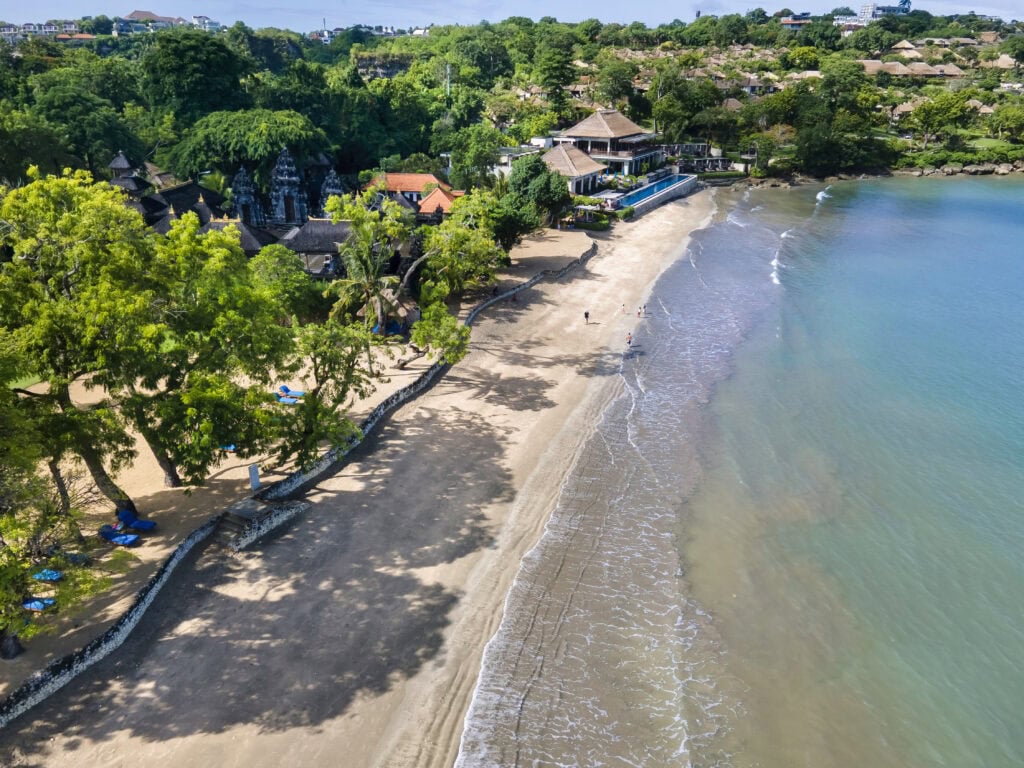
Jimbaran is essentially one long, curving bay divided into several subtle zones, each lending a slightly different feel to your stay. The arc of sand faces west and north-west, ensuring long, drawn-out sunsets over the Indian Ocean. Compared with busier Balinese resorts, Jimbaran Bay stays relatively low-rise, with coconut palms, temple compounds and fishing boats defining the skyline rather than nightclubs or malls.
The sea here is calmer than on the exposed west coast, which makes a Jimbaran Bay stay appealing for travellers who prefer to swim rather than surf. Waves lap rather than crash, and the seabed slopes gently, which can suit families and less confident swimmers. Strolling along the shoreline at dusk, you will share the sand with local families socialising, fishermen tending nets and visitors finding a table at a seafood beach Jimbaran cafe.
The overall rhythm is slow and coastal: changing light, the smell of grilling fish, and the occasional temple ceremony on the sand. If your ideal Bali base revolves around sunsets rather than late nights, Jimbaran aligns well with that pace.
Central Jimbaran: Classic Seafood Beach and Sunset Atmosphere
The central portion of Jimbaran Bay, often simply called “Jimbaran Beach”, is the most recognisable area, where rows of seafood restaurants set tables straight onto the sand. This is the stereotypical seafood beach Jimbaran scene: lanterns, barbecues smoking, and silhouettes of aircraft approaching the nearby runway as the sky fades from orange to indigo.
Staying in this central belt puts you at the heart of Jimbaran’s social life. By day, the beach is spacious and relaxed, with loungers, local vendors and occasional surf lessons on the small, friendly waves. As evening approaches, the restaurants lay out their tables and the vibe shifts from laid-back beach to lively, family-friendly dining strip.
Central Jimbaran suits travellers who want to walk barefoot from their room to dinner, and who enjoy ambient noise in the evenings. It is particularly well-suited to couples and groups who see sunset dining as a highlight of their trip. The trade-off is that the beach can feel busy at dusk, and smoke from grills occasionally drifts along the shore. Those seeking absolute quiet may wish to base themselves slightly north or south, within walking distance but away from the densest cluster of cafés.
Northern Jimbaran: Softer Vibes and Easy Airport Access
The northern section of Jimbaran curves towards the airport and the causeway that leads to the Nusa Dua area. This part of the bay feels a touch more open, with wider sands and fewer tightly packed seafood outlets. While you still have sunset and sea views, the atmosphere is generally calmer than in the central restaurant strip.
From a practical perspective, northern Jimbaran is useful for those planning late arrivals or early departures, as the drive to the terminal is short, usually via the toll road. Despite this proximity, aircraft noise tends to be less intrusive than you might expect, as most flights angle in from the sea rather than directly overhead.
For travellers asking where to stay in Jimbaran if they want sunsets but also convenience for day trips, the northern end works well. It offers relatively easy road access toward Seminyak, Canggu and Ubud, yet you can still walk along the sand to reach the central seafood cluster. The main compromise is that the setting feels slightly more open and less village-like than the heart of Jimbaran, with fewer traditional lanes to wander.
Southern Jimbaran: Secluded Coves and Resort-Style Calm
South of the main bay, the coastline becomes more irregular, breaking into smaller coves and headlands as it curves toward the cliffs of the Bukit peninsula. This area offers some of the most tranquil jimbaran hotels settings, with properties built into slopes that descend to quieter pockets of sand.
Here, the focus is on seclusion and views. Sunsets can be especially dramatic from slightly elevated positions, where the bay and open ocean spread out below. The sea remains relatively calm in many of these coves, but you will find steeper walks between rooms, pools and beaches due to the natural contours of the land.
Southern Jimbaran suits travellers who value privacy, landscaped gardens and a contained environment. It is a strong choice for longer stays where you intend to spend extended time by the pool or on a private-feeling stretch of sand. The trade-off is that, while you still enjoy seafood and sunset ambience, you may need a short car ride to reach the bustling central seafood beach scene, rather than simply strolling along the shore.
Inside the Village: Local Life Just Behind the Sand
One of Jimbaran’s defining characteristics is how quickly beach life gives way to village rhythms. Just a few steps inland from the main road, narrow lanes are lined with family compounds, shrines and small warungs. Smoke from home cooking mingles with the scent of frangipani flowers, and you may hear gamelan music drifting from temple courtyards in the evenings.
Staying slightly back from the main beach road can be appealing if you want a more local-feeling Jimbaran Bay stay. You gain easier access to traditional markets, humble eateries and smaller temples, while still being within walking distance of the sea. This set-up works well for travellers who appreciate morning walks to buy fruit, or who like to observe daily life beyond the more polished beachfront.
The trade-off here is visual: you may not have direct sunset views from your accommodation, but you can easily reach the beach for the evening light show. In return, you gain quieter nights, especially after the beachfront restaurants wind down and the beach empties.
Beach Life, Sunsets and Seafood: Daily Rhythm in Jimbaran
Whichever part of Jimbaran you stay in, the daily rhythm tends to orbit around the sea. Mornings are typically peaceful, with the light softer and the beach relatively empty aside from joggers and local children playing near the shore. This is often the best time for extended walks along the sand, when temperatures are lower and the sun less intense.
By late afternoon, more people drift toward the water. Sunsets in Jimbaran are rarely hurried; the sky often passes through several colours, and cloud formations over the horizon can create memorable silhouettes. Many travellers find themselves structuring their day around this moment, returning from excursions in time to watch the light fade from a beachside table or a balcony.
Seafood is woven into this routine. Fishing boats land their catch in the morning, with much of it later appearing in the seafood beach Jimbaran restaurants along the shore. Even if you do not eat seafood every evening, simply watching the night-time beach scene, with tables, lanterns and musicians spread along the sand, becomes part of the experience of staying in Jimbaran.
Access, Transport and Day Trips from a Jimbaran Base
One of Jimbaran’s strengths as a coastal base is its strategic location. The bay sits close to the main road network, making it relatively straightforward to arrange day trips around southern Bali. Uluwatu’s cliffs and temples lie to the south, Nusa Dua’s manicured peninsula to the east, and busier beaches like Kuta and Seminyak to the north.
For shorter journeys within the Jimbaran area, many visitors rely on taxis or ride-hailing services, which are commonly available, especially along the main road and near the beachfront. The bay itself is walkable, though distances can be longer than they appear on a map, especially in the heat; strolling in the early morning or just before sunset is usually more comfortable.
Evenings are typically low-key, with most activity concentrated on the sand rather than in bars or clubs. If you value quiet nights, this is a benefit; if you enjoy rooftop bars or dense nightlife, you may prefer to visit those areas as excursions and return to Jimbaran for rest and sea air.
Practical Travel Tips for Staying in Jimbaran
Airport proximity: Jimbaran is one of the closest beach areas to the international terminal; allow extra time during evening rush hours, but transfers are usually short.
Choosing your stretch of sand: For the fullest seafood and sunset atmosphere, stay near the central section of the bay; for quieter nights, look to the northern sands or southern coves.
Walking the bay: The beach is long and mostly flat; consider sandals that cope with both sand and short sections of rock, especially toward the southern end.
Sun exposure: Shade can be limited on the open sand around midday. A hat and light, long-sleeved clothing make walks more comfortable.
Swimming conditions: The sea in Jimbaran is generally calmer than on the west coast, but currents can vary with tides; observe local swimmers and posted flags before entering.
Seafood etiquette: On the main seafood strip, tables on the sand are often informal; allow time for relaxed service and enjoy the atmosphere rather than expecting a rapid meal.
Cultural respect: Temple ceremonies and processions sometimes cross the beach at sunset; give space, avoid obstructing pathways and dress modestly when leaving the sand for village lanes.
Noise considerations: If you are sensitive to sound, ask about evening music or beach events near your accommodation, especially around holidays and festivals.
Day trip planning: Combine Uluwatu sunsets or cliff walks with a Jimbaran seafood dinner on the way back to reduce time in traffic.
Cash and payments: Smaller warungs and local shops in the village may prefer cash; there are ATMs along the main road but not always directly on the sand.
FAQs About Staying in Jimbaran
Is Jimbaran a good place to stay for sunsets?
Yes, Jimbaran is one of Bali’s most reliable sunset spots, thanks to its west-facing bay and wide open horizon. The beach offers ample space to sit on the sand, and many jimbaran hotels and restaurants are oriented specifically toward sunset views.
How does a Jimbaran Bay stay compare to areas like Seminyak or Kuta?
Jimbaran is noticeably quieter, with fewer bars and shops and a stronger focus on beach, seafood and local village life. Seminyak and Kuta offer more nightlife and retail, but lack Jimbaran’s calm bay and softer, more sheltered swimming conditions.
Is Jimbaran suitable for families?
Many families appreciate Jimbaran’s gently shelving beach, relatively calm water and relaxed evening atmosphere. The seafood beach Jimbaran restaurants are generally informal and welcoming to children, and the lack of intense nightlife keeps evenings comparatively peaceful.
Can you swim in Jimbaran all year round?
Swimming is usually possible throughout the year, though conditions vary with tides and seasons. The bay’s shape tends to moderate waves compared to open west-coast beaches, but it is still wise to observe local advice and avoid entering the sea during particularly rough conditions.
How many nights should I stay in Jimbaran?
Many travellers find that two to four nights is enough to enjoy the beach, sunsets and seafood-focused atmosphere, especially at the start or end of a Bali trip. Those seeking a slow coastal base, with occasional day trips, may choose to stay longer.
Conclusion: A Gentle Coastal Base for Slow Evenings
Choosing where to stay in Jimbaran is ultimately about balancing atmosphere and convenience. The central stretch offers the fullest seafood and sunset energy, the north brings easier access and slightly calmer sands, and the southern coves provide seclusion and elevated views. Behind the beach, village lanes and temples add a sense of place that distinguishes Jimbaran from busier resort areas.
For European travellers who value soft sand, gentle sea and unhurried evenings framed by golden light, Jimbaran works well as a sunset beach base, with its own rhythm of fishing boats, lanterns and changing skies.
Recommended next:
- Where to Stay in Bali for First-Time Visitors
- Bali Itinerary 7 Days: Ubud + Beaches with Smooth Transfers
- Bali Itinerary 10 Days: Add Nusa Islands and Slow-Luxury Days
- Bali in 5 Days: Best Highlights Without Feeling Rushed
- Best Time to Visit Bali: Month-by-Month Weather and Crowd Reality
- Bali Travel Costs: Daily Budget for Comfortable (Not Backpacker) Trips
- More in Bali →