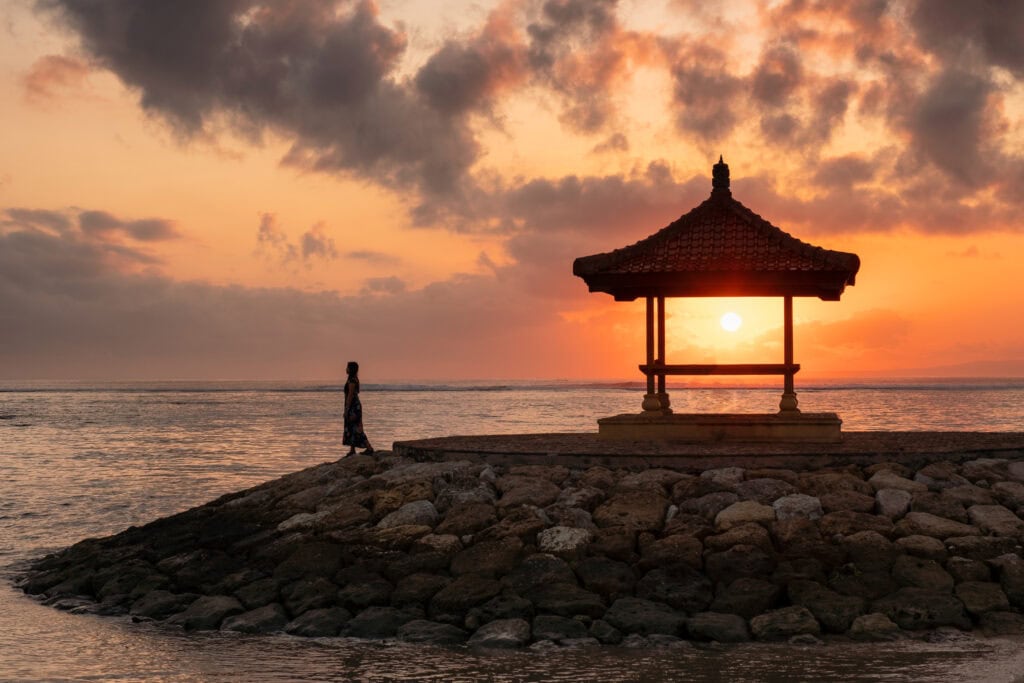
Introduction: A Gentle Resort Enclave by the Sea
This guide to where to stay in Nusa Dua is written for European travellers who value comfort, calm seas and a sense of order in their beach time. Nusa Dua is Bali’s most polished resort zone, with manicured grounds, secure access points and a string of sheltered beaches that feel a world away from Kuta’s bustle or Canggu’s surf culture.
Set on Bali’s south-eastern Bukit Peninsula, about 30–40 minutes’ drive from the airport, Nusa Dua forms a self-contained resort area along a protected curve of coastline, with a cluster of gated hotels, landscaped promenades and carefully maintained public spaces.
Understanding how this master-planned resort zone is laid out – from the central bay to quieter corners near Benoa and Sawangan – will help you choose the part of Nusa Dua that best matches your idea of beach relaxation.
Understanding Nusa Dua’s Resort Zone Layout
Nusa Dua is not a typical Indonesian town but a planned resort enclave. The area is managed as a cohesive tourism zone, with controlled access, security checkpoints and wide, landscaped boulevards. For many European visitors, this feels reassuringly orderly and easy to navigate after a long-haul flight.
The core of Nusa Dua is the main gated complex often referred to simply as the Nusa Dua resort area. Within this zone you will find most of the classic Nusa Dua resorts, a long arc of soft sand, a beachfront promenade and an internal road loop linking the different hotel entrances.
Behind the beachfront line, there is a second tier of properties and low-key shopping and dining at the Bali Collection precinct. Everything within the central enclave is compact: walking between neighbouring resorts or to the beach path is straightforward, with flat, paved surfaces and clear signage.
Beyond the gate, the greater Nusa Dua area spreads north towards Tanjung Benoa (a separate peninsula with its own character) and south towards Sawangan, where the coastline becomes slightly more elevated and some resorts sit on bluff tops with lifts or stairs down to the sand.
The Central Bay: Classic Nusa Dua Beach Hotels
The central bay is the heart of Nusa Dua and the best known to European travellers. This is where to stay in Nusa Dua if you are imagining graceful gardens, palm-fringed pools and direct access to one of Bali’s calmest swimming beaches.
Beachfront pathways connect many of the main Nusa Dua beach hotels here, allowing you to stroll along the shore in the early morning or late afternoon. The sand is light and soft, and the bay is protected by an offshore reef, creating gentle waves and generally safe conditions for swimming. Tides are noticeable, but even at low tide the atmosphere stays serene.
This central stretch is also the most sociable part of the resort zone. While Nusa Dua never feels hectic, you will see more joggers, families and couples here than in the outlying coves. There are a few casual beach cafés and water-sports stands, though activities remain relatively low-key compared with livelier areas like Tanjung Benoa.
For European travellers who prefer to arrive and immediately find everything within an easy walk – beach, promenade, spa, shaded loungers and a choice of dining – the central bay is the obvious Nusa Dua best area.
Southern Nusa Dua and Sawangan: Elevated Seafront Seclusion
South of the main gate, the coast curves gently towards Sawangan, where the shoreline becomes more varied, with pockets of cliff and elevated headlands. This is where to stay in Nusa Dua if you like the idea of a resort that feels a little more removed, with long sea views and quieter surroundings.
Many properties in this area are set on raised ground, with tiered pools and gardens cascading down towards the shore. Beach access may be via lifts, stairways or sloped pathways, so it is worth considering mobility and comfort if you or your companions prefer flatter terrain.
The beaches here tend to be slightly narrower than in the central bay, and the sea can feel more open, though there are still protected sections suitable for swimming. The general mood is contemplative rather than lively, with more focus on in-resort time: spa treatments, slow breakfasts and reading by the pool.
In terms of orientation, there are fewer independent restaurants and shops within short walking distance; most facilities are embedded in the resorts themselves. For guests who enjoy staying primarily within the grounds, this can be ideal, but if you like to wander out in the evening, the central bay may feel more convenient.
Northern Edge and Benoa Approach: Quieter, Residential-Feeling Comfort
To the north of the main gated zone, the landscape shifts as you approach the start of the Tanjung Benoa peninsula. This transitional area has a more mixed character, combining quieter resorts with local housing clusters and small-scale services.
This is where to stay in Nusa Dua if you appreciate a softer, less manicured edge to the resort environment while still being relatively close to the controlled core. Streets are narrower and more lived-in, with roadside warungs (local eateries), convenience shops and small temples appearing between the hotels.
Beachfronts in this northern stretch can be more variable: some sections are broad and sandy, others narrower or influenced by tides and sea-grass. Water sports become more visible as you move fully onto the Tanjung Benoa peninsula, but in the northern Nusa Dua fringe things remain relatively calm, especially early and late in the day.
For European travellers who enjoy a balance of comfort and local glimpses, this edge zone offers a compromise between the polished heart of Nusa Dua and the activity-focused Benoa area further north.
Inside the Gated Core: How the Nusa Dua Resorts Function
Within the main Nusa Dua resort zone, daily life follows a gentle rhythm. The area is accessed via security checkpoints, which all vehicles must pass through, creating a strong sense of enclosure and safety that many visitors, especially families or older travellers, find reassuring.
Once inside, you move between hotels, beach and dining via a simple internal road network and a network of pathways. Most movement is on foot, by resort buggy, or via short taxi rides. Distances are short, and the terrain is consistently flat, making it easy for those pushing prams or managing mobility challenges.
The gardens are heavily landscaped, with water features, lawns and mature trees providing shade from the tropical sun. Signage usually includes English, and staff across the area are accustomed to European guests, smoothing over language or cultural uncertainties.
In practical terms, this means that time in Nusa Dua is mostly about rest and recovery: unhurried breakfasts, mid-morning sea swims, spa appointments and easy evening walks along the beach promenade. For travellers who plan to explore Ubud, Seminyak or the interior of Bali on other days, Nusa Dua can act as a restorative base at the start or end of a wider itinerary.
Beach Experience: Calm Waters and a Managed Coastline
One of the main reasons European visitors choose Nusa Dua over other parts of Bali is the quality and predictability of the beach experience. The coastline here is deliberately managed to maintain a clean, inviting environment with relatively gentle seas.
Most Nusa Dua beach hotels share the same curved shoreline, separated by subtle boundaries rather than fences. You can walk the full length of the main bay along the sand or on the paved path just behind it, passing different gardens, pool fronts and small shrines that belong to each resort.
Because of the offshore reef, waves break further out to sea, creating a lagoon-like effect inside. Water is generally calm, particularly in the mornings, making it suitable for less confident swimmers and relaxed floating. As elsewhere in Bali, tides are important: at low tide the water may be shallower and patches of sea-grass more visible.
The overall effect is one of order and tranquillity. Beach hawkers are present but usually minimal, and the presence of resort staff keeps the atmosphere quietly supervised. For travellers who prefer a defined sun-lounger-and-parasol set-up to the more improvised feel of Bali’s surf beaches, Nusa Dua is a natural fit.
Beyond the Resort Gates: Excursions and Connectivity
Although Nusa Dua is self-contained, it connects easily to other parts of southern Bali. The toll road linking the airport, Denpasar and the Bukit Peninsula simplifies travel times, and most resort receptions can arrange taxis or private drivers for day trips.
For short local journeys – for example to the clifftop temples and viewpoints around Uluwatu or to the seafood restaurants on Jimbaran Bay – travel times are usually between 30 minutes and an hour, depending on traffic and time of day. Roads are paved and, while busy, are familiar routes for experienced local drivers.
If you plan to split your time between Nusa Dua and more characterful inland areas such as Ubud, it can be helpful to think of Nusa Dua as the coastal “rest” chapter of your journey. Many travellers begin or end their Bali itinerary here, taking advantage of the area’s calm to adjust to or recover from long-haul flights.
Practical Travel Tips for Nusa Dua
Airport transfers: The drive from Ngurah Rai International Airport to Nusa Dua usually takes 30–40 minutes via the toll road; having your transfer arranged in advance simplifies arrival, especially after a long European flight.
Local transport: Within the resort area most distances are walkable; for trips beyond the gate, metered taxis and reputable car-with-driver services are widely used.
Walking and terrain: Paths in the main Nusa Dua resort zone are mostly flat and paved, suitable for prams and travellers with limited mobility; southern Sawangan can involve slopes and stairs down to the beach.
Best time of day for the beach: Early mornings offer cooler temperatures, calmer seas and softer light, while late afternoons are comfortable for beach walks and photography.
Seasonality: Nusa Dua is relatively sheltered, but during the wetter months (roughly November to March) short, heavy showers are common; resort layouts make it easy to retreat indoors without feeling confined.
Dress norms: Resort wear is standard inside hotel grounds, but for visiting temples or local communities, bring light clothing that covers shoulders and knees; sarongs are often provided at temple entrances.
Sun and heat: The polished gardens can make the midday heat feel deceptively mild; sun protection and regular hydration are essential, particularly for children and older travellers.
Swimming awareness: Although the bay is protected, always check local flags and ask staff about conditions, especially if travelling with less experienced swimmers.
Noise levels: The gated design keeps traffic noise low; if you are sensitive to early-morning activity, consider room locations set back from shared pathways and pool areas.
Cultural considerations: Even within the polished resort environment, you will see offerings and ceremonies; giving these space and quiet respect is appreciated by local staff and communities.
FAQs: Where to Stay in Nusa Dua and Resort Area Basics
Is Nusa Dua a good area for first-time visitors to Bali?
Yes. Nusa Dua is often considered one of the best areas for first-time visitors who prioritise calm, safety and comfort. The resort layout is easy to understand, the beaches are sheltered, and services are used to international guests, which can be reassuring if it is your first trip to Indonesia.
Which part of Nusa Dua has the best beach?
The central Nusa Dua bay is widely regarded as offering the most consistently appealing beach, with a long curve of soft sand, a protected lagoon and a continuous beachfront promenade. Southern and northern sections have their own charm, but the central arc is the most classically “Nusa Dua”.
Are Nusa Dua resorts suitable for couples looking for quiet?
Most Nusa Dua resorts are designed around tranquillity, with generous gardens, multiple pools and quiet corners. Couples often favour the southern Sawangan stretch or properties slightly set back from the central promenade for a more secluded mood.
Can you walk easily between different Nusa Dua beach hotels?
Yes. One of the advantages of the area is the beachfront path that links many Nusa Dua beach hotels along the main bay. You can walk on the sand or on the paved path just behind it, making it simple to explore different sections of the shoreline.
Is staying in Nusa Dua a good base for exploring the rest of Bali?
Nusa Dua works well as a comfortable coastal base, especially at the start or end of a trip. For more intensive sightseeing – temples, rice terraces, arts and markets – many travellers combine it with nights in other regions such as Ubud or central-south Bali to reduce daily travel times.
Conclusion: A Managed Coastline for Measured Relaxation
Nusa Dua offers a distinct version of Bali: a carefully curated resort zone with polished beaches, calm seas and a reassuringly ordered environment. The central bay brings classic beach-lounger ease, the southern Sawangan area adds elevated seclusion, and the northern edge softens into a more local-feeling fringe.
For European travellers deciding where to stay in Nusa Dua, the choice is less about individual properties and more about which part of this resort enclave matches their rhythm – from fully self-contained relaxation to a gentle balance of comfort and exploration.
Recommended next:
- Where to Stay in Bali for First-Time Visitors
- Bali Itinerary 7 Days: Ubud + Beaches with Smooth Transfers
- Bali Itinerary 10 Days: Add Nusa Islands and Slow-Luxury Days
- Bali in 5 Days: Best Highlights Without Feeling Rushed
- Best Time to Visit Bali: Month-by-Month Weather and Crowd Reality
- Bali Travel Costs: Daily Budget for Comfortable (Not Backpacker) Trips
- More in Bali →