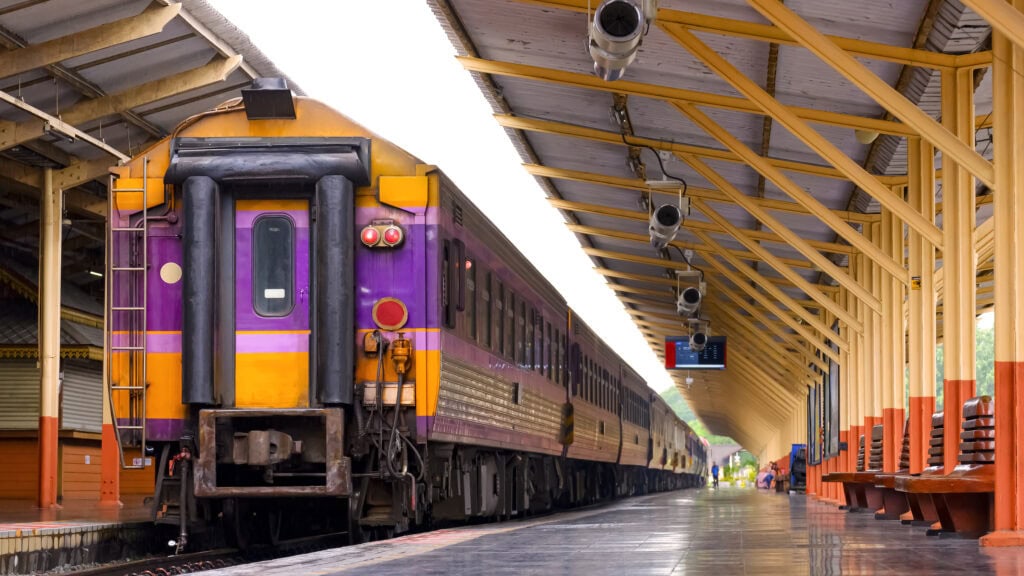
Introduction: A Classic Thai Rail Journey for European Travellers
The night train Bangkok to Chiang Mai is one of Thailand’s most atmospheric journeys, linking the country’s hectic capital with its relaxed northern hub in a single overnight ride. For European travellers used to long-distance trains at home, this route offers a familiar way to move across the country while experiencing Thai daily life at a slower, more observational pace.
This guide focuses on train planning: how the Bangkok–Chiang Mai sleeper train works, what to expect from each class, and how to choose between seats and berths. It is especially useful if you are combining several nights in the capital with a rail journey north; in that case, an overview of Bangkok’s best areas for first-time visitors can help you align your hotel choice with the departure station you use.
By way of orientation, the route runs from central Bangkok in the south of Thailand to Chiang Mai in the mountainous north, taking roughly half a day including the night, and passing through lowlands, river plains and finally jungle‑lined hills.
Understanding the Night Train Bangkok to Chiang Mai Route
The night train Bangkok to Chiang Mai is operated by the State Railway of Thailand and is one of the country’s core northbound services. It departs from Bangkok and follows the Northern Line, stopping at provincial towns before climbing gently towards Chiang Mai’s valley. The journey duration varies by service, but you can broadly expect an overnight schedule with a late afternoon or early evening departure and arrival the following morning.
For European travellers, this overnight structure works neatly with jet lag and itinerary planning. Many visitors spend a full day in Bangkok, board the train in the evening, sleep on board and arrive in Chiang Mai ready for breakfast and a full day in the city. It is a practical alternative to a short domestic flight, avoiding airport transfers and security queues while turning transport time into part of the experience.
Despite being a popular route, the atmosphere is generally calm and orderly. Onboard announcements are simple, and carriage attendants keep a regular routine of converting seats into beds, checking tickets and closing curtains. The journey is not particularly fast by European high-speed standards, but it is steady and, in many sections, surprisingly quiet.
Sleeper Classes Explained: First, Second and Seats
Choosing the right class is central to planning your Bangkok Chiang Mai sleeper train experience. The main options are first-class sleepers, second-class sleepers (air‑conditioned or fan) and standard seats. Each has advantages depending on how you like to travel.
First-Class Sleeper Cabins
First-class on the Thailand night train typically consists of enclosed, air‑conditioned two-berth cabins. During the day, you have a sofa-style seat facing a small table; at night, this converts into two bunks, one upper and one lower. Doors can be locked from the inside, offering privacy and a degree of separation from the main corridor.
This class suits couples, close friends, or solo travellers who value quiet and privacy. The layout will feel familiar to anyone who has used overnight sleepers in Western or Central Europe. Bedding, including sheets and a pillow, is usually provided, and there is generally space to stow medium-sized luggage inside the cabin itself. Washrooms and toilets are shared along the carriage.
Second-Class Sleeper Carriages
Second-class sleepers are the backbone of the Bangkok–Chiang Mai route and are often considered the most atmospheric way to travel. Berths are arranged along an open-plan corridor, with pairs of seats facing each other. In the evening, attendants convert these into two bunk beds with curtains for privacy.
There are usually two variants: air‑conditioned and fan-only. Air‑conditioned second-class tends to be slightly brighter and cooler; fan carriages can feel more traditional, with open windows in some older rolling stock and a stronger sense of the outside environment. For many European visitors, air‑conditioned second-class offers the best balance between comfort, budget sensitivity and a sociable, local feel.
The open design makes it easy to observe carriage life—families settling children, solo travellers quietly reading, and vendors passing through at some stops—while the curtains and individual reading lights allow you to retreat into your own space when you wish.
Seats-Only Options
Seats-only carriages are often available on both day and night departures. On an overnight journey, these are the most basic option, with reclining seats arranged in pairs. While the lack of a berth may be challenging for those who struggle to sleep sitting up, some travellers choose this class for very short notice trips or because they plan to doze lightly rather than sleep deeply.
For European visitors used to well-padded long-distance seats, Thai seat carriages can feel a little firmer and more utilitarian. They are clean and functional, but you should not expect the same level of personal space as a sleeper. Seats may be a reasonable option if you are travelling in a group and treat the journey as a social evening with only a few hours of rest before arrival.
Onboard Experience: What It Feels Like to Spend a Night on the Train
Spending the night on the Bangkok Chiang Mai sleeper train is as much about mood as it is about logistics. The rhythm of the journey tends to follow a gentle pattern: boarding and finding your seat or berth, an early-evening period of light, conversation and food, then quiet hours as the lights dim and the train crosses the countryside.
No two nights are identical, but several elements are consistent. Lighting is subdued after a certain hour, and most travellers respect a quiet atmosphere; headphones replace speakers, and conversations become hushed. The motion of the train is noticeable but not usually disruptive, and many people find the sway conducive to sleep once they are used to it.
Early in the morning, the train often passes through misty stretches of countryside close to Chiang Mai, with mountains appearing beyond the fields. Curtains open, people stretch and pack, and there is usually a gentle excitement among first-time visitors as the train approaches the end of the line. For those accustomed to flying, this slow, visible transition between regions is a distinctive pleasure.
How to Choose the Right Class for Your Travel Style
Planning the night train from Bangkok to Chiang Mai is largely about matching class and comfort level to your expectations and travel style. There is no single “best” option; each has trade-offs that suit different types of trips.
If you value privacy above all, a first-class cabin is the most straightforward choice. The ability to close your own door, work quietly at a small table, and move around your cabin without worrying about disturbing others will feel reassuring, especially after a busy day navigating Bangkok.
If you are happy to trade some privacy for a livelier, more local atmosphere, an air‑conditioned second-class sleeper is often ideal. It allows you to move down the corridor, exchange a few words with fellow travellers and enjoy a sense of shared journey, while still being able to draw your curtain and sleep in a proper bed.
Seats-only options are eventually a question of sleep tolerance. If you can sleep sitting up on long-haul flights or European night buses, you may be content; if not, the incremental comfort of a sleeper berth can define how you feel on arrival in Chiang Mai. When planning an itinerary that involves early onward activities in the north, such as exploring the old city or heading towards the surrounding countryside, the rest gained in a sleeper becomes particularly valuable.
Planning, Reservations and Practicalities of Booking Thai Trains
Although this guide is informational rather than transactional, it is important to understand the broad mechanics of booking Thai trains so you can plan your route and timings with confidence. The Bangkok–Chiang Mai line is popular, and sleepers, in particular, can be in demand during peak tourist seasons and national holidays.
In general, Thai railway bookings assign a specific carriage and seat or berth number. For the night train Bangkok to Chiang Mai, this means you know in advance whether you have an upper or lower bunk, a first-class cabin or a second-class berth, or a particular seat. Many European travellers prefer to secure these details before finalising hotel reservations in Bangkok and Chiang Mai, as departure and arrival times may shape check-in and check-out plans.
When researching booking Thai trains, it is worth noting that some services on the route are newer or refurbished, with more modern air‑conditioned carriages and enhanced luggage areas, while others are older and more traditional in style. For travellers who are particular about the onboard environment, reading recent accounts of the specific train number you intend to use can help you align expectations with reality.
Comfort, Safety and Etiquette on the Bangkok–Chiang Mai Sleeper
Thailand night train tips often focus on two priorities: personal comfort and an understanding of local norms. European travellers will find the journey broadly safe and orderly, but a few small habits can make the experience more seamless.
In terms of comfort, most travellers bring a light layer such as a jumper or scarf, especially in air‑conditioned carriages, which can feel cool during the night. Earplugs and a simple eye mask are useful if you are sensitive to movement or corridor light. Footwear that is easy to slip on and off is helpful for bathroom visits and moving around the carriage.
Etiquette is generally relaxed but respectful. Keeping noise low after the lights dim, speaking quietly on phones and keeping luggage arranged neatly in racks or under berths all contribute to a calm carriage environment. In open second-class sleepers, it is courteous to keep curtains closed once the beds are made, especially if interior lights are on, to maintain a sense of privacy for everyone.
When it comes to security, the usual common-sense precautions apply. Valuables are best kept in a small bag that you can keep within reach while you sleep, either secured to a fixed point or used as a pillow. Larger bags can be stored on racks, at the end of carriages or under lower berths, depending on the train layout.
Practical Travel Tips for the Night Train Bangkok to Chiang Mai
Arrive at the station with time to spare: Bangkok’s rail environment can feel busy and unfamiliar at first; having a buffer allows you to find your platform calmly and observe how the station works.
Keep key items accessible: Pack a small pouch with passport, tickets, a pen and any medications so you do not need to open large luggage during the night.
Prepare for varied temperatures: Air‑conditioned carriages can feel cool, while platforms and some fan carriages are warmer; dress in layers that you can adjust easily.
Choose lower or upper berth thoughtfully: Lower bunks offer more headroom and easier access, while upper berths can feel more cocooned and slightly removed from corridor movement.
Respect quiet hours: Once staff begin making up berths, keep conversations soft and use headphones, mirroring the way night trains operate in many parts of Europe.
Carry simple toiletries: A small kit with toothbrush, face wipes and hand sanitiser makes shared washrooms more comfortable during the night and before arrival.
Secure luggage sensibly: Use small locks or straps, and keep high-value items within your personal space rather than in communal racks.
Note your station stops: While the final destination is straightforward, intermediate stops can come early in the morning; setting an alarm a little before expected arrival helps you prepare without rushing.
Consider onward transport in Chiang Mai: Familiarise yourself with the general layout of Chiang Mai’s station and typical onward options into the old city or surrounding areas to avoid decision-making while tired.
Allow for slower travel pace: Thai trains are not high-speed; treat the journey as a transitional, reflective element of your itinerary rather than a purely functional transfer.
FAQs About the Bangkok–Chiang Mai Night Train
Is the Bangkok to Chiang Mai sleeper train comfortable enough for light sleepers?
Comfort levels are generally good, especially in first and second-class sleepers, with proper mattresses and bedding. However, if you are a light sleeper, the movement of the train and occasional station stops may wake you. Earplugs, an eye mask and choosing a lower berth in a quieter part of the carriage can improve rest significantly.
What is the difference between the Bangkok Chiang Mai sleeper train classes?
First-class sleepers provide private two-berth cabins with lockable doors, while second-class sleepers are open-plan with curtained bunks along the corridor. Seats-only carriages offer reclining seats without beds. First-class prioritises privacy, second-class balances comfort and sociability, and seats are the most basic but can suit those who do not mind sleeping upright.
Is the night train in Thailand safe for solo travellers?
Many solo travellers, including women, use the Bangkok–Chiang Mai night train without issue. Carriages are staffed, and there is a steady, communal environment. As elsewhere, keeping valuables close, locking your bag where possible and being discreet with electronics and documents are sensible precautions.
How far in advance should I think about booking Thai trains on this route?
For the most popular services and sleeper classes, it is wise to plan some time in advance, especially during peak seasons, local holidays and European winter months when visitor numbers are higher. This ensures a choice of class and berth type that matches your comfort expectations and schedule.
Are there major differences between the various Bangkok–Chiang Mai night services?
Yes, some trains use newer or refurbished carriages with more modern interiors, while others are older and more traditional. The core layout of first and second-class sleepers is similar, but lighting, air‑conditioning and general ambience can vary slightly. Checking the specific train number and its usual rolling stock can help you anticipate the onboard environment.
Conclusion: A Measured, Atmospheric Way to Cross Thailand
The night train Bangkok to Chiang Mai remains one of Thailand’s defining overland journeys, combining practical long-distance transport with an unhurried sense of movement between south and north. For European travellers used to rail travel at home, its sleeper classes offer a familiar framework translated into a distinctly Thai context.
Choosing between first-class cabins, second-class sleepers and seats involves balancing privacy, comfort and atmosphere, while a few simple habits around packing, etiquette and timing can make the journey smoother. The result is not the fastest way to move between Bangkok and Chiang Mai, but often the most memorable, turning an overnight transfer into a calm, observational passage through the heart of the country.
Recommended next:
- Thailand Itinerary 10 Days: Bangkok, Chiang Mai & Islands for First-Timers
- Thailand Itinerary 14 Days: Classic Route with Beaches and Northern Culture
- Thailand in 7 Days: Bangkok + One Beach Base (No Rushing)
- Best Time to Visit Thailand: Month-by-Month Weather for Europeans
- Thailand Travel Costs: Realistic Daily Budget for European Travelers
- Thailand Travel Insurance Guide: What to Cover and What to Skip
- More in Thailand →