Introduction: Money Tips Thailand for European Travellers
This practical money guide to Thailand is written for European travellers who like to feel prepared before they land, from how much cash to carry to what happens when you tap your card in a Bangkok café. Understanding how money works in Thailand will help you move smoothly between street food stalls, long-tail boats and rooftop bars without worrying about surprise fees or awkward tipping moments.
Thailand sits at the heart of mainland Southeast Asia, with Bangkok as its main international entry point; for many visitors, it is also where they first encounter local payment habits, from cash-only markets to modern, contactless metro gates. If you are planning your first stay in the Thai capital, it can be useful to pair these money tips with broader orientation advice such as choosing the right Bangkok neighbourhood for a first visit.
What follows is a calm, practical overview of ATMs, card use, exchange rates, and tipping customs across Thailand, tailored specifically to expectations and habits common among travellers from Europe.
Understanding Thai Currency and Denominations
The Thai currency is the baht (THB). You will encounter coins of 1, 2, 5 and 10 baht and banknotes of 20, 50, 100, 500 and 1,000 baht. The 20-baht note is green, 50 is blue, 100 is red, 500 is purple and 1,000 is brownish-grey. Coins can look similar at a glance, so it is worth taking a moment to familiarise yourself with them when you first arrive.
For European travellers used to the euro or pound, the key difference is the role of cash in everyday transactions. While card payments are increasingly accepted in shopping centres, supermarkets, hotels and many restaurants, small-scale businesses such as local food stalls, songthaews (shared pick-up trucks), rural guesthouses and some massage shops still rely heavily on cash. It is sensible to carry a mix: enough local currency for taxis, tips and small purchases, while keeping larger expenses on card where possible.
Thai people rarely use coins for tipping; notes are generally preferred. Keeping a supply of 20- and 100-baht notes available will make small payments and discretionary tips much more straightforward.
ATMs in Thailand and How to Navigate Fees
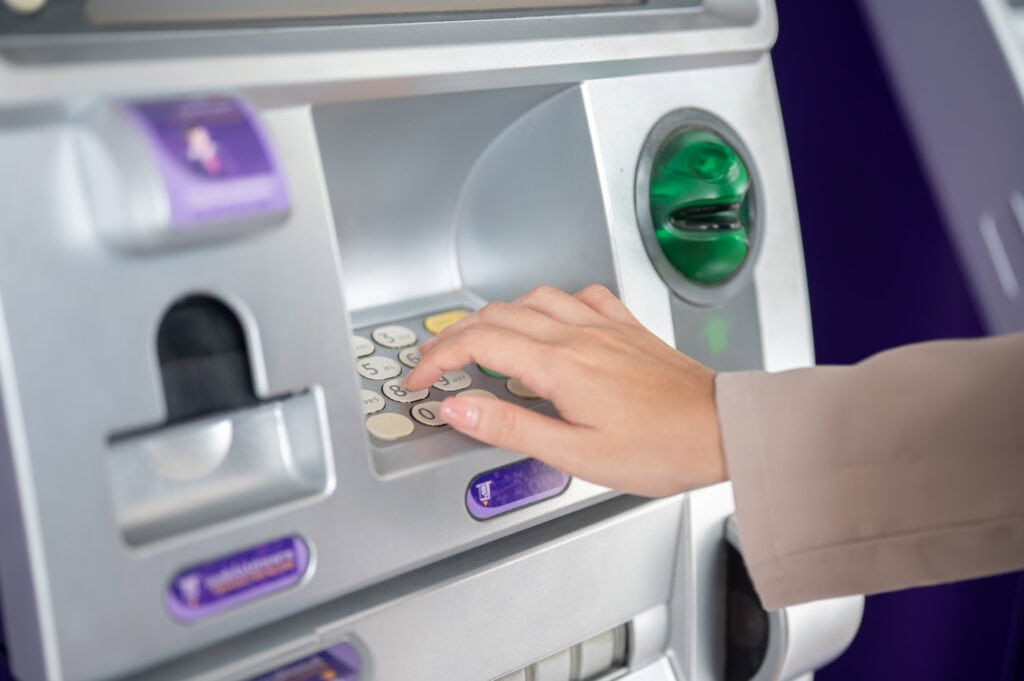
ATMs are widely available in Thailand, especially in cities such as Bangkok, Chiang Mai, Phuket and Chiang Rai, and in most resort areas. You will find them at airports, outside banks, in metro stations and near convenience stores like 7-Eleven. However, Thailand ATM fees for foreign cards are a recurring issue for visitors and should be factored into your planning.
Most Thai banks charge a fixed fee per withdrawal on foreign-issued cards, which appears on the screen before you confirm. On top of this, your home bank may apply its own foreign transaction fee or ATM charge. To limit cumulative costs, withdraw larger amounts less frequently instead of taking out small sums every day, and keep the cash secure in different places rather than in one wallet.
ATMs usually offer you a choice to be charged in your home currency (for example, euros or pounds) via dynamic currency conversion, or in Thai baht. It is generally more favourable to select the option to be charged in baht and let your own bank handle the conversion, as the in-machine conversion rates are often less competitive. Read the prompts calmly, as the wording can feel designed to push you towards the less favourable option.
Most ATMs accept major debit and credit cards on the Visa and Mastercard networks. Withdrawals are typically limited per transaction, and sometimes per day, which can be relevant if you plan to pay a domestic flight or long-distance transport in cash. If your card uses a four-digit PIN, it should work without issue; longer PIN codes may cause problems, so consider changing to a four-digit code before travelling.
Cash vs Card in Thailand: When Each Works Best
The cash vs card balance in Thailand depends strongly on where you are and the type of spending. In metropolitan Bangkok and other major cities, most mid-range and higher-end hotels, shopping malls, chain restaurants and modern cafés accept credit and debit cards, often contactless. International brands and large supermarkets routinely take both chip-and-PIN and contactless payments.
Once you step into night markets, street food areas, temples, small independent shops or rural settings, cash becomes dominant again. Many of the most atmospheric experiences in Thailand—boat taxis along Bangkok’s canals, local markets in Chiang Mai, small beach cafés on the islands—still run on cash. Carrying some notes also avoids minimum spend requirements that some card-accepting places may impose.
European travellers often find that their everyday bank cards work well for direct payment, but that Thai merchants may add a small surcharge for card transactions, especially for credit cards. These surcharges are not universal, but they are common enough that paying significant restaurant or shopping bills by card and keeping small, frequent spends in cash can be a comfortable compromise.
Mobile payments (such as QR code transfers using local banking apps) are widely used by residents, but international visitors generally cannot access these without a Thai bank account. Some international digital wallets may work on certain terminals, but should not be relied upon as a primary method. A combination of a primary card, a backup card and a reasonable cash float is more dependable across the country.
Exchange Rates, Where to Change Money and What to Avoid
Managing exchange rates sensibly is central to good money tips in Thailand. As a European traveller, you have three main options for obtaining baht: withdrawing from ATMs, exchanging cash at money changers and occasionally changing small amounts at your accommodation. Each comes with a different blend of rate and convenience.
ATMs generally apply interbank or card network rates, which are often competitive, but the Thai ATM fee and any charges from your home bank need to be weighed against the convenience. For many travellers this remains the simplest option, particularly upon arrival at the airport.
Authorised money changers in city centres and tourist areas can offer favourable rates when exchanging euros or pounds into baht, especially for larger notes in good condition. Rates at airports are typically less advantageous than in downtown locations, so some visitors exchange only a modest sum on arrival for immediate needs, then seek better rates in the city. Always check that the money changer is licensed, clearly posts buy/sell rates, and counts cash in front of you.
Changing money at hotels or smaller guesthouses is possible in some cases but usually comes with conservative rates. This can be acceptable for a small top-up when you do not want to search for an ATM or money changer, but not ideal for large sums.
As with ATM withdrawals, avoid dynamic currency conversion on card payments when offered. If a payment terminal asks whether you want to be charged in your home currency or in THB, choosing THB typically gives a better overall rate, assuming your bank’s foreign exchange conditions are reasonable.
Card Payments, Deposits and Security Considerations
Credit and debit cards are well integrated into Thailand’s urban travel infrastructure. They are particularly useful for transport passes, intercity travel tickets, large restaurant bills, shopping and higher-end hospitality. Visa and Mastercard are most widely accepted; some merchants also accept American Express, but not all.
Many hotels and some car hire companies will request a card for a deposit, often placing a temporary hold rather than taking a payment. Ensure the card you intend to use has enough available limit to accommodate such holds, and consider having a separate credit card for security deposits to keep your main travel funds unaffected by temporary blocks.
From a security perspective, the usual precautions apply. Use ATMs attached to bank branches rather than standalone machines where possible, cover your PIN, and check payment terminals before tapping or inserting your card. Contactless payments reduce the need to hand over your card, particularly in restaurants. Keep copies of your bank’s emergency contact numbers separately from your wallet, in case of loss or theft.
It may also be worth informing your bank in advance that you will be travelling in Thailand, depending on its fraud detection policies. Sudden overseas transactions can sometimes trigger security blocks, especially if you rarely use your card outside Europe.
Tipping in Thailand: Customs, Expectations and Etiquette
Tipping in Thailand is more discretionary than in many European countries and is generally not obligatory. However, in tourist areas it has become more common, especially in hospitality and service sectors. Understanding the local tipping culture will help you show appreciation without over- or under-tipping.
In simple local restaurants, street food stalls and food courts, Thai customers rarely tip. As a visitor, leaving small change or rounding up the bill is appreciated but not expected. In mid-range and upscale restaurants, leaving around 5–10 percent when service has been good is seen as a kind gesture, particularly if a service charge is not already included in the bill.
For taxis and ride-hailing services, rounding up to the nearest 10 or 20 baht is customary rather than calculating a precise percentage. For hotel staff, small tips in cash—such as a modest amount for porters or housekeeping if you stay multiple nights—are welcomed but should remain proportionate to the cost of services.
When using massage services or spas, tips are more significant to staff incomes, especially in tourist centres. A modest cash tip handed directly to the therapist at the end of the session is common practice; some venues have tip boxes, but giving it personally ensures it goes to the person who served you.
In all cases, tipping should feel voluntary and aligned with the level of service received. Thai culture values politeness and composure, so a smile and a respectful thank you, combined with an appropriate small tip when warranted, will always be well received.
Practical Travel Tips: Handling Money Smoothly Across Thailand
- Carry a mix of payment methods: at least one debit card, one credit card and a supply of small Thai banknotes for street-level spending.
- Use ATMs attached to bank branches or inside shopping centres in Bangkok and major towns, which tend to feel more secure and better maintained.
- Withdraw larger sums less frequently to soften the impact of fixed Thailand ATM fees, then store the cash in different secure places.
- Keep 20- and 100-baht notes handy for taxis, small shops, temple donations and tipping; many smaller vendors struggle to change 1,000-baht notes.
- Decline dynamic currency conversion on payment terminals and ATMs; choose to pay in Thai baht instead of your home currency for more favourable rates.
- Check restaurant and hotel bills for an included service charge before adding any extra tip, particularly in international-style venues.
- Have some cash with you when visiting markets, local bus stations and night bazaars, where card acceptance remains patchy.
- Store a photo or photocopy of your passport and bank cards separately from your wallet to simplify replacements in case of loss.
- In island destinations and more rural provinces, withdraw cash in larger towns before moving on, as ATM availability can be limited in small villages.
- Use a discreet money belt or an internal pocket in crowded places such as popular markets and festival areas, where pickpocketing is more likely.
FAQs: Money Tips Thailand for European Visitors
Is it better to bring cash or use ATMs in Thailand?
A combination works best. ATMs provide convenience and generally fair exchange rates, but Thailand ATM fees make frequent small withdrawals inefficient. Many travellers bring some euros or pounds to exchange at authorised money changers in cities and rely on ATMs for additional funds as needed, while keeping enough cash for daily spending.
Can I pay by card everywhere in Thailand?
No. Card payments are widely accepted in Bangkok, major tourist centres, modern malls, chain restaurants and higher-end hotels, but many small eateries, markets, rural shops and local transport services remain cash-only. Always carry some Thai baht, especially when exploring neighbourhoods away from the main tourist strips.
How much should I tip in Thailand?
Tipping Thailand-style is flexible and modest. In simple local places it is optional, while in mid-range restaurants a 5–10 percent tip for good service is common if no service charge is added. Rounding up fares for taxis and leaving small notes for hotel staff or massage therapists is appreciated but not mandatory.
Are Thai ATM and card payments safe for foreign travellers?
Using ATMs and cards in Thailand is generally safe, particularly in bank branches, shopping centres and reputable hotels. Standard precautions apply: cover your PIN, avoid isolated machines at night, monitor your account activity and keep your bank’s emergency contact details with you.
Should I accept the offer to pay in my home currency at shops or ATMs?
It is usually better to decline and choose to pay in Thai baht instead. Being charged in your home currency uses dynamic currency conversion, which tends to have a weaker exchange rate than letting your bank handle the conversion directly.
Conclusion: A Calm Approach to Money in Thailand
Managing money in Thailand as a European traveller is straightforward once you understand the balance between cards and cash, the reality of ATM fees, the basics of exchange rates and the relaxed nature of local tipping habits. With a small amount of planning—carrying mixed payment methods, watching conversion options at machines and keeping tipping proportional to service—you can move comfortably through Thailand’s cities, islands and countryside, focusing on the experience rather than the logistics of payment.
Recommended next:
- Thailand Itinerary 10 Days: Bangkok, Chiang Mai & Islands for First-Timers
- Thailand Itinerary 14 Days: Classic Route with Beaches and Northern Culture
- Thailand in 7 Days: Bangkok + One Beach Base (No Rushing)
- Best Time to Visit Thailand: Month-by-Month Weather for Europeans
- Thailand Travel Costs: Realistic Daily Budget for European Travelers
- Thailand Travel Insurance Guide: What to Cover and What to Skip
- More in Thailand →