Introduction: A Gentle Two-Day Escape to Kanchanaburi
This kanchanaburi 2 day itinerary is designed for European travellers who enjoy combining nature, river landscapes and layered history in a calm, unhurried way. It is not about ticking off sights, but about understanding how Kanchanaburi’s tranquil forests and river scenery coexist with one of Southeast Asia’s most significant wartime stories.
Kanchanaburi sits roughly 2–3 hours west of Bangkok and pairs naturally with a stay in the Thai capital; many visitors first orient themselves in Bangkok’s riverside or central districts, using resources such as thoughtful overviews of where to stay in Bangkok for first-time visitors, before travelling onwards to this quieter province.
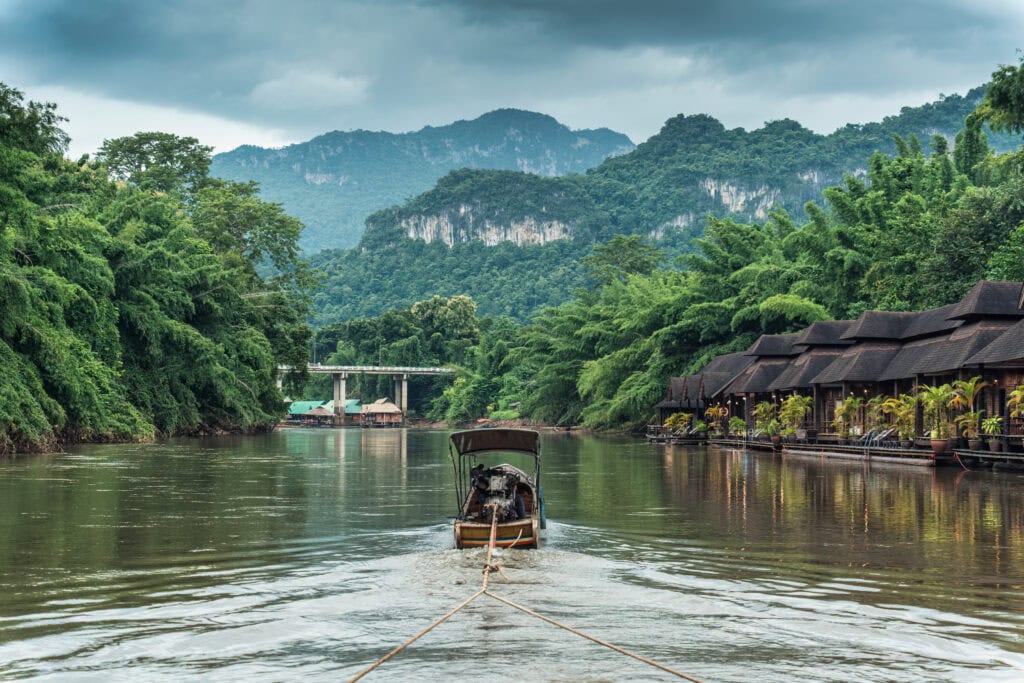
Geographically, Kanchanaburi lies near the Myanmar border, where the River Kwai winds through limestone hills and national parks, making it ideal for a short break that blends the famous Bridge on the River Kwai with an Erawan Falls trip and time spent in simple river kwai hotels or floating cabins.
How to Get to Kanchanaburi from Bangkok
For most European visitors, the journey to Kanchanaburi from Bangkok is the first logistical question. Distances are modest, but the mode of transport you choose will shape how your two days feel: scenic and slow, or straightforward and efficient.
By road, Kanchanaburi is around 120–140 km from central Bangkok, depending on your starting point. Transfers by private driver or rideshare are usually the most comfortable, especially after an overnight flight into Thailand. The drive takes around 2.5 hours in usual traffic, following major highways before tapering into quieter roads as you approach the town and river.
Trains run from Bangkok’s Thonburi Station towards Kanchanaburi, and while they are slower than road transport, they offer a more atmospheric introduction to the countryside. The line passes through low-rise suburbs and rice fields, gradually giving way to more rural scenery. For visitors interested in the wartime railway, arriving by train lends context to the following day’s historical visits, though it can eat into your sightseeing time if you only have two days.
Buses and minivans are another widely-used option from Bangkok’s bus terminals. These are practical if you are comfortable navigating Thai transport hubs and do not mind less personal space. For a short, two-day stay, many travellers prefer a direct transfer to maximise time by the river and at Erawan National Park.
Day 1: River Kwai, Bridge and Wartime History
The first day of this kanchanaburi 2 day itinerary focuses on Kanchanaburi’s historical layers along the River Kwai, balanced with quiet moments by the water. Most visitors start near the famous Bridge on the River Kwai, then move between small museums, cemeteries and riverfront viewpoints to build a fuller picture of the region’s past.
The bridge itself, now framed by forested hills and slow-moving water, is one of Southeast Asia’s most recognised wartime landmarks. Walking across the tracks, you can look down at the river that once served as a strategic artery during the construction of the Thai–Burma Railway. The atmosphere varies throughout the day: early mornings are calmer, with softer light and fewer tour groups, while late afternoons bring more visitors but also a gentle golden glow on the river.
Nearby, several modest museums trace the story of the wartime railway, the role of Allied prisoners of war and Asian labourers, and the conditions they faced. The tone is sobering rather than sensational. European travellers often find that spending time in the cemeteries and memorials, reading the names and ages on the headstones, provides a more personal understanding than the bridge alone.
Breaking up the historical visits with river time is essential. Many river kwai hotels offer decks or small terraces where you can sit and simply watch the water traffic drift by: longtail boats, floating restaurants and the occasional barge. The contrast between today’s calm and the river’s past importance for wartime logistics is one of the reasons Kanchanaburi resonates with history-focused travellers.
In the late afternoon, consider a short boat ride on the river to appreciate the surrounding hills and vegetation from the water. It is not a dramatic landscape in the alpine sense; instead, the appeal lies in palm trees, bamboo, distant karst shapes and the easy rhythm of local life on the banks. Evenings can be spent in low-key riverside eateries, ideal for those adjusting from European time zones.
Day 2: Erawan Falls Trip and National Park Scenery
The second day in Kanchanaburi turns towards nature, with an Erawan Falls trip into the national park north of town. The park is about an hour’s drive from central Kanchanaburi, so leaving early helps avoid both midday heat and the busiest period for day trippers from Bangkok.
Erawan National Park is known for its seven-tiered waterfall, a succession of turquoise pools framed by forest. The lower levels are easily accessible along a clear path, while the higher tiers require more confident footing on sometimes uneven, tree-rooted trails. For European travellers used to marked hiking routes, the paths are straightforward but can be slippery in places; supportive sandals or light hiking shoes are more comfortable than flip-flops.
Spending several hours here allows you to move at your own pace between shaded rest spots and open, sunlit pools. The setting is tropical rather than mountainous: expect dense greenery, cicadas, and filtered light through the canopy. It is worth noting that Kanchanaburi’s climate can be very warm and humid, particularly from March to May, so frequent breaks and steady hydration make the day considerably more pleasant.
After returning from the park, some visitors choose to visit locations further along the old railway line, depending on time and interest. Hellfire Pass, in particular, offers both a walking trail and an interpretation centre explaining the construction of this difficult section of the railway. Even if you do not walk the full trail, standing in the cutting and looking up at the rock walls gives a more physical understanding of the labour that went into the line.
Ending the day back on the river, you will likely notice how the soft light of sunset reflects off the water and the silhouettes of the hills. This final evening often becomes a quiet pause, allowing the experiences of the waterfalls and wartime sites to settle into a coherent picture of Kanchanaburi as both a natural retreat and a place of remembrance.
Choosing River Kwai Hotels and Areas to Stay
Where you base yourself along the River Kwai will subtly shift the mood of your kanchanaburi 2 day itinerary. The town centre offers straightforward access to markets, food options and transport, while riverside properties a little further out feel more secluded and immersed in greenery.
Along the main riverbanks close to the bridge, you will find a mix of traditional guesthouses, small boutique hotels and floating rooms moored to the shore. These locations are convenient for walking to the bridge and nearby restaurants, though noise can carry across the water in the evenings. This area suits travellers who appreciate being able to explore on foot without relying on constant transfers.
Further upriver, accommodations become more spread out, with extensive gardens, more pronounced jungle surroundings and a sense of detachment from the town. Access to independent restaurants may be more limited, but the reward is a quieter riverfront with fewer passing boats and a closer connection to the natural setting. This works particularly well if you value early mornings on the deck with mist over the river and birdsong from the trees.
Floating raft-style rooms, a recognisable feature of river kwai hotels, can be atmospheric but come with trade-offs. The movement of the water is part of the experience, yet it can also mean more sound from boat traffic and less stable footing. These stays are less suited to travellers with mobility issues or those who prefer solid ground underfoot.
Wherever you choose, it is helpful to understand the distance from your hotel to both the Bridge on the River Kwai and to the road heading towards Erawan National Park. With only two days, being too far off-route can add unnecessary time in vehicles, especially during hotter hours in the middle of the day.
Balancing Nature and History: How to Pace Two Days
With limited time, the key to a satisfying kanchanaburi 2 day itinerary is pacing. The temptation is to add more sites and viewpoints, yet the character of Kanchanaburi reveals itself best when you allow for pauses beside the river or in the shade of the forest.
A common pattern is to allocate the first day primarily to the town, bridge and associated museums, then dedicate the second day to Erawan Falls and, if desired, a section of the old railway further out. This rhythm lets you absorb the wartime story in digestible segments rather than compressing everything into a single, overwhelming day.
It is also worth considering how you personally respond to memorial sites. Some travellers prefer to visit cemeteries and museums in the morning when they feel freshest, then decompress in calmer, natural spaces later in the day. Others are more comfortable doing the reverse. The point is not to see every historical location, but to engage meaningfully with a few.
Similarly, your approach to the Erawan Falls trip can be either leisurely or energetic. You may choose to linger at the lower pools, observing fish in the clear water and watching the interplay of light and leaves, or you may prefer to hike steadily to the higher tiers. Both approaches deliver a sense of immersion in Kanchanaburi’s landscape; neither is inherently more authentic than the other.
Seasonality, Weather and Best Time to Visit
Kanchanaburi experiences three broad seasons, which will influence how your two days feel, especially around Erawan Falls and the river. From November to February, temperatures are generally more moderate and evenings can even feel cool by Thai standards, making this period comfortable for European visitors unaccustomed to tropical heat.
From March to May, temperatures rise noticeably, and both the town and national park can feel very warm, particularly in the early afternoon. In these months, it becomes even more important to plan outdoor activities for the morning and late afternoon, allowing for rest during the hottest hours.
The rainy season usually runs from roughly June to October, bringing more frequent showers and the possibility of heavier downpours. On the positive side, this can mean lusher vegetation and stronger waterfalls, though paths around Erawan Falls may be muddier and more slippery. Rain often comes in bursts rather than all day, so with flexible timing you can still follow a similar itinerary.
For those combining Kanchanaburi with a stay in Bangkok and perhaps elsewhere in Thailand, shoulder months such as late November or early February often provide a balanced combination of manageable temperatures, good visibility and relatively full waterfalls.
Practical Travel Tips for Kanchanaburi
- Allow at least 2–3 hours of travel time each way when planning Kanchanaburi from Bangkok, and avoid scheduling tight onward connections on your return day.
- For the Erawan Falls trip, arrive at the park early in the morning to enjoy cooler temperatures and quieter trails.
- Wear light, breathable clothing and shoes with good grip; paths around the falls and railway cuttings can be wet and uneven.
- Carry water and sun protection, especially from March to May when Kanchanaburi’s heat is most intense.
- Respect memorial sites by keeping voices low, dressing modestly and avoiding photography of individuals without permission.
- In river kwai hotels, sound travels easily across the water; light sleepers may wish to bring earplugs.
- Cash is useful for small expenses in markets, at simple eateries and at some smaller museums outside the main town.
- Check local park regulations at Erawan National Park, including any rules regarding food, swimming areas and litter.
- When using local taxis or songthaews, agree on the route and total cost clearly before starting the journey.
- If you are sensitive to insects, consider using repellent in the late afternoon near the river and inside forested areas.
FAQs About a Kanchanaburi 2 Day Itinerary
Is a kanchanaburi 2 day itinerary enough time?
Two days are enough to experience the central highlights: the Bridge on the River Kwai, one or two key museums or memorials, and a full Erawan Falls trip. You will not see every site, but you can gain a solid overview of both the wartime history and the natural setting.
How do I travel to Kanchanaburi from Bangkok?
Most visitors travel to Kanchanaburi from Bangkok by car, either with a private driver or rideshare, taking around 2.5 hours. Trains from Thonburi Station and buses from major terminals are also available, though they can be slower and less flexible if you have limited time.
Where is the best area to stay along the River Kwai?
Staying near the bridge offers convenience for restaurants and historical sights, while properties further upriver are quieter and more immersed in nature. Your choice depends on whether you prioritise easy access or a more secluded riverfront atmosphere.
Is Erawan Falls suitable for less experienced hikers?
Yes, the lower levels of Erawan Falls are accessible on a clear path and suit most visitors with average mobility. Reaching the higher tiers involves steeper, occasionally slippery sections, so good footwear and a measured pace are advisable.
Can Kanchanaburi be visited as a day trip from Bangkok?
A day trip is possible but compressed. You are likely to have to choose between focusing on the bridge and museums or on Erawan Falls. An overnight stay allows for a more balanced, unhurried experience that reflects both the natural and historical sides of Kanchanaburi.
Conclusion: A Quiet Meeting of River, Forest and Memory
Kanchanaburi offers a thoughtful combination of river landscapes, national park scenery and complex wartime history within a manageable distance of Bangkok. Over two days, you can move from the stillness of memorial cemeteries to the clear pools of Erawan Falls and the gentle flow of the River Kwai. The trade-off is that you will only scratch the surface of the wider province, yet for many European travellers, this limited but carefully paced insight is precisely what makes a short Kanchanaburi stay so resonant.
Recommended next:
- Thailand Itinerary 10 Days: Bangkok, Chiang Mai & Islands for First-Timers
- Thailand Itinerary 14 Days: Classic Route with Beaches and Northern Culture
- Thailand in 7 Days: Bangkok + One Beach Base (No Rushing)
- Best Time to Visit Thailand: Month-by-Month Weather for Europeans
- Thailand Travel Costs: Realistic Daily Budget for European Travelers
- Thailand Travel Insurance Guide: What to Cover and What to Skip
- More in Thailand →