Ayutthaya Day Trip from Bangkok: An Easy History Escape
This guide is for European travellers who enjoy culture and history but prefer an easy, well-structured day rather than an intense temple marathon. An Ayutthaya day trip from Bangkok offers a calm contrast to the capital: ruined temples, quiet riverside scenes and a clear, compact route that is straightforward to navigate.
Ayutthaya was once the grand capital of the Siamese kingdom, and today its historical park forms one of Thailand’s most accessible windows into the country’s past. From riverside districts along the Chao Phraya to the historic core of Rattanakosin, your choice of where to stay in Bangkok for first-time visitors will shape how easy it is to reach the main transport hubs for Ayutthaya.
In orientation terms, Ayutthaya lies around 80 km north of central Bangkok, on an island formed by rivers and canals, with most key temple ruins concentrated within a small, walkable historic zone.
Understanding Ayutthaya as an Easy History Trip
Ayutthaya’s appeal lies in how gracefully it introduces Thai history. Rather than demanding deep prior knowledge, the city’s ruins give intuitive visual clues: prang towers influenced by Khmer architecture, serene Buddha images and low brick platforms that hint at vanished wooden palaces.
The Ayutthaya Historical Park is compact, mostly flat and well-signposted in English. For European travellers, it offers a manageable history dose: in a single day you can see distinct architectural styles, understand basic historical timelines and still return to Bangkok in time for an evening drink.
The overall atmosphere is unhurried. While Ayutthaya is a UNESCO-listed destination and can be busy around the largest temples, you will also find quiet corners where crumbling chedis sit in the shade of old trees. This makes it particularly suitable if you want history without the density and noise of Bangkok’s inner-city temples.
Choosing the Best Transport: Train, Van, Taxi or River
The journey from Bangkok to Ayutthaya sets the tone of the day. The most common options vary in comfort, scenery and independence, but all are straightforward with a little planning.
Bangkok to Ayutthaya by Train
The classic way to travel is the Bangkok to Ayutthaya train from Bang Sue Grand or Hua Lamphong (services are being gradually reshuffled between stations, so it is worth checking locally where your chosen departure leaves from). The ride typically takes 1.5–2 hours, passing through suburbs and flat countryside.
For an easy history trip, the train has several advantages. It naturally limits how much you can pack into the day, encouraging a relaxed pace. The slow rhythm and open windows on some services feel pleasantly old-fashioned, and Ayutthaya train station sits just across the river from the historic island. From here, a short ferry crossing and a quick tuk-tuk ride take you to the main temples.
Taxi or Private Car from Bangkok
Many visitors choose a taxi or private car for convenience. Journey time is usually about 1.5 hours each way, depending on Bangkok traffic. This option works well if you are travelling as a couple or with friends and want direct point-to-point travel from your hotel to the historical park and back, without navigating public transport.
A driver can also shuttle you between temples, reducing walking distances in the heat. The trade-off is that you see less everyday local life en route compared with the train, and you may feel more detached from the landscape.
Minivans and Buses
Minivans and buses run from various points in Bangkok to Ayutthaya, often from large bus terminals or suburban hubs linked to metro lines. They tend to be faster than the train but less spacious and can feel more hectic at boarding and drop-off points.
This route is practical if you are comfortable with local-style travel and do not mind a little uncertainty in exact departure times or vehicle standards. For a gentle, curated history day, many European visitors find the train or taxi more aligned with their preferences.
River and Combination Journeys
Some travellers opt for a combination of road one way and river the other, travelling along the Chao Phraya. These journeys emphasise landscape over speed, gliding past small temples and riverside communities. They suit those who appreciate the historical importance of the river corridor between Bangkok and Ayutthaya and prefer a more contemplative experience.
Designing an Ayutthaya Temples Route
To keep the day easy and coherent, it helps to follow a simple Ayutthaya temples route that focuses on four to six sites. This allows time for quiet moments, photographs and shade breaks, rather than rushing from ruin to ruin.
Core Historic Route (Half-Day Circuit)
Wat Mahathat – Often the first stop, this temple is known for the Buddha head entwined in tree roots. Beyond the famous image, the surrounding prang towers and fallen Buddha statues offer a powerful impression of Ayutthaya’s rise and fall.
Wat Ratchaburana – Just across the road from Wat Mahathat, this site has a distinctive central prang you can partially climb, weather permitting. Its symmetry and surviving stucco work make it one of the most photogenic ruins.
Wat Phra Si Sanphet – Once part of the royal palace complex, this temple is known for its three aligned chedis. They illustrate the more formal palace side of Ayutthaya’s religious life and are an ideal stop for understanding the link between monarchy and Buddhism.
Viharn Phra Mongkhon Bophit – Adjacent to Wat Phra Si Sanphet, this still-active temple houses an enormous seated Buddha. The contrast between the living worship space and the surrounding ruins helps frame Ayutthaya not just as an archaeological site but as part of contemporary Thai spirituality.
Extended Route (If You Have More Energy)
Wat Lokayasutharam – Home to a vast reclining Buddha image in an open field. There is little else on the site, but its scale and the sense of space make a calm interlude between more complex ruins.
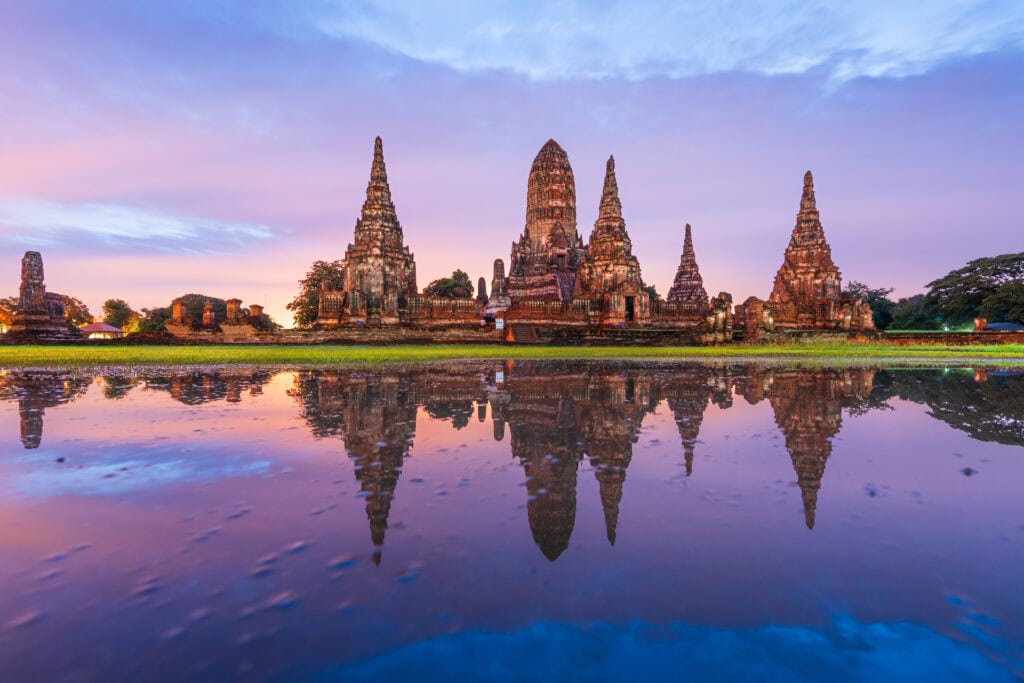
Wat Chaiwatthanaram – Located on the western riverbank, slightly away from the central cluster, this temple often forms the finale of an Ayutthaya itinerary. Its Khmer-style prang and riverside setting glow beautifully in the late afternoon light, making it a favourite for sunset.
For an easy history trip, start in the late morning, enjoy lunch between stops and end at Wat Chaiwatthanaram before returning to Bangkok. This keeps the narrative logical: from central city temples and royal grounds through to a grand riverside complex that feels almost cinematic at dusk.
Suggested Ayutthaya Itinerary and Timing
Many European visitors prefer to avoid the earliest departures from Bangkok, especially after a late arrival in the city. A mid-morning start still allows a satisfying day in Ayutthaya, as long as you structure the route carefully.
Morning: Travel and Orientation
A comfortable outline is to leave Bangkok between 8:00 and 9:30, depending on your chosen transport. Trains and road traffic are often slightly calmer than at absolute rush hour, and light is already bright by the time you reach Ayutthaya.
On arrival at Ayutthaya train station or bus stop, cross to the island, arrange a tuk-tuk or bicycle and begin at Wat Mahathat and Wat Ratchaburana. These two sites introduce the core architectural vocabulary of Ayutthaya and give a quick overview of the historical park’s scale.
Midday: Royal Temples and Lunch
Late morning or early afternoon, move on to Wat Phra Si Sanphet and Viharn Phra Mongkhon Bophit. The sites are close enough to combine without excessive walking, and there are places nearby for a simple lunch and a cold drink.
Midday heat can be strong, so this is a good time to use shade, indoor spaces and gentler pacing. This section of the day is less about covering ground and more about absorbing the sense of former royal grandeur and present-day religious practice.
Afternoon and Early Evening: Riverside and Return
After a rest, continue to Wat Lokayasutharam if you enjoy the idea of a single striking sight in a spacious setting. Alternatively, head straight towards Wat Chaiwatthanaram in the later afternoon. The temple’s design, with a tall central prang flanked by smaller towers, becomes particularly atmospheric as the sun begins to drop.
Many visitors time their departure from Ayutthaya to leave shortly after sunset, returning to Bangkok by train, taxi or van in the early evening. This creates a rhythm that feels more like a gentle excursion than a rushed checklist: a full day, but with breathing space.
Getting Around the Historical Park: On Foot, Bike or Tuk-Tuk
Once in Ayutthaya, the question becomes how to navigate between temples comfortably. The area is broadly flat, but the climate and distances still require thought, especially for a relaxed, history-focused day.
Walking Between Temples
Short sections of the Ayutthaya temples route, particularly between Wat Mahathat and Wat Ratchaburana, are very walkable. Pavements are inconsistent, but distances are small and traffic relatively light compared to Bangkok’s main roads.
However, walking exclusively can be tiring in midday heat. European travellers used to cooler climates often find it more pleasant to combine short walks with another mode of transport, using walking primarily inside the temple compounds themselves.
Cycling Around the Island
Bicycles are a popular option, lending a sense of gentle independence. The terrain is ideal for casual cycling and offers a slower, more intimate view of side streets, small shrines and ordinary neighbourhood life.
The main considerations are heat, traffic at larger junctions and the need to stay hydrated. If you are comfortable cycling in light traffic and enjoy the idea of quietly moving between ruins at your own pace, this can be a memorable way to experience the historic island.
Tuk-Tuks and Local Transport
For many, especially on a first visit, hiring a tuk-tuk by the hour strikes the best balance. Drivers know the main temples, can suggest an efficient sequence and spare you from navigating constantly. You can still walk freely within the sites and pause as long as you like at each stop.
This option works well if you have already oriented yourself in Bangkok’s riverside and old town districts and now prefer a day where logistics are simplified, allowing you to focus on atmosphere and historical context rather than wayfinding.
Culture, Dress and Temple Etiquette
While Ayutthaya is less crowded than many urban temples, cultural norms remain the same. Understanding these small details enhances the sense of respect and helps the day flow smoothly.
Dress modestly, covering shoulders and knees, especially when entering active temples such as Viharn Phra Mongkhon Bophit. Light, breathable fabrics are ideal for the climate while still meeting expectations of decorum around Buddha images and shrines.
Inside or near religious structures, remove hats and sunglasses, lower your voice and avoid climbing on ruins or Buddha statues, even if they appear abandoned. This restraint is not only about preservation but also about recognising that many local visitors see the site as sacred as well as historical.
Photography is widely accepted, but try to avoid blocking local worshippers or treating active shrines as mere backdrops. A moment of quiet observation can reveal patterns of offering, gesture and ritual that bring the history of Ayutthaya into the present.
Practical Travel Tips for Ayutthaya
Time your departure from Bangkok to avoid peak rush hours where possible; late-morning trains or mid-morning road departures often feel calmer.
Check the current main station for the Bangkok to Ayutthaya train locally, as services may shift between Hua Lamphong and Bang Sue Grand.
Carry cash for local transport in Ayutthaya, as small ferries, tuk-tuks and bicycle rentals usually do not accept cards.
Plan rest stops into your Ayutthaya itinerary, using shady temple courtyards or simple cafes between sites instead of walking continuously in the heat.
Bring sun protection – hat, sunglasses and high-SPF sunscreen are important, as many ruins offer limited shade at midday.
Wear comfortable footwear suitable for uneven brick surfaces and occasional sandy or grassy patches within temple grounds.
Keep shoulders and knees covered to meet temple dress norms while still choosing loose, breathable clothing.
Carry a light scarf or shawl that can double as an extra cover when entering active temples or prayer halls.
Have a simple offline map of Ayutthaya Historical Park downloaded, as mobile coverage is good but navigating ruins is easier with a clear visual overview.
Agree the route and approximate duration with your tuk-tuk driver at the start of the day to avoid misunderstandings later.
FAQs about an Ayutthaya Day Trip from Bangkok
Is a day trip enough to see Ayutthaya’s main temples?
Yes, a single day is enough for the central Ayutthaya temples route, including Wat Mahathat, Wat Ratchaburana, Wat Phra Si Sanphet and Wat Chaiwatthanaram. You will not see every ruin, but you can form a coherent picture of the former capital’s history.
Is the Bangkok to Ayutthaya train the best option for first-time visitors?
The train is often the most atmospheric and straightforward public transport option. It suits travellers who value a calm, scenic journey and do not mind slightly longer travel times. Those prioritising speed and door-to-door comfort may prefer a taxi or private car instead.
How early should I leave Bangkok for an Ayutthaya day trip?
Leaving between 7:30 and 9:30 works well for most visitors. Earlier departures offer cooler temperatures and more time, while mid-morning starts still allow a satisfying itinerary if you keep your temple list focused.
Can I walk the entire Ayutthaya itinerary?
It is technically possible, but the combination of heat and distances between some sites makes it tiring. A blend of walking within temple grounds and using a tuk-tuk or bicycle between clusters is usually more comfortable.
Are temples in Ayutthaya strict about dress codes?
Dress expectations are similar to major temples in Bangkok: modest clothing that covers shoulders and knees is appreciated, especially at active temples. At open-air ruins, enforcement may feel more relaxed, but following the same standards shows respect.
Conclusion: A Gentle Historical Counterpoint to Bangkok
An Ayutthaya day trip from Bangkok offers a measured introduction to Thailand’s royal and religious past, with enough structure to feel accessible yet enough space to wander quietly among ruins and riverside views. The main trade-offs involve transport style and pace: trains and bicycles emphasise atmosphere and independence, while taxis and tuk-tuks prioritise comfort and ease. Either way, a well-planned, compact route reveals how this former capital shaped the country’s cultural landscape and provides a thoughtful counterpoint to the intensity of modern Bangkok.
Recommended next:
- Thailand Itinerary 10 Days: Bangkok, Chiang Mai & Islands for First-Timers
- Thailand Itinerary 14 Days: Classic Route with Beaches and Northern Culture
- Thailand in 7 Days: Bangkok + One Beach Base (No Rushing)
- Best Time to Visit Thailand: Month-by-Month Weather for Europeans
- Thailand Travel Costs: Realistic Daily Budget for European Travelers
- Thailand Travel Insurance Guide: What to Cover and What to Skip
- More in Thailand →